
From the founder of Sticky Monkey Labels
I'm Dodie — mom of three boys, two with food allergies and one with special needs, and founder of Sticky Monkey Labels. I'm now in my 15th year of business, which started in 2011 — not because I wanted to sell stickers, but because I was a frustrated parent who couldn't find a label that survived a bottle warmer. Every product in our lineup was designed because a parent called me with a specific problem. This guide covers everything I've learned from 15 years of those conversations.
If you're a first-time parent preparing for that first day of daycare, I know exactly what you're going through. Your head is spinning with packing lists, the mental load of returning to work is heavy, and the anxiety of leaving your little one for the first time is real. I've been there — three times over.
I remember the frustration of masking tape that peeled off in the bottle warmer, and "permanent" markers that smudged onto my hands and my baby's clothes. The system in this guide is what I built to solve those problems — and what thousands of parents have used over the past 15 years to make daycare mornings genuinely manageable.
What's Covered in This Guide
- The "one-and-done" method — apply once, label for months
- How to prep your bottle surface for a lifetime bond
- Wax pencil vs. semi-permanent marker — which to use and when
- The brand guide — Comotomo, Dr. Brown's, Avent, and more
- Daycare safety and CDC compliance — why labeling matters
- Comparing labeling methods — the honest breakdown
- Your grab-and-go evening routine
- Frequently asked questions
The "One-and-Done" Method: Apply Once, Label for Months
The biggest mistake parents make is trying to re-label bottles from scratch every single night. When you're exhausted at 9pm after a full day of work and parenting, the last thing you want is to fight with tape that won't stick to a damp bottle or a marker that smears on contact.
The secret to a stress-free morning is high-quality reusable baby bottle labels and the one-and-done approach. Here's how it works:
- Apply your dishwasher safe baby bottle labels to the bottles and caps just once. Our labels are made from professional-grade vinyl engineered to stay put through hundreds of dishwasher cycles and steam sterilizers.
- Once the label is applied, your daily work is reduced to about 10 seconds per bottle. Use our write-on baby bottle labels and specialized writing tools to add the date and ounces each morning.
- No peeling, no sticky residue, no hunting for masking tape at 6am. Label once, and you're ready for months to come.
How to Prep Your Bottle Surface for a Lifetime Bond
Even the best adhesive can't stick to milk fat or dish soap residue. If a label fails, it's almost always because of surface preparation — not label quality. Here is the method I use in my own home, and the one I recommend to every parent who calls us:
- Deep clean and degrease. Wash the bottle thoroughly. If it's brand new, it often has a factory film that needs to be scrubbed off with hot, soapy water before a label will bond properly.
- The alcohol swipe — the step most people skip. Take a cotton ball with a small amount of alcohol and wipe the area where the label will go. This removes invisible oils from the surface and from your fingers that can prevent adhesion. This single step makes a significant difference in how long labels last.
- Bone dry before applying. The surface must be 100% dry. Even a small drop of moisture can trap an air bubble under the vinyl that becomes a peeling point over time.
- Firm pressure after application. Once the label is placed, press firmly with your thumb from center outward to the edges. This warms the adhesive and creates a water-tight seal that survives dishwashers and steamers.
Wax Pencil vs. Semi-Permanent Marker: Which to Use and When
Every set we sell is compatible with both a waterproof wax pencil and a semi-permanent marker, which can be added to your order. They are designed for different conditions, so using the right one for the right situation matters.
The semi-permanent marker — for dry labeling situations
This marker is fast — it dries in seconds, which is useful for labeling items that stay dry: snack containers, daycare folders, cubby bins, and supplies that won't be exposed to heat or moisture. However, because it's designed to wipe off with water, condensation is its enemy. A cold bottle that sweats, or a bottle going into a high-steam warmer, will cause this marker to smear. Use it for dry-goods labeling and quick notes — not for bottle date labeling.
The waterproof wax pencil — the gold standard for baby bottles
This wax-based pencil is my top recommendation for baby bottles and the reason it's the focus of the video below. It is completely waterproof — it doesn't care about fridge condensation, and it won't run or fade in the high heat of a bottle warmer. Write the date in the morning, and it stays legible all day through handling, refrigeration, and warming. Note that because it is wax-based, it can smudge if rubbed repeatedly — so write the date and let it be rather than handling the label surface unnecessarily. When the bottle comes home, simply wipe the date away with a dry rag or paper towel and it's ready for tomorrow.
Watch: The Bottle Warmer Waterproof Test
The waterproof pencil is the #1 choice for daycare bottle labeling.
The Brand Guide: Comotomo, Dr. Brown's, Avent, and More
I designed specific label shapes because not all bottles are created equal. Here is how to get the right fit for the most popular bottle brands.
Silicone bottles — Comotomo and Boon Nursh
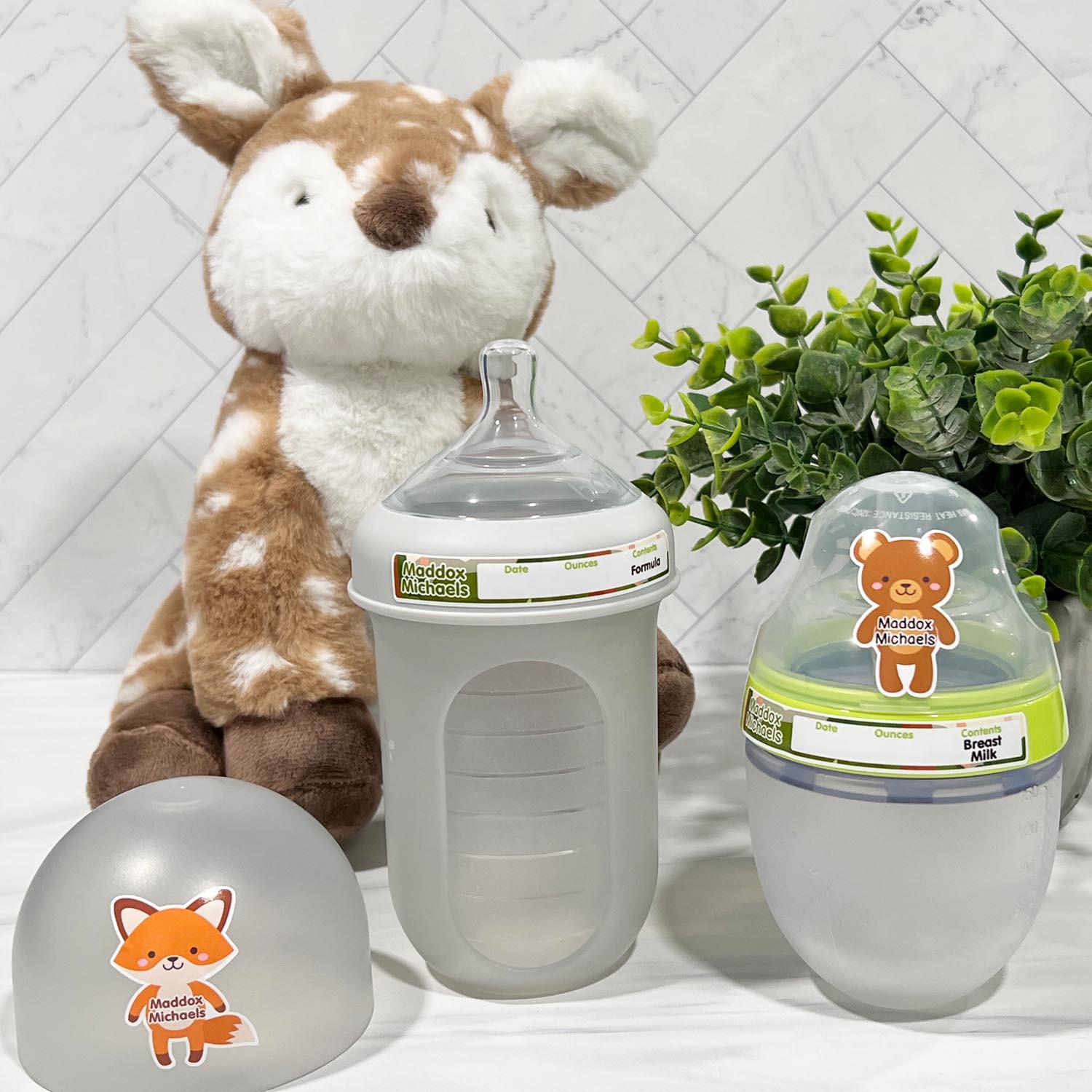
Shown: Slim Rim Labels on the hard plastic collar of a Comotomo bottle.
If you use Comotomo or Boon Nursh, you've likely already discovered that standard stickers don't stick to silicone. Silicone is a non-stick surface — great for hygiene, a problem for labeling. Many parents try silicone bands as a workaround, but bands can trap moisture, milk residue, and bacteria underneath — exactly what we want to avoid in a feeding environment.
The solution: Labeling Comotomo bottles for daycare starts with the hard plastic collar — the only part of a silicone bottle with a surface labels will bond to permanently. Our slim rim or curved rim labels are sized specifically for this placement, giving you a clean, permanent name ID that survives high-heat sterilizers without bulk or hygiene risk.
Dr. Brown's, Avent, and MAM bottles
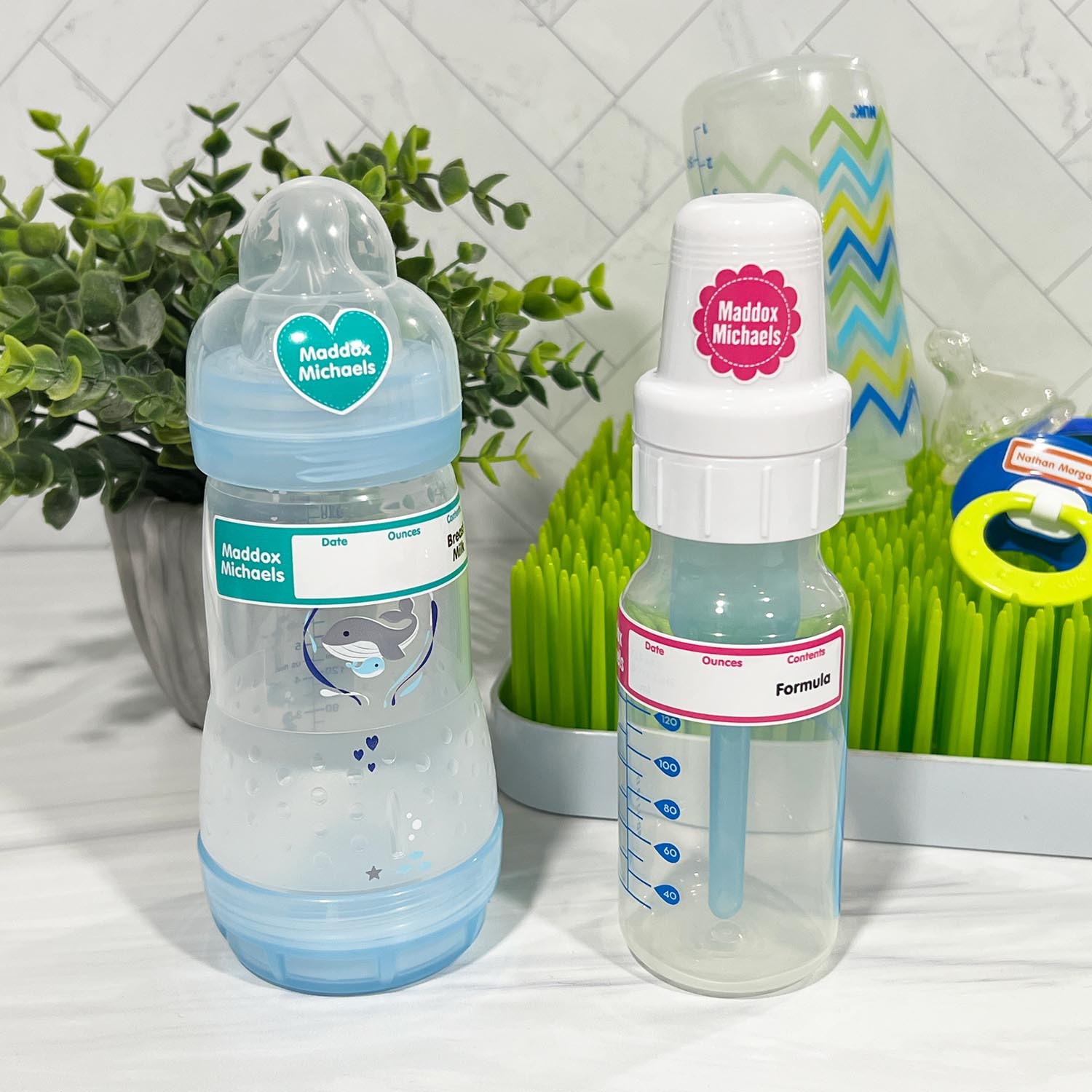
Shown: Standard Rectangle Labels on Dr. Brown's and MAM bottles.
For Dr. Brown's, our standard or small rectangle labels fit perfectly on the smooth glass or plastic body. For Avent wide-neck bottles, the large surface area works well with our write-on labels, giving you plenty of space for name, date, ounces, and milk type.
Don't forget the caps. Caps are the number one most misplaced item in a daycare kitchen. A tiny name label on the cap ensures your entire bottle assembly stays together and comes home with you — not separated in two different cubbies or lost entirely.
Daycare Safety and CDC Compliance: Why We Label
Licensed daycares must follow strict health department guidelines to prevent milk mix-ups and ensure infant safety. Meeting daycare bottle labeling requirements isn't bureaucratic paperwork — it's what stands between your baby and an incorrect feeding. Here is what experts recommend including on every bottle:
First and last name
Daycare centers frequently have multiple infants with the same first name. Full names prevent incorrect feedings and cross-contamination between families.
Date of preparation
Baby bottle date labels help providers follow the 24-hour rule for breast milk and formula — ensuring milk is used within safe timeframes and spoiled milk is never served. This is a state licensing requirement in most states, not just a preference.
Contents and ounces
Clearly marking "Breast Milk" vs. "Formula" — and how many ounces — is essential for nutritional tracking and allergy protocols. Providers feeding multiple infants need this information at a glance, not after opening a bottle.
Comparing Labeling Methods: The Honest Breakdown
Parents often ask why not to just use masking tape or a permanent marker. Here is the honest answer from someone who tried everything before building a better solution:
- Masking tape. Cheap but harbors bacteria, leaves sticky residue that ruins bottles, and typically peels off in the first warming cycle of the day. The residue alone makes bottles harder to clean properly.
- Permanent marker on plastic. Eventually ghosts or stains the plastic, making it impossible to read the new date over the old one. It also permanently affects the resale value of bottles once your baby outgrows them.
- Silicone bands. Bulky, difficult for daycare teachers to read quickly, and can slide off or harbor mold if not removed and scrubbed daily. They also don't meet most daycare's labeling requirements for legibility.
- Sticky Monkey Labels. Professional-grade vinyl adhesive designed for high-heat environments. Dishwasher safe, warmer safe, sterilizer safe. Apply once and the label is there for years — the daily work is 10 seconds of writing, not relabeling from scratch.
Your Grab-and-Go Evening Routine
To achieve true grab-and-go status in the morning, the work has to happen the night before. Once your personalized baby bottle labels are in place, here is the routine I used to survive three kids and a business simultaneously:
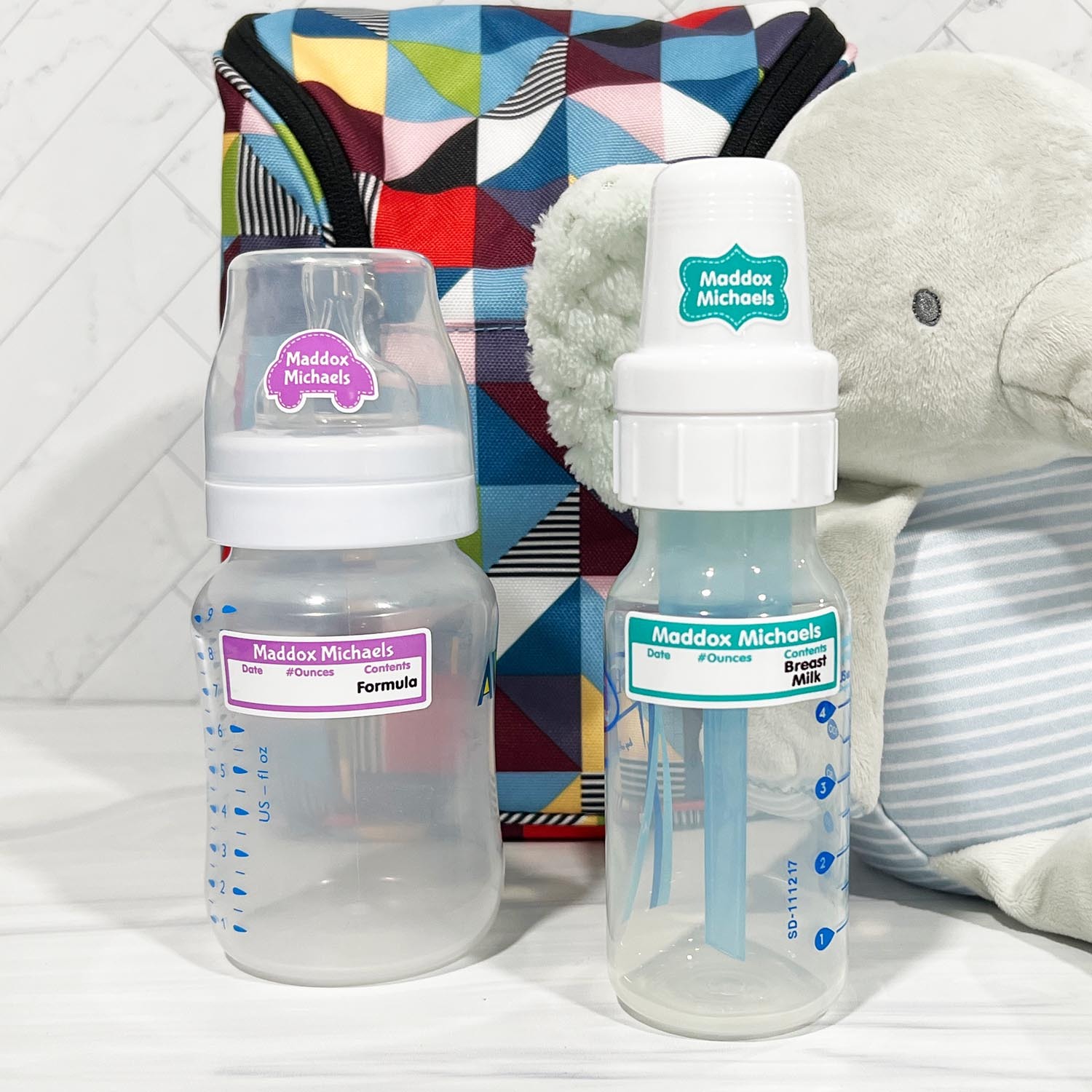
Shown: Small Rectangle Bottle Labels on Avent and Dr. Brown's bottles.
- Write first. It's much easier to write the date on an empty, room-temperature bottle than a cold, heavy, full one. Write before you fill.
- Fill. Pour your milk or formula into the labeled bottle.
- Cap it. Snap on the labeled cap. It takes one second and saves you from losing a $10 cap replacement — caps are the most commonly separated item in a daycare kitchen.
- Stage the bag. Place bottles in your insulated bag and put the whole bag in the fridge. In the morning, you grab the bag and go. Zero decisions, zero stress.
Browse our full bottle label range at Sticky Monkey Labels. Not sure which label fits your specific bottle? Call us at 1-888-780-7734 — after 15 years of helping parents figure this out for every bottle brand on the market, we can usually answer in under two minutes.
Frequently Asked Questions
How do I remove the waterproof pencil marks from the label?
Rub the label with a dry paper towel or rag — the wax pencil writing comes off cleanly without water or chemicals. If you notice a small waxy buildup on the label surface after weeks of daily use, a tiny drop of cooking oil on a paper towel removes it instantly.
Will the labels stay on in a steam sterilizer?
Yes. Our professional-grade vinyl and adhesive are specifically rated for the extreme temperatures of steam sterilizers and commercial dishwasher cycles. They won't disintegrate, peel, or leave adhesive residue in your equipment. The key is correct initial application — clean, dry surface, firm pressure, adequate setting time before the first wash.
Can I use these labels for frozen breast milk bags?
Absolutely — our labels are freezer safe. If you're building a freezer stash, our write-on labels keep your inventory organized by date so you always use the oldest milk first. The wax pencil writes clearly even on cold surfaces and the writing stays legible through freezing and thawing cycles.
What label fits my Comotomo bottle?
Comotomo bottles have a silicone body — nothing adheres to silicone, regardless of label brand. The label has to go on the hard plastic nipple collar. Measure the height of your collar and choose between our slim rim labels (for narrower collars) or curved rim labels (for wider ones). If you're not sure which fits, call us at 1-888-780-7734 and we'll figure it out with you in about a minute.
What information does daycare require on baby bottles?
Most licensed daycare centers require at minimum: the child's full first and last name, the date the bottle was prepared, the milk type (breast milk or formula), and the total ounces. For breast milk specifically, many states also require the expression date and thaw date if the milk was previously frozen. Call your specific daycare before ordering to confirm their requirements — this tells you which label size you need to fit all required information.
Why does my label keep peeling off after a few days?
In almost every case this comes down to surface prep. The most common causes are: applying to a surface that wasn't completely dry, skipping the rubbing alcohol step (which removes invisible oils), not pressing firmly enough from center to edges, or running through a dishwasher before the adhesive had time to fully set. Follow the prep steps in this guide and the same label should last for years — through hundreds of dishwasher and sterilizer cycles.