
From the founder of Sticky Monkey Labels
I'm Dodie — mom of three boys, two with food allergies and one with special needs, and founder of Sticky Monkey Labels. I'm now in my 15th year of business, which started in 2011. I started this business because I needed a real solution for real kid chaos — daycare routines, school supplies, summer camp gear, and managing food allergies in an all-boy household where everything somehow ends up wet, sandy, or missing.
Sending your kid to summer camp is a big deal. Independence! New friends! S'mores! And for parents? It's also the season of "Wait — whose hoodie is this?" and "How did we lose a $35 water bottle in two days?"
Every year, mountains of perfectly good camp gear end up in the lost-and-found bin for one simple reason: no name. And "writing it with a Sharpie" isn't a real plan — especially when that name disappears after one swim, one dishwasher cycle, or one enthusiastic sunscreen application.
If you want everything that leaves your house to actually come back, you need a simple, high-performance system of camp labels designed for what camp actually does to gear. Here's the complete guide — what to label, where to put it, and which labels survive sunscreen, lake water, and industrial laundry.
What's Covered
- Why waterproof is the only way to go at camp
- Water bottles, food containers, and the swap zone
- Summer essentials and waterfront gear
- Footwear — the shoe label strategy
- Labeling clothes for camp — stick-on vs. iron-on
- Safety first — medical and allergy labels for camp
- Beyond the trunk — toiletries need labels too
- The sunscreen problem and how to protect labels
- Application tips — the rules that make labels last
- Frequently asked questions
1. Why Waterproof Is the Only Way to Go at Camp
Camp is basically an extreme sport for anything you put your child's name on: heat, humidity, mud, lake water, industrial laundry, and mystery cabin floors. Standard stickers and markers aren't built for this environment — they're built for a kitchen counter or a classroom cubby.
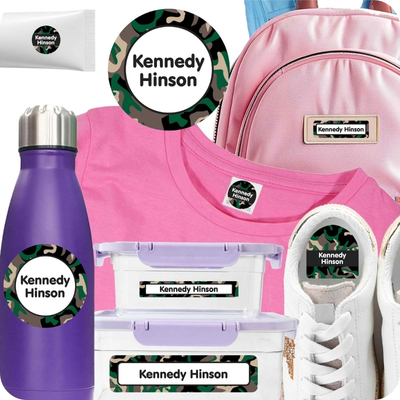
To survive camp life, you need waterproof labels engineered for high-heat dishwashers, constant handling, and the chemical killers — bug spray and sunscreen — that can be brutal on ink and adhesive over a full summer season.
2. Water Bottles, Food Containers, and the Swap Zone
At sleepaway camp, kids carry water bottles everywhere. At day camp and on field trips, snack containers and lunch totes get mixed up fast. If you label nothing else this summer, label these — they're the highest-traffic items in any camp setting.
Hydration and snack must-label checklist
- Reusable water bottles and sports flasks — use waterproof water bottle labels rated for dishwashers
- Bento boxes and snack containers — label the container and the lid separately
- Insulated lunch totes — label the handle or inside lining
3. Summer Essentials and Waterfront Gear
Water activities are the number one cause of lost gear at camp. Things get dropped at the lake, kicked under benches, and left on the dock. This is where camp labels earn their keep — and where cheap labels fail fastest.
Waterfront and summer essentials checklist
- Swim goggles
- Snorkel gear
- Flashlight
- Sunscreen bottles
- Bug spray
Labeling swimsuits and rash guards: For rash guards and swim trunks, use iron-on clothing labels for permanent bonding that survives chlorine, salt water, and repeated washing, or stick-on clothing labels on care tags if the item has a usable tag. Never apply stick-on labels directly to fabric — swimwear stretches constantly and the adhesive won't bond to a moving surface.
4. Footwear: The Shoe Label Strategy
If your child is going to camp, they need shoe labels. Flip-flops at the pool and sneakers in the cabin get mixed up constantly — especially when a dozen kids are taking shoes off for pool time or nap time and piling them in the same spot.
Placement: Inside the heel is the most stable spot — it's protected from direct friction and stays readable through regular wear. A strong adhesive matters here because shoes deal with sweat, moisture, and repeated flexing all day. Our shoe labels are specifically rated for this environment.
5. Labeling Clothes for Camp: Stick-On vs. Iron-On
Clothing is where parents lose the most money at camp — because camp laundry is no joke. You need clothing labels that survive heavy-duty commercial washing and drying. Both options have their place in a complete camp labeling system.
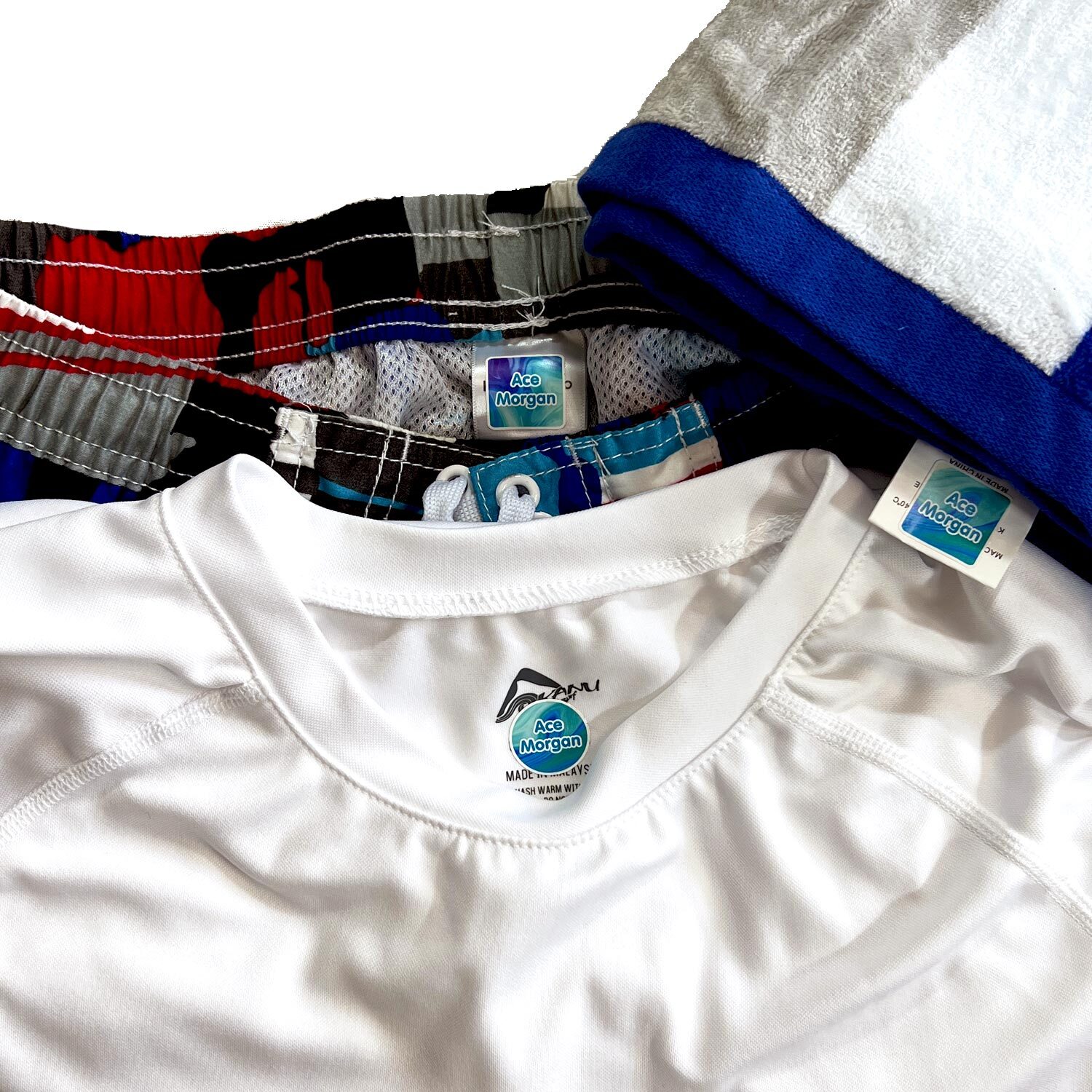
Stick-On Camp Labels for Clothes — the time-saver
Peel and press onto the garment care tag or largest part of the tagless imprint — no ironing, no extra steps. Fast enough to get through a whole pile of camp clothes in one sitting. Stay put through laundry and last and last, but can be removed later if you plan to pass clothes down. Best for jackets, hoodies, and daily apparel with accessible care tags.
Iron-On Camp Clothing Labels — the permanent option
For items without usable tags — or when you want the "this is never coming off" option — iron-ons are the gold standard. Completely soft and flat with no rough edges, they blend seamlessly into fabric and feel smooth against skin. Best for sheets, pillowcases, blankets, swimwear, tagless shirts, socks, and anything going through communal laundry repeatedly all summer. Also the right choice for sensory-sensitive children — no raised edges to feel through clothing.
6. Safety First: Medical and Allergy Labels for Camp
For many families, labeling isn't just about organization — it's about safety. In a camp setting with new counselors and busy staff who don't know your child's history, clear labeling matters more than in any other environment.
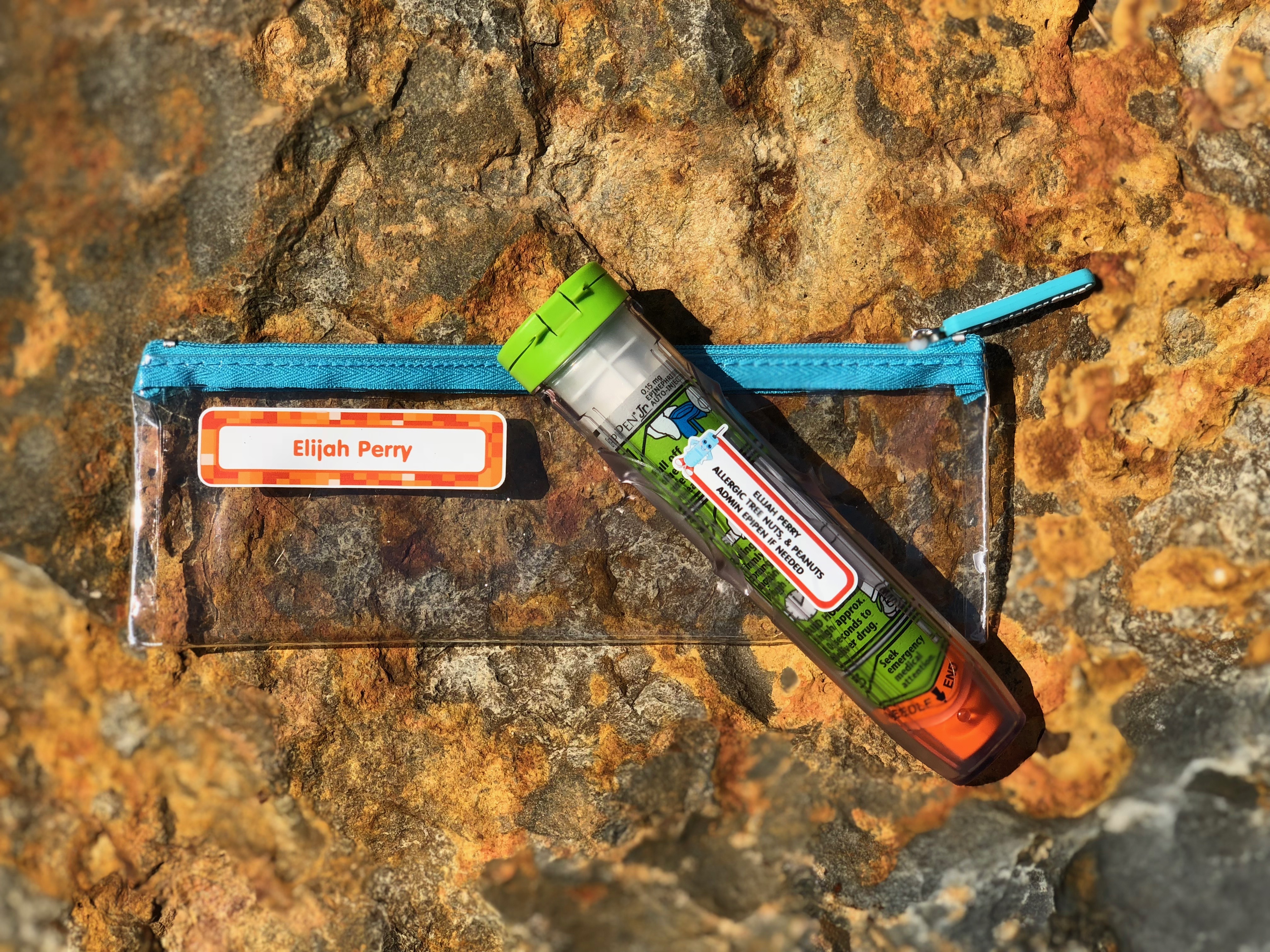
Use bold, clearly visible medical labels for kids and allergy labels for kids on high-priority items: lunchboxes, epinephrine cases, inhaler holders, and the exterior of the camp bin. Specific allergen named — "PEANUT ALLERGY," not just "ALLERGY" — so staff can act immediately without follow-up questions.
7. Beyond the Trunk: Toiletries Need Labels Too
Labeling toiletries is the detail most camp packing guides miss. Shared bathrooms at sleepaway camp mean shampoo, body wash, and toothbrushes are easily misplaced — and replacing toiletries mid-session is both inconvenient and completely avoidable.
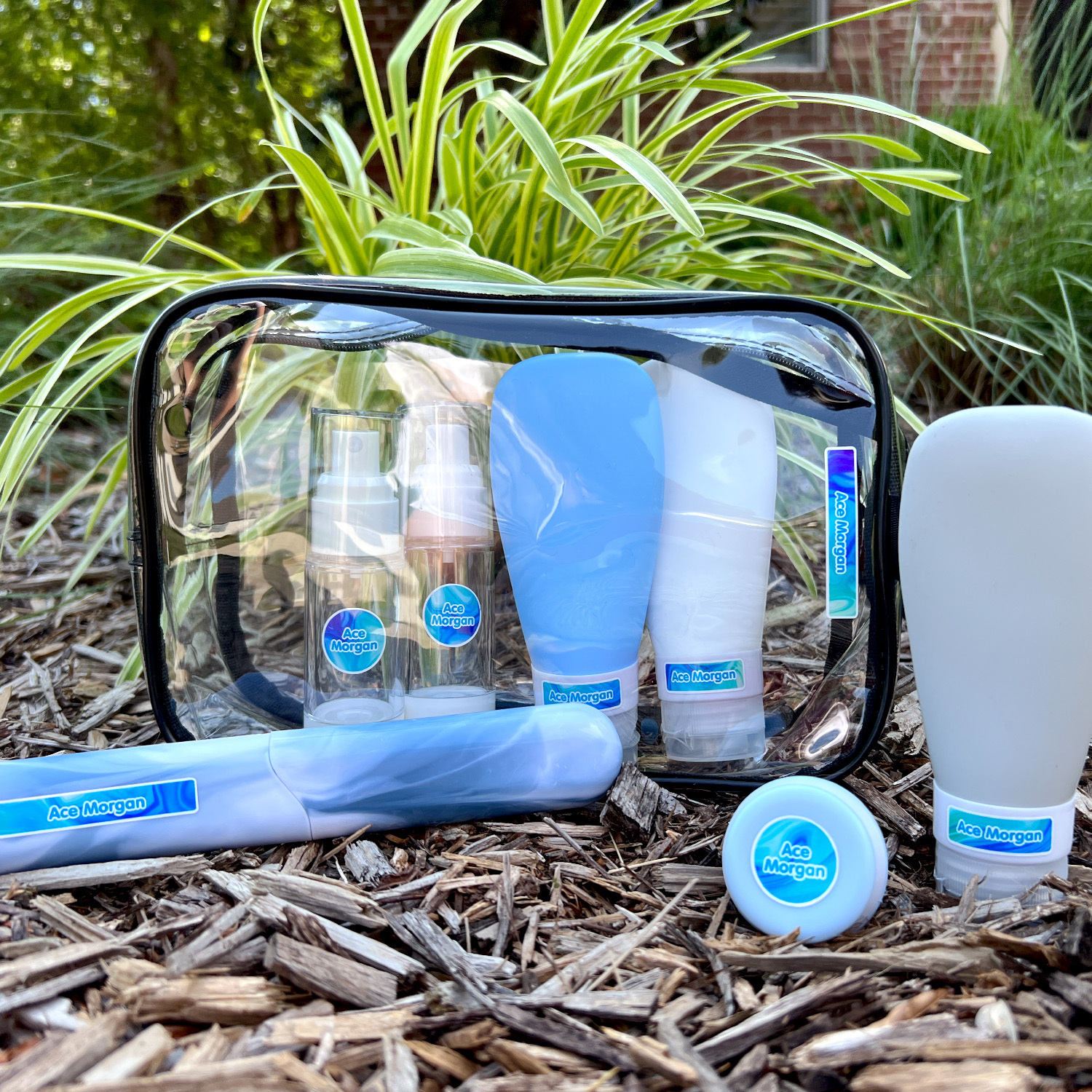
Label every bottle in the shower caddy — shampoo, conditioner, body wash, sunscreen, bug spray — with waterproof name labels that can handle moisture and repeated handling.
8. The Sunscreen Problem: Keeping Camp Labels Sharp
Day camp means a constant cycle of SPF and bug spray application. The oils and chemicals in these products can wear on ink over time — particularly on smaller labels that get handled and reapplied frequently throughout the day.
To keep camp name labels looking crisp through a full summer, add a clear label overlay for small round or extra-small rectangle labels. It acts as a protective laminate layer that locks ink in and keeps the chemicals out — particularly valuable for labels on sunscreen bottles, bug spray, and water bottles that get handled with sunscreen-covered hands multiple times a day.
9. Application Tips: The Rules That Make Labels Last
Correct application is as important as label quality. These are the rules I use at home that determine whether a label lasts one week or one full summer:
- Clean surface rule. Apply labels to a clean, dry, room-temperature surface. Alcohol removes oils from plastic or metal gear that prevent adhesion — use it on water bottles and hard surfaces before applying.
- Pressure rule. Press firmly from center outward to remove air bubbles and ensure full contact across the entire label surface. Run your thumbnail along all edges.
- 24-hour rule. Let the adhesive cure before dishwashing, swimming, or heavy use. Labels applied and immediately submerged haven't had time to bond properly.
- Dishwasher care. Top rack recommended. For metal water bottles, hand washing helps protect both the bottle finish and the label long-term.
- Iron-on application. Preheat iron to cotton setting, no steam. Press firmly with parchment paper over the label for 60–90 seconds. Let cool completely and check all edges before the garment is worn or washed.
Browse our full range of camp label packs and camp clothing labels at Sticky Monkey Labels. Questions about which labels work best for your specific water bottles, shoes, or clothing? Call us at 1-888-780-7734 — after 15 years of helping families get ready for camp, I can usually answer in two minutes.
Frequently Asked Questions
Will labels really survive camp conditions — lake water, industrial laundry, sunscreen?
Yes — when you use labels specifically engineered for these conditions. Standard stickers and home-use labels aren't rated for industrial washing temperatures, repeated chemical exposure, or constant moisture. Our labels are designed and tested for exactly the conditions camp creates. Correct application — clean dry surface, firm pressure, 24-hour cure time before first wash — is what determines how long they last.
Should I use iron-on or stick-on labels for camp clothing?
Both have their place. Iron-on labels are the right choice for clothing going through communal camp laundry — the permanent bond into fabric survives industrial washing that can loosen stick-on adhesives over time. They're also the right choice for tagless items: socks, swimwear, blankets, sheets. Stick-on labels are faster to apply and ideal for items with care tags, containers, gear, and anything you may want to relabel for a younger sibling after camp. For a full trunk's worth of camp gear, most families use both.
How early should I start labeling before camp?
At least a week before drop-off, ideally two. Camp labeling involves significantly more items than daycare or school — a full trunk's worth of clothing, gear, and toiletries takes several hours to label properly. Apply labels early so adhesives have adequate cure time before the first wash. Labels applied the night before with no cure time will fail faster than labels given a week to set before the first industrial wash cycle.
Do I need to label sunscreen and bug spray for camp?
Yes — these items look identical in a shared cabin or common area and get borrowed constantly without being returned. A name label on each bottle takes 10 seconds and prevents the most common toiletry loss at camp. Use a clear overlay on these labels specifically since the chemicals in sunscreen and bug spray can wear on ink over the course of a summer season.
What allergy labels do I need for a child with food allergies at camp?
Place allergy labels with the specific allergen named — "PEANUT ALLERGY," not just "ALLERGY" — on the lunchbox exterior, the camp bin exterior, the water bottle, and the EpiPen or epinephrine case. The label on the lunchbox reaches the counselor before any food container is opened, regardless of who is supervising. Always submit written allergy documentation to camp administration before arrival — the physical labels and the written plan work together. Neither replaces the other.
What's the single most important item to label for camp?
The water bottle — it's the highest-traffic item at any camp, goes everywhere your child goes, and is nearly identical to dozens of other campers' bottles. Label the bottle and the lid separately. After the water bottle, the items parents most regret not labeling are jackets and hoodies (expensive, look identical), shoes (constantly removed for pool time and indoor activities), and comfort items for younger campers (the most distressing things to lose).