
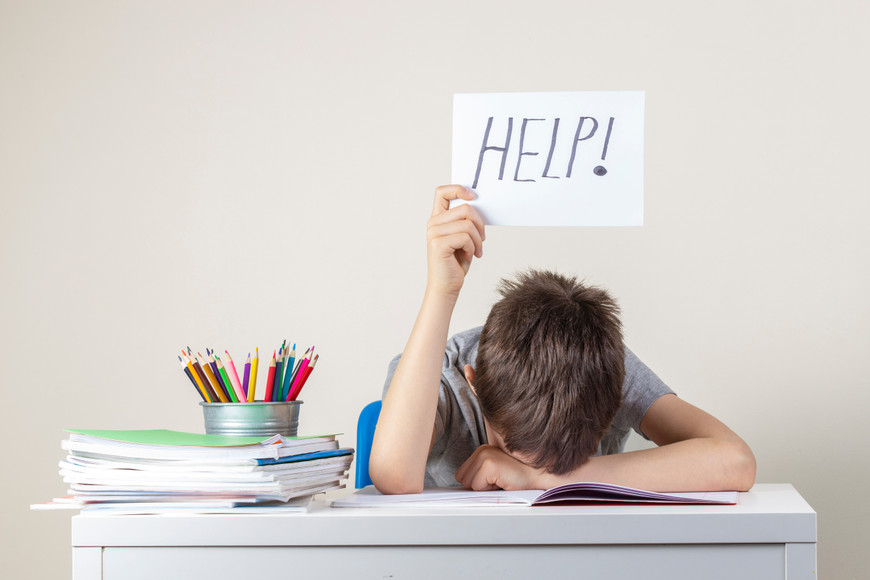
Back to school anxiety is real — for children facing new teachers, new routines, and unfamiliar social environments, and for parents wondering whether they've prepared adequately. Some nervousness is normal and healthy. Persistent anxiety that disrupts sleep, causes physical symptoms, or makes mornings a daily battle is worth taking seriously — and organizational systems, including school labels, are one of the most evidence-supported ways to reduce it.
Here's the science behind why organization specifically reduces school anxiety, what it looks like by age, and the practical systems that make the most difference — including the back to school labels that help children feel prepared, connected to their belongings, and confident in an unfamiliar new environment.
From the founder of Sticky Monkey Labels
As a mom of three boys — including one with special needs — and the founder of Sticky Monkey Labels, I've learned over the years that the difference between a smooth back to school transition and a stressful one often comes down to organization. When everything has its place and children know what to expect, anxiety decreases measurably for both kids and parents. Here's why that works, and what to do about it.
Topics Covered
- Why back to school anxiety happens
- How organization specifically reduces anxiety
- The 3-3-3 grounding technique for anxious moments
- Age-specific organization strategies and school labels
- The psychology of labeled belongings and anxiety
- Special considerations — allergies and special needs
- When organization isn't enough
Why Back to School Anxiety Happens
Back to school anxiety stems from several overlapping sources worth understanding separately, because the right organizational response differs by cause:
- Fear of the unknown — new teachers, new classmates, new building layouts, new rules. Children who have previewed the physical space, met the teacher, and know what to expect experience significantly less anxiety than those walking in cold.
- Separation concerns — particularly in younger children and children with attachment sensitivities. The predictability of routines and the comfort of familiar belongings — including labeled personal items — help here. This is especially relevant for preschool and kindergarten first-timers.
- Academic pressure — concerns about performance, fitting in academically, being called on. Less directly addressed by organization, but reduced cognitive load from organizational chaos frees mental space for learning.
- Social anxiety — fears about making friends, being included, navigating peer dynamics. Organization helps indirectly by reducing the daily small stressors that compound social anxiety.
- Loss of summer structure — the shift from relaxed to structured schedules. Gradual routine adjustment starting 4–6 weeks before school begins is the primary intervention here.
Parents experience their own version — worrying about adjustment, readiness, whether they've done enough. This parental anxiety is often picked up by children, who read parental stress as a signal that the situation is genuinely difficult. A parent who is calm and organized models that school is manageable. Part of that calm comes from being genuinely prepared — including having back to school labels on every item before the first day, so the morning isn't a labeling session on top of an already emotionally loaded transition.
How Organization Specifically Reduces Anxiety
Organization reduces school anxiety through several distinct mechanisms:
- Reduces decision fatigue and cognitive load. Every decision — where is my backpack, which folder do I need, what am I having for lunch — draws on the same limited cognitive resources children also need for regulating anxiety. When organizational systems answer these questions automatically, more cognitive resources are available for coping with the genuinely anxiety-producing aspects of school.
- Creates predictability. Anxious children are calmed by predictability. A consistent morning routine, a launch pad where everything always is, a labeled lunchbox that's always in the same spot in the fridge — each of these small predictabilities reduces the ambient anxiety that comes from environmental uncertainty.
- Builds independence and competence. When children can manage their own belongings, remember their own checklist, and navigate the school day without constant adult prompting, they develop the experience of competence that is the most reliable long-term foundation for confidence. Labeled belongings a child can identify independently, a routine they can execute without reminders — these build the competence that confidence is built on.
- Prevents the small daily disasters that compound anxiety. A missing homework folder, a lost lunchbox, arriving without the right materials — each is small in isolation but cumulatively they create an experience of school as a place where things go wrong. Systematic organization and school labels prevent most of them.
The 3-3-3 Grounding Technique for Anxious Moments
This grounding technique is worth teaching to any child who experiences significant school anxiety. It's a standard evidence-based anxiety intervention that parents and children can practice together so it's available when needed — at drop-off, before a test, in a new social situation.
The 3-3-3 technique works by anchoring attention in the present moment rather than anxious future projections:
- Look: Identify three things you can see right now. Name them specifically — not "the wall" but "the blue poster with the alphabet."
- Listen: Notice three distinct sounds you can hear. The air conditioning, someone's voice in the hall, the sound of a pencil.
- Move: Wiggle three different parts of your body. Fingers, toes, shoulders.
Practice this with your child when they're calm — at dinner, on a walk — so the technique is available when anxiety is high. Children who have rehearsed it can use it independently at school, which itself builds competence and reduces anxiety about being overwhelmed.
Age-Specific Organization Strategies and School Labels
Preschool and Early Elementary — Ages 3–7
Visual systems over verbal instruction. Picture-based morning checklists. A school station near the entryway with hooks for backpacks, bins for shoes, and a basket for school communications. Comfort kits for children with separation anxiety — a family photo, a special note — organized into the backpack so they're reliably there when needed.
School labels at this age do double duty: they identify belongings and they provide visual anchors. A preschooler who chose the construction truck design for their label recognizes their bottle from three feet away without reading anything. Bold, distinctive designs help young children identify their belongings visually before they're confident readers. Our Ultimate School Label Pack (134 labels) covers the full preschool kit — clothing, shoes, water bottle, lunchbox, backpack, and all school supplies — in one order, so every item is labeled and familiar before the first day.
Middle Elementary — Ages 8–10
Dedicated homework spaces with labeled supply containers. Assignment notebooks introduced and practiced before school starts. Subject-specific organization with labeled colored folders reduces the anxiety of not knowing which materials belong where.
Clothing labels for school on jackets and gym clothes are particularly important at this age — this is when outerwear loss peaks in elementary school, and labeled items come back while unlabeled ones don't. The daily stress of a missing jacket is small but cumulative. The Ultimate School Label Pack covers this age group comprehensively.
Upper Elementary and Middle School — Ages 11–14
Children this age can begin taking genuine ownership of their organizational systems — choosing their own approach to locker organization, managing assignment tracking with digital or physical tools, taking responsibility for their own schedule. The adult role shifts from managing the system to maintaining the infrastructure.
School labels for this age group need to be age-appropriate — clean, minimal designs that look intentional rather than parent-imposed. Our School Essentials Label Pack (67 labels) covers the key items for older students — water bottle, backpack, calculator, jacket, and most-used school supplies — without the volume that seems excessive to a thirteen-year-old. The organizational benefit is identical; the presentation works for older students.
The Psychology of Labeled School Belongings and Anxiety
The connection between school labels and reduced anxiety operates through several psychological mechanisms:
- Ownership and responsibility. When a child's name is on their belongings, the psychological ownership connection is stronger. Children take more care of things they experience as specifically and visibly theirs — which means fewer losses, which means fewer anxiety-producing situations.
- Reduced social anxiety around belongings. "Is this mine or yours?" and "I can't find my lunchbox" are socially awkward situations for children already navigating complex peer dynamics. Labeled items that children can identify instantly eliminate these small social friction points.
- Independence without adult help. A child who can manage their school belongings without needing to ask an adult has one fewer anxiety-producing dependency in an unfamiliar environment. The ability to navigate independently is itself calming.
- Prevention of the lost-item anxiety spiral. A missing homework folder or lunchbox the morning of school creates an acute stress response that doesn't always resolve even after the item is found. Systematic school labeling prevents most of these events, and recovery happens faster when labeled items are returned.
- Familiar anchors in an unfamiliar environment. For children starting preschool, kindergarten, or a new school, a school label they chose themselves — a design they recognize as theirs — is a small piece of the familiar in an unfamiliar environment. The construction truck label they picked in June is still there in September. It's theirs. They chose it. That continuity matters for anxious children.
Special Considerations — Allergies and Special Needs
For children with food allergies or medical conditions, back to school anxiety carries additional weight because the stakes are genuinely higher. The organizational systems that reduce general school anxiety also address the specific anxiety of allergic children navigating food environments without constant adult oversight.
Our allergy alert labels on lunchboxes, backpacks, and food containers provide visible communication of dietary restrictions to any adult at point of food contact — without requiring the child to self-advocate at every meal. For children whose food allergy anxiety is partly about the burden of constant self-advocacy, visible labels shift some of that responsibility to the environment rather than the child. This is genuinely anxiety-reducing.
For children with special needs, the organizational principle most important for anxiety reduction is consistency above all else. The same labeled spots, the same morning sequence, the same visual cues — maintained reliably — provide the predictability that is most calming for children for whom change is inherently dysregulating. When disruption does occur, having the physical anchors of familiar labeled belongings provides continuity in the midst of change.
Our medical alert labels on medication cases, EpiPens, and medical equipment ensure any supervising adult has the information they need at a glance — without the child having to explain or self-advocate in a high-stress moment.
When Organization Isn't Enough — Recognizing the Need for Additional Support
Organizational systems reduce anxiety meaningfully, but they're not a substitute for clinical intervention when anxiety is significant. Watch for these signs that professional support may be warranted:
- Persistent physical symptoms — stomachaches, headaches, or other physical complaints that recur around school or school-related activities
- Sleep disruption — difficulty falling asleep, frequent nightmares, or other school-related sleep disturbances that persist beyond the first two weeks
- Complete school refusal — extreme emotional reactions or total refusal to attend school
- Social withdrawal — avoiding activities or friendships that were previously enjoyable
- Significant academic impact — inability to complete schoolwork or dramatic performance decline attributable to anxiety rather than learning difficulties
The appropriate resources for significant school anxiety:
- School counselors — first point of contact for strategies during school hours
- Child psychologists and therapists specializing in anxiety disorders — cognitive behavioral therapy (CBT) has strong evidence for childhood anxiety
- Pediatrician — to rule out underlying medical contributors and provide referrals
Browse our full range of back to school labels at Sticky Monkey Labels — including the Ultimate School Label Pack (134 labels for K–8), the School Essentials Label Pack (67 labels for older students), allergy labels, clothing labels, and medical alert labels. Questions? Call us at 1-888-780-7734.
Frequently Asked Questions
Why does organization help with back to school anxiety?
Organization reduces anxiety through several mechanisms: it reduces decision fatigue by answering organizational questions automatically; it creates predictability that anxious children find calming; it builds independence and competence that are the reliable foundations of confidence; and it prevents the small daily disasters — missing folders, lost lunchboxes, forgotten materials — that compound over time into an experience of school as a place where things go wrong. School labels are a core part of this — labeled items come back when lost, which eliminates one of the most common small-but-acute anxiety triggers in the school day.
Can school labels really help reduce back to school anxiety?
Yes — through several mechanisms. Labels on belongings strengthen children's psychological sense of ownership, which reduces the anxiety of not knowing what's theirs in a shared environment. For preschoolers and kindergarteners, a school label they chose themselves — a design they recognize — is a small familiar anchor in an unfamiliar new space. For children with special needs, consistent labeled environments provide the predictability that is most calming for children for whom change is dysregulating. And for anxious children generally, fewer lost-item crises mean fewer acute anxiety triggers throughout the school day. Our Ultimate School Label Pack covers every surface — clothing, water bottle, lunchbox, backpack, and school supplies — in one order.
How does parental anxiety affect children's back to school anxiety?
Children are sensitive readers of parental emotional states, particularly anxious children who are already hypervigilant to environmental cues. A parent who is visibly anxious or disorganized about the back to school transition signals to the child that the situation is genuinely difficult, regardless of the words used. Parents who model calm preparation — organized, matter-of-fact, positive — communicate that school is manageable. Part of that preparation is having everything labeled and ready before the first day, so the morning transition is calm rather than chaotic.
What is the 3-3-3 technique and when should children use it?
The 3-3-3 technique is a grounding exercise that reduces acute anxiety by anchoring attention in the present moment: name three things you can see, three sounds you can hear, and move three parts of your body. It shifts focus from future-oriented anxious thoughts to present sensory experience. Children should practice it when calm so it's automatic when needed. It can be used at drop-off, before a test, in a new social situation, or any moment of acute school anxiety. Practice with your child at dinner or on a walk before school starts.
What school labels should I order to help with preschool anxiety?
For preschool anxiety specifically, bold visual designs are the most useful — preschoolers identify their belongings by design before they can read their own name, and a familiar design in an unfamiliar environment is a small but real comfort. Let your child choose the design months before school starts so it's already familiar by September. The Ultimate School Label Pack (134 labels) covers every preschool surface — cubby hook, lunch bag, snack containers, clothing, blanket roll, water bottle, and shoes — in one comprehensive order.
When should I seek professional help for my child's school anxiety?
When anxiety causes persistent physical symptoms (stomachaches, headaches), disrupts sleep beyond the first two weeks of school, leads to significant school avoidance or refusal, causes social withdrawal from previously enjoyed activities, or produces a dramatic academic decline. School counselors are a good first contact. Child psychologists specializing in anxiety and CBT-based approaches have strong evidence for childhood anxiety disorders. Your pediatrician can provide referrals and rule out medical contributors.