
Spring cleaning has a reputation for being the organizational project that never quite happens — either it's too overwhelming to start, or it starts strong and stalls halfway through the kids' rooms. The reason is usually the same: trying to do too much at once, without a system that keeps the whole family involved and the results actually lasting.
Here's the approach that works — broken into manageable steps, with the labeling system that keeps everything organized after the cleaning is done, not just during it.
5 Steps Covered
- Build a routine — chip away instead of cramming it all in
- Get the whole family involved
- Tackle one room at a time — kids' spaces first
- Use labels to make organization stick after the clean
- The seasonal clothing sort — what to donate, store, and keep
From the founder of Sticky Monkey Labels
As a mom of three boys and the founder of Sticky Monkey Labels, I've done this many times over. The tips in this post are ones I've used in our own house — the labeling system is what makes the difference between a spring clean that holds through summer and one that collapses by May.
1. Build a Routine — Chip Away Instead of Cramming It All In
The spring clean that gets scheduled as a single weekend marathon rarely happens. Life intervenes. The weekend arrives and someone is sick, or there's a game, or the prospect of doing the entire house in two days is too daunting to start. The approach that actually works is smaller, more frequent sessions built into existing routines.
Fifteen to twenty minutes a day on a specific area produces results without requiring you to sacrifice a whole weekend. The key is specificity — not "clean the house" but "sort the kids' winter jackets" or "clear the pantry shelves." Defined, completable tasks that end with something visible to show for the effort.
A simple weekly plan that works:
- Week 1: Kids' rooms — clothing sort, toy cull, storage organization
- Week 2: Kitchen and pantry — expired food, reorganize containers, label everything
- Week 3: Common areas — living room, entryway, coat storage
- Week 4: Storage spaces — attic, basement, garage, seasonal items in and out
Four weeks, one area per week, fifteen minutes a day. Done by the time the warmer weather arrives.
2. Get the Whole Family Involved
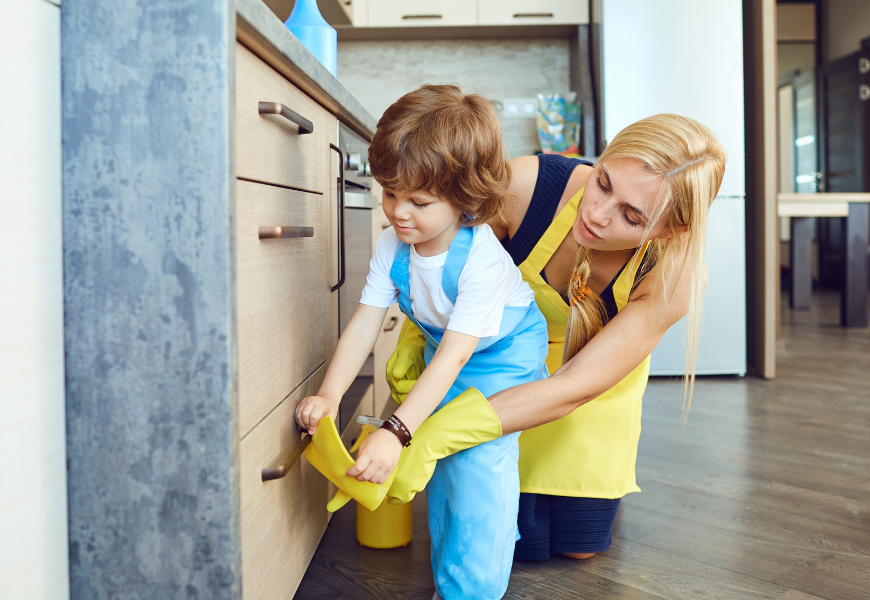
Spring cleaning done solo while everyone else is out of the way is exhausting and produces a system nobody else feels ownership over. Spring cleaning done with the family — even with the friction that involves — produces a system everyone knows and is more likely to maintain.
The key is age-appropriate, genuinely achievable tasks with clear instructions:
- Ages 2-4: Put toys into labeled bins, put dirty clothes in the laundry basket, wipe accessible surfaces with a damp cloth. Simple, visible, completable — and the labeled bins are what make these tasks achievable independently rather than requiring adult direction for every item.
- Ages 5-8: Sort their own clothing by size (keep/donate/store), reorganize their bookshelves, help label storage bins, wipe down their own surfaces. Children this age can participate in genuine decisions about their things, which builds investment in keeping the system working afterward.
- Ages 9+: Full closet cleanout, reorganize their own storage, apply labels to their own belongings, take ownership of a specific area. A child who organized their own space and labeled their own bins maintains it with far less parental oversight than one whose space was organized for them.
3. Tackle One Room at a Time — Kids' Spaces First
Start where the most clutter accumulates — usually the kids' rooms and play areas — rather than the spaces that are easiest to clean. Getting the high-entropy spaces organized first creates momentum and frees up the storage space you'll need when you're rotating seasonal items in the later weeks.
For kids' rooms specifically:
- Toys and books. Everything out of bins first, then sort into keep, donate, and broken/discard. Our write-on labels on storage bins — "Lego," "Board Games," "Art Supplies," "Outdoor Toys" — give every item a labeled home that any family member can navigate independently. Wide enough categories that children can return items without asking where they go.
- Clothing. Spring cleaning is the natural moment to sort through seasonal clothing — what fits, what doesn't, what moves to storage for next year. Our clothing labels on items going to storage mean you can identify whose they are and what size they are when you pull them out again, without opening every bag.
- Under-bed and closet storage. Bins going into storage for the season get a write-on label — contents and date. When you need something in October, the label tells you exactly what's in each bin without opening all of them.
4. Use Labels to Make Organization Stick After the Clean
This is the step that separates a spring clean that holds from one that reverts to chaos by June. Cleaning creates a tidy space. Labeling creates a system. The difference is that a labeled system communicates to everyone in the house — not just the person who organized it — where things go and how to maintain it.
The right label for the right application:
Write-On Labels — For bins and storage
The best choice for toy bins, pantry containers, storage boxes, and any area where contents change seasonally or over time. Apply once, update the written information as the contents evolve. No replacing labels when reorganization happens.
Waterproof Name Labels — For personal belongings
Water bottles, lunchboxes, sports equipment, backpacks — everything a child takes out of the house. Spring is the perfect moment to replace any labels that have worn through the school year and refresh the labeling on all personal items before summer activities begin.
Stick-On Clothing Labels — For the clothing that stays
Any clothing that survived the sort and is going back into rotation should be labeled if it isn't already. Spring is also the moment to add labels to new items being brought out of storage from last year before they head to school or camp.
Clothing Storage Labels — For the attic bins
Size pre-printed, with season and disposition checkboxes. Everything going into attic or closet storage gets one of these — so pulling down the right bin next season takes thirty seconds instead of an afternoon of digging.
5. The Seasonal Clothing Sort — What to Donate, Store, and Keep
The clothing sort is the most time-consuming part of spring cleaning for most families — and the most valuable if done properly. A clear system makes it faster:
- Keep: fits now, in good condition, needed for the coming season. Label and return to rotation.
- Store: too big for now but will fit next year or will fit a younger sibling. Label with our clothing storage labels (size and season pre-marked) and into the attic bin.
- Donate: outgrown, duplicates, or items nobody is going to wear. Use a clothing label to mark "donate" on the bag before it leaves the house — keeps donation bags from being reopened and items redistributed through the house again.
- Discard: stained, torn, or worn beyond wear. This pile is smaller than most parents expect once honest assessment happens.
The rule that prevents the sort from expanding indefinitely: if you've held an item for thirty seconds without a clear category, it donates. Hesitation usually means the item hasn't been worn and won't be.
Browse our full range at Sticky Monkey Labels — including write-on labels for storage, clothing storage labels for seasonal bins, and waterproof name labels for personal belongings. Questions? Call us at 1-888-780-7734.
Frequently Asked Questions
How do I make spring cleaning less overwhelming?
Break it into weekly zones rather than a single marathon session. Fifteen to twenty minutes a day on a specific, defined task produces results without requiring a sacrificed weekend. Starting with the highest-clutter areas (kids' rooms and play spaces) first builds momentum and frees up the storage space you'll need for seasonal rotation.
How do I get kids to help with spring cleaning?
Age-appropriate tasks with clear instructions, a labeled system that makes independent action possible, and a reward at the end of each session. Children maintain systems they helped create far more consistently than ones imposed on them. Letting them decide where labeled bins go and what the categories are builds investment in keeping the system working.
What labels are most useful for spring cleaning?
Write-on labels for storage bins and containers whose contents change seasonally. Clothing storage labels for attic and closet bins (size pre-printed, season and disposition checkboxes included). Waterproof name labels for refreshing personal belongings before summer activities begin. Clothing labels for any seasonal items going back into rotation that aren't already labeled.
How do I organize outgrown kids' clothing for storage?
Our clothing storage labels are designed specifically for this — size is pre-printed, with checkboxes for season (fall/winter, spring/summer) and disposition (resale, donate, or other). Same-size bins stacked in the attic with these labels means pulling the right bin next season takes thirty seconds. For garage sales, price the whole bin rather than individual items — people are happy to sort through a bin labeled with the size they need.