
From the founder of Sticky Monkey Labels
As a mom of three boys and the founder of Sticky Monkey Labels, I've spent 14 years thinking about why things go missing — and what actually prevents it. Labels are part of the answer, but they're not the whole answer. Here's the full picture.
Children lose things. This is not a character flaw — it's a developmental reality. Young children are fully absorbed in what's happening right now, which means the jacket they were wearing an hour ago is genuinely not on their radar when something more interesting comes along. The water bottle gets set down during a game. The hat comes off at recess and stays there.
You can't eliminate lost items entirely. But you can dramatically reduce how often it happens — and dramatically improve the recovery rate when it does — with a combination of practical habits, smart packing decisions, and a labeling system that works. Here's what actually makes the difference.
Strategies Covered
- Pack less — extra items are extra things to lose
- Choose footwear that stays on
- Limit jewelry and irreplaceable items
- Label everything that matters
- Establish routines and end-of-day checklists
- Reinforce habits with consistent reminders
- Always pack a spare set of clothes — labeled
1. Pack Less — Extra Items Are Extra Opportunities to Lose Something
The instinct to send children out with every possible item they could conceivably need is understandable — but it backfires in practice. The more items a child has with them, the more items there are to keep track of. And items that aren't needed don't get looked after; they get set down and forgotten.
The most commonly lost items at school, camp, and daycare fall into a predictable category: things the child took off because they didn't need them. The jacket they wore in the morning when it was cold but abandoned at recess when it warmed up. The extra layer they peeled off during lunch. The hat they didn't actually need once they got inside.
A practical approach: check the forecast and the day's activities before packing. If extra layers aren't genuinely likely to be needed, leave them at home. If they do need to go, pack them in a labeled bag that stays in the backpack rather than being worn — an item in a bag is harder to misplace than an item that gets taken off.
2. Choose Footwear That Stays On
Slide-on shoes, flip-flops, and easy-to-remove footwear are genuinely problematic in school, camp, and daycare environments — not just because they come off easily and get left behind, but because they can become a tripping hazard when taken off or worn improperly in shared spaces.
Properly secured shoes — lace-up sneakers, velcro closures, or any footwear that requires deliberate effort to remove — are significantly less likely to go missing because they require a conscious decision to take off. They're also safer for the child and those around them during active play.
For younger children who are still learning to dress themselves, velcro fastening shoes strike the right balance between security and independence. For older children, lace-up shoes are appropriate — and a good opportunity to make sure they actually know how to tie them before they head out.
Whatever footwear you choose, label the inside sole of each shoe with a shoe label — waterproof, placed at the heel, washer and dryer safe. For younger children starting school, our MatchUP Shoe Labels serve double duty — they label the shoes and teach left from right through a self-correcting picture puzzle.
3. Limit Jewelry and Irreplaceable Personal Items
Children naturally want to bring their favorite things with them — a special toy, a piece of jewelry, a cherished memento. The problem is that these items are exactly the ones that are most distressing to lose and least likely to be recovered without a label.
A few principles worth establishing:
- Check the setting's policy first. Many schools and daycare centers have rules about toys, jewelry, and personal items — some prohibit them entirely. Finding out before day one avoids a tearful confiscation at the door.
- Keep valuable or irreplaceable items at home. If losing it would be genuinely upsetting — a sentimental toy, expensive jewelry, something with emotional significance — it's better not to risk the school environment. Introduce the concept of "special things stay home" early and explain why simply and honestly.
- Label anything that does go in. A show-and-tell item, a special book, a comfort toy allowed by the setting — if it's going in, it should have a name on it. Waterproof labels work on hard toys and plastic items; clothing labels on the care tag work for soft toys and fabric items.
4. Label Everything That Matters
Labels don't prevent items from being set down or left behind — but they dramatically improve the recovery rate when that happens. A labeled jacket that gets left on a bench at recess has a straightforward path back to its owner. An unlabeled one becomes a mystery item in the lost and found.
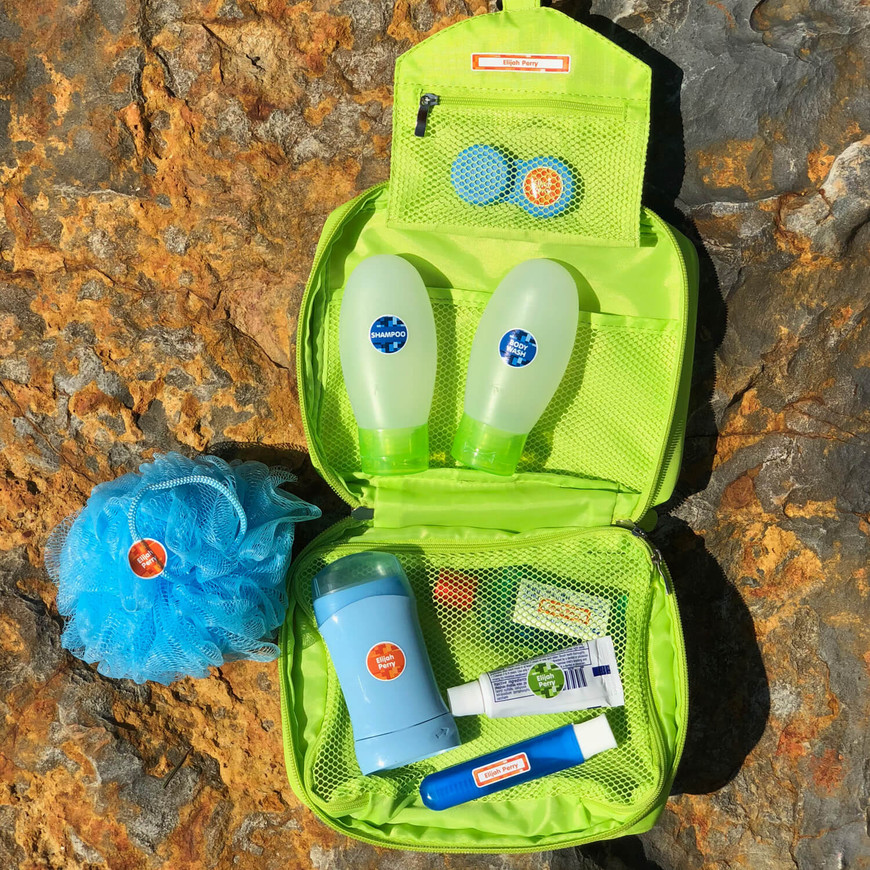
The practical rule: if you'd be frustrated to lose it, label it before it leaves the house. Here's the right label type for each category:
Clothing — Stick-On or Iron-On Labels
Stick-on clothing labels apply to care tags or tagless imprint areas — fast, no tools, laundry-safe. Iron-on labels bond permanently to iron-safe fabrics — completely flat, soft against skin, ideal for uniforms and PE kits. For bibs or comfort items a child is likely to mouth, iron-on is the safer choice.
Hard Surfaces — Waterproof Name Labels
For water bottles, lunchboxes, containers, backpacks, pencil cases, and all hard-surface items. Dishwasher-safe, weatherproof, tear-resistant — built for daily school use.
Shoes — Shoe Labels
Waterproof labels designed for the curved inner sole surface at the heel. Washer and dryer safe, only removable with intent.
Our school label packs cover all three categories in one order — clothing labels, shoe labels, and waterproof labels for hard surfaces. Packs can be split across multiple children's names at no extra charge by typing "Split" in the name field at checkout.
5. Establish End-of-Day Routines and Simple Checklists
A child who has a consistent end-of-day routine loses fewer things — not because they're more careful, but because the routine itself prompts the behavior that prevents loss. "Before you leave, check your cubby, check the coat hook, check under your chair" becomes automatic with repetition. It doesn't require active vigilance; it becomes a pattern.
Simple checklists work particularly well for primary school-aged children who can read. A laminated card in the backpack or on the classroom cubby listing the items they should have at the end of the day gives a concrete prompt. They check the list, they check their bag, they leave with what they came in with more consistently than without it.
A few things that make routines and checklists stick:
- Keep it short — three to five items maximum. A long checklist gets ignored. "Coat, water bottle, lunchbox, backpack" is achievable. Twenty items isn't.
- Make it visual for younger children — pictures of the items rather than written words work for pre-readers. A simple drawn icon of a jacket, a water bottle, and a bag is enough.
- Connect it to a specific cue — "when you hear the end-of-day song, check your checklist" gives children a clear trigger. Routines that are attached to an existing cue establish faster than free-floating ones.
6. Reinforce Habits With Consistent, Low-Pressure Reminders
Establishing a routine is the first step. Keeping it going is the second — and it requires consistent reinforcement, especially in the early weeks. Young children are still developing the executive function needed to maintain habits independently. External reminders from a trusted adult bridge the gap until the habit is internalized.
The approach that works best is light-touch and consistent rather than heavy and occasional. A quick "did you check your coat hook?" at pickup every day for three weeks is more effective than a big conversation about responsibility once a month. The repetition is the point — it eventually becomes internal.
For older children who push back on reminders, framing it around their own interests helps: "Your headphones were $60 — do you have them?" lands differently than "make sure you don't forget anything." The former is a question they have a stake in answering correctly.
7. Always Pack a Spare Set of Clothes — But Do It Right
Accidents, spills, unexpected weather, an enthusiastic session with the water table — spare clothes earn their place in the bag every single time they're needed. The question isn't whether to pack them; it's how to pack them so they don't become another lost item.
Pack the spare set in a labeled ziplock bag or small labeled pouch inside the backpack. Keeping all the spare items together in one identifiable container means they stay as a set, can be found quickly when needed, and come home together when the day is done. Label each item individually too — a spare shirt that ends up separated from its bag in the changing room needs its own name to find its way back.
A complete spare set for a younger child typically includes: underwear, socks, a top, and trousers or leggings. For older children, a spare top and underwear is usually enough. Keep it simple — the spare set is a backup, not a full wardrobe.
The Honest Reality
None of these strategies eliminates lost items entirely — children are children, and some things will go missing regardless. But the combination of packing sensibly, labeling everything that matters, and building consistent end-of-day habits gets you to a place where lost items are occasional rather than routine, and recoverable when they do happen rather than gone for good.
Browse our full range of kids name labels at Sticky Monkey Labels — including clothing labels, shoe labels, and school label packs that cover everything in one order.
Frequently Asked Questions
Why do kids lose things at school so often?
Young children are fully absorbed in the present moment — which is developmentally appropriate but means items set down during play or activity simply don't stay on their radar. It's not carelessness; it's a normal feature of how children's attention works at this age. The strategies that work best are those that reduce the number of items that need tracking, make recovery easier when things go missing (labels), and build habits over time (routines).
Do name labels actually help recover lost items?
Yes — significantly. Teachers and school staff actively want to return labeled items; the challenge without labels is that they have no way to identify whose they are. A labeled jacket in the lost and found is returned. An unlabeled one stays there until it's donated or thrown away. Labels don't prevent loss, but they make recovery reliable rather than lucky.
What's the best way to get kids to keep track of their belongings?
Consistent end-of-day routines reinforced with low-pressure daily reminders work better than occasional conversations about responsibility. A short checklist, a consistent cue (like a specific end-of-day routine), and a brief reminder at pickup for the first few weeks builds the habit into their routine. It takes several weeks of consistency before it becomes automatic — the repetition is the point.
Should I pack extra clothes for my child at school?
Yes — for younger children especially, a spare set of clothes is worth packing every day. Pack it in a labeled bag inside the backpack to keep it together and easy to find. Label each item individually so that if the spare clothes become separated from their bag, they can still be identified and returned.
What items should I not send to school with my child?
Items that are irreplaceable, expensive, or emotionally significant are generally better left at home — the risk of loss in a school environment is real. Always check the school or daycare's policy on toys and personal items before sending anything in. For items that do go in (show-and-tell, a comfort toy allowed by the setting), label them clearly before they leave the house.