
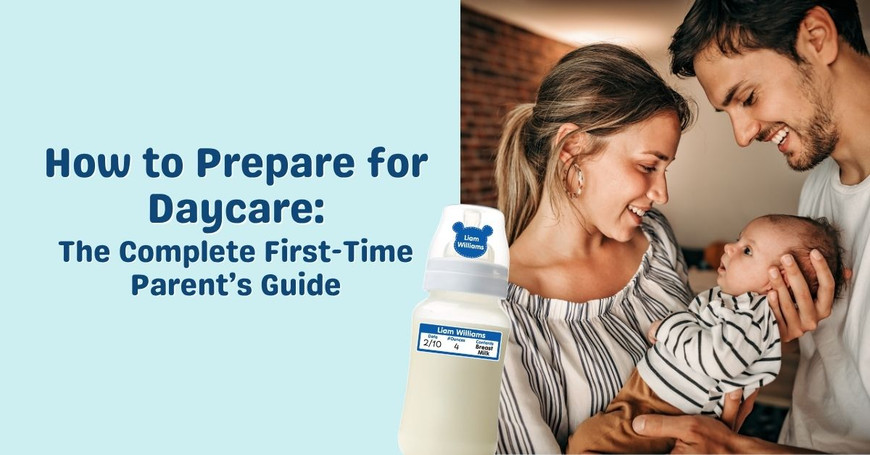
Maternity leave ends faster than anyone tells you it will. One week you're measuring time by feedings and the next you're filling out daycare intake forms, washing bottles, and trying to figure out what goes in a diaper bag that comes home every day. For first-time parents, starting daycare is one of the most logistically and emotionally loaded transitions of the first year. There's a lot to do, and most of it feels urgent at once.
This is the complete guide to preparing for daycare — everything to do in the weeks before your baby starts, what to pack, how to label it all, what the first week looks like, and how to manage the emotional side of handing your baby to someone else for the first time.
From the founder of Sticky Monkey Labels
I'm Dodie, founder of Sticky Monkey Labels — a mom of three boys who navigated this exact transition, and now in my 15th year helping daycare families get everything labeled and ready. The practical side of starting daycare is solvable. Here is everything I know about solving it.
Jump To
- The daycare preparation timeline — what to do and when
- Questions to ask your daycare before day one
- What to pack in the daycare bag — complete checklist
- How to label everything for daycare
- The emotional side — what to expect and how to manage it
- What the first week actually looks like
- Frequently asked questions
The Daycare Preparation Timeline — What to Do and When
Preparing for daycare works better with a timeline than a single to-do list. Some things need to happen months out. Others are first-week tasks. Knowing what to do when prevents the last-minute scramble that most first-time daycare parents describe as their most stressful memory of the whole process.
2–3 Months Before
- Confirm your daycare enrollment and start date in writing
- Ask for the full supply list and labeling requirements
- Schedule any required health and vaccination appointments — most daycares require up-to-date immunization records before the first day
- Research and purchase the bottles or sippy cups your daycare recommends or accepts
- Order daycare labels — this is the one thing most parents leave too late
2–4 Weeks Before
- Complete all required paperwork — emergency contacts, medical authorization, feeding preferences, allergy documentation
- Begin bottle practice if breastfeeding and baby hasn't had a bottle regularly
- Label everything in one labeling session — bottles, pacifiers, clothing, diaper bag, all supplies
- Pack and test the diaper bag with everything the daycare requires to confirm nothing is missing
- Practice the morning routine so it feels familiar before the real first day
The Week Before
- Visit the daycare for orientation if offered — let your baby see the space and meet the caregivers in a low-stakes setting
- Confirm pickup arrangements and authorized pickup list
- Pack the bag the night before the first day, not the morning of
- Confirm all labels are applied and have had the 24-hour cure time they need before being washed or sterilized
Questions to Ask Your Daycare Before Day One
Every daycare center has its own policies, requirements, and culture. Getting clear answers to these questions before the first day prevents surprises at drop-off and makes the transition smoother for everyone — especially your baby.
- What exactly needs to be labeled? Every item, or specific categories? First name only or full name?
- What information goes on bottle and breast milk labels? Name only, name and date, or name, date, contents, and ounces?
- What bottles and cups do you use or accept? Some centers have preferences or restrictions.
- What goes in the bag daily versus what stays at the center? Some centers provide diapers and wipes. Others require you to supply everything.
- How do you handle feeding schedules? On demand or set schedule?
- How do you communicate with parents during the day? App, paper log, texts?
- What is your illness policy? What symptoms require a child to stay home?
- What is the drop-off and pickup procedure? Sign-in required? Authorized pickup list?
- What is your policy on pacifiers, loveys, and comfort items?
- Are there allergy restrictions or policies? Especially relevant for children with known allergies.
What to Pack in the Daycare Bag — Complete Checklist
What goes in a daycare bag depends on your baby's age and your center's policies, but the core items are consistent across most infant and toddler rooms. Every item that leaves the house needs a name label before it goes through the door.
Feeding
- Bottles — body and cap labeled
- Breast milk or formula, clearly labeled
- Nipples and rings — if not attached
- Sippy cup — body and lid labeled
- Spoons and feeding utensils
- Baby food jars or pouches
- Bibs — labeled on the back
Diapering
- Diapers — enough for the full day plus extra
- Wipes
- Diaper cream — labeled
- Changing pad (if required)
- Wet bag for soiled items (if cloth diapering)
Clothing
- 2–3 complete spare outfits — all labeled
- Spare socks — labeled
- Jacket or outerwear — labeled
- Labeled bag for spare clothes
- Sleep sack or wearable blanket if used
Comfort and Personal
- Pacifiers — labeled on the plastic base
- Pacifier clips — labeled
- Lovey or comfort item — labeled on tag
- Sunscreen — labeled (if applicable)
- Any medications — clearly labeled
How to Label Everything for Daycare
Labeling for daycare is not optional — licensed centers are required by state regulations to keep all children's items clearly identified. Unlabeled bottles are refused at drop-off at most centers. Everything your baby brings needs a name before it crosses the threshold.
How to Label Baby Bottles for Daycare
Bottles need two labels: one on the body and one on the cap. Caps separate from bottles constantly — in the refrigerator, in the dishwasher, in the bag. An unlabeled cap is a cap that doesn't come home.
For standard plastic or glass bottles, wipe the body with isopropyl alcohol, apply a waterproof label, press every edge firmly, and allow 24 hours before sterilizing or dishwashing. For silicone bottles, nothing sticks to the silicone body — label the plastic nipple ring collar instead. Our bottle labels for daycare collection includes labels in multiple sizes for every bottle type, including specialized formats for nipple rings on silicone bottles. See our complete baby bottle labeling guide for step-by-step instructions by bottle type.
What Information Goes on Daycare Labels
Ask your daycare before labeling anything — requirements vary significantly. Common requirements:
- Name only — most common for personal belongings and clothing
- Name and contents — common for bottles and sippy cups when children have different liquid contents
- Name and date — required by most infant rooms for breast milk tracking
- Name, date, contents, and ounces — the most detailed requirement, common in strictly regulated infant rooms
Our daycare label packs include write-on labels with space for date and contents alongside pre-printed name labels — so whatever your center requires, you have the right label format ready. For the complete daycare labeling checklist covering every item in detail, see our complete daycare labeling checklist.
Labeling Clothes for Daycare
Every piece of clothing your baby wears to daycare needs a name label — including the spare outfits stored at the center. Our stick-on clothing labels apply directly to the care tag: machine washable, no iron required, and removable for hand-me-downs. Label every garment in the spare outfit bag before you drop it off, and label the bag itself.
The Emotional Side — What to Expect and How to Manage It
No amount of practical preparation fully prepares you for handing your baby to another adult and walking away. That moment is genuinely hard for most parents, and it helps to know that what you're feeling is normal, common, and temporary.
For your baby
Young babies — particularly those under 6 months — adapt to new caregivers more easily than many parents expect, because they haven't yet developed the stranger anxiety that peaks around 8 to 12 months. Older babies who start daycare after the stranger anxiety stage often have a harder first few weeks. Both experiences are normal. Consistent drop-off routines, familiar items from home (a lovey, a piece of clothing with your scent), and warm consistent caregiver relationships all support the adjustment. Most babies settle within 2 to 4 weeks.
For you
Guilt, grief, relief, anxiety — sometimes all four in the same morning. All of it is normal. Having a short, consistent drop-off routine and leaving promptly rather than lingering helps both you and your baby. Lingering extends distress for both parties. A hug, a specific pickup time stated clearly, and a confident goodbye is the move. The center will call if there's a genuine problem. Trust the process and give it a few weeks before drawing conclusions about how the transition is going.
What the First Week Actually Looks Like
Managing expectations for the first week makes it significantly more bearable. Here's what most families experience:
Sleep disruption
Most babies sleep differently during daycare adjustment. The stimulation of a new environment affects sleep patterns at home. Nap timing may shift. Night waking may temporarily increase. This typically resolves within 2 to 4 weeks as the new routine becomes familiar.
Illness in the first months
New daycare babies get sick. Exposure to other children's germs triggers the immune system response that builds long-term immunity, but the first months of daycare are typically the sickest months of a child's life. Having a sick-day plan — a backup caregiver, a work-from-home option, or a family member who can step in — before you need it is one of the most important practical preparations you can make.
Missing items
Something will come home unlabeled or not at all in the first week. A sock, a pacifier cap, a food container lid. This is why labeling everything matters — labeled items have a path home; unlabeled items end up in a communal pile. Check your labeling at the end of the first week and add labels to anything that came home without one or didn't come home at all.
Frequently Asked Questions
How do I prepare my baby for daycare?
Start 2 to 3 months before the start date: confirm enrollment, get the supply list, schedule any required health appointments, and order daycare labels. In the weeks before, practice the morning routine, label everything in a single labeling session, and visit the daycare for orientation if offered. Pack the bag the night before the first day. Keep drop-off short and consistent on the first day — a brief confident goodbye is better for both you and your baby than a prolonged farewell.
What do I need to label for daycare?
Every item that goes to daycare needs a name label. That includes every bottle and cap, pacifiers and pacifier clips, every piece of clothing including spare outfits, all food containers and lids, the diaper bag exterior and interior, diaper cream and personal care items, and any comfort items or loveys. The most commonly missed items are bottle caps, spare outfit clothing, and the individual lids on food containers. Our daycare label packs include every size needed in one order.
How do you label baby bottles for daycare?
Wipe the bottle body with isopropyl alcohol, apply a waterproof label to the smooth surface, press every edge firmly with a thumbnail, and wait 24 hours before sterilizing or dishwashing. Apply a separate small round label to the cap or lid. For silicone bottles, label the plastic nipple ring collar rather than the silicone body — nothing sticks to silicone. Our bottle labels for daycare include the right size for every bottle type.
What should be in a daycare bag?
Feeding supplies (bottles with caps labeled, breast milk or formula labeled with name and date, bibs, spoons), diapering supplies (diapers, wipes, cream), 2 to 3 labeled spare outfits in a labeled bag, pacifiers and comfort items, and any medications. The bag itself needs a name label on the exterior and a contact label (name and phone number) inside the main compartment. Check with your daycare about what they provide versus what you supply — policies vary significantly by center.
How long does it take for a baby to adjust to daycare?
Most babies adjust to a new daycare routine within 2 to 4 weeks. The adjustment period involves some combination of sleep disruption, increased fussiness at home, and drop-off distress. Younger babies (under 6 months) often adjust faster than babies who start daycare after stranger anxiety develops around 8 to 12 months. Consistent routines, familiar items from home, and warm caregiver relationships are the factors that most reliably support a faster adjustment.
When should I order daycare labels?
Order daycare labels as soon as you have your start date confirmed — ideally 2 to 3 weeks before the first day. Our labels ship in 1 to 2 business days, but you need time to label everything and allow the 24-hour adhesive cure on waterproof labels before the first sterilizer or dishwasher cycle. Labels applied the morning of the first day haven't finished curing and are far more likely to peel in the first week. Order early, label in a single session, arrive on day one fully prepared.
What information do daycares require on labels?
It varies by center and by room. Most centers require the child's name on every item. Infant rooms frequently require the date on breast milk and formula containers — sometimes the time of expression as well. Some centers require contents labeled on every bottle or sippy cup, and a few require ounces as well. Always ask your specific center before labeling — getting the format right from day one means you won't be relabeling on day two.