
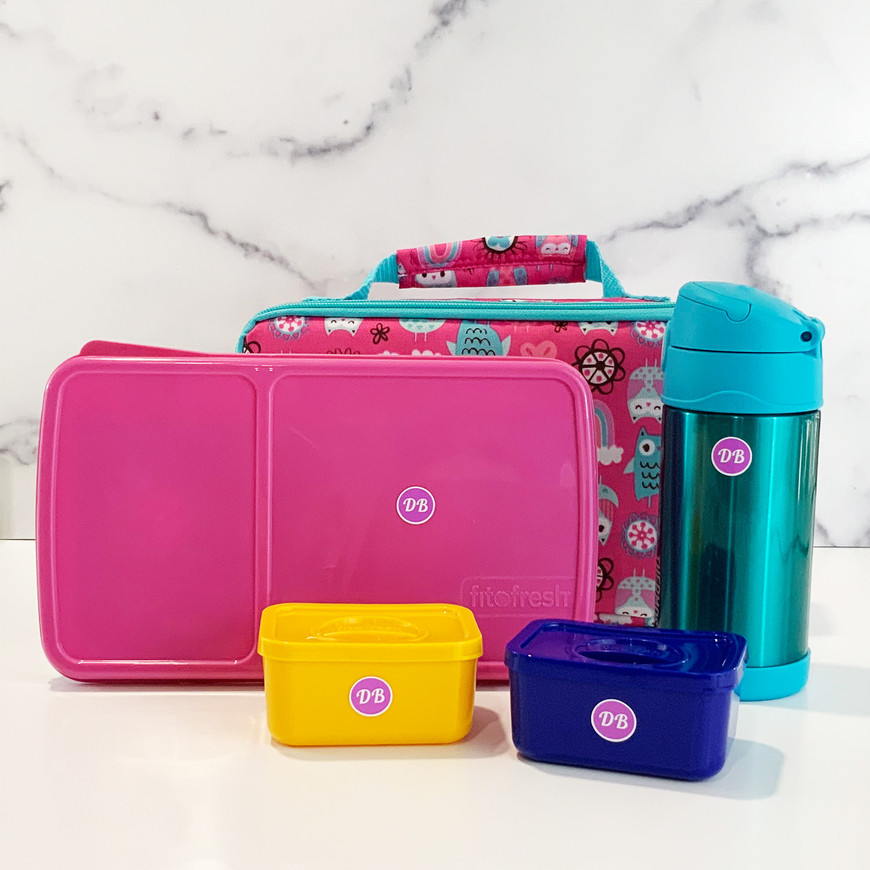
Back to school labels are the single most important thing you can do before the first day of school — and the one thing most parents leave until it's too late. Every item that goes out the door without a name on it has a real chance of not coming home. Every item that leaves with a school label comes back.
The families who get this right spend about an hour total and don't think about it again until the following September. The ones who skip it spend the year replacing water bottles, chasing down jackets in lost-and-found, and watching supplies disappear into the classroom void. The difference isn't organization — it's having a clear process and the right labels for each surface.
This is that process: a step-by-step back to school labeling guide covering what to label, which label type goes on which surface, the prep steps that determine how long labels last, and a complete checklist of every item that needs a name on it before day one.
From the founder of Sticky Monkey Labels
As a mom of three boys and the founder of Sticky Monkey Labels, I've helped thousands of families get their back to school labels done before the school year starts. The parents who do it well spend about an hour total and don't have to think about it again. Here's exactly how to do it that way.
What's in this guide
- Order school labels in June or July — not August
- Gather everything in one place before you start
- Label hard surfaces first — waterproof labels for school
- Clothing labels for school — iron-on or stick-on
- Label school supplies — including pencils
- Shoe labels — inner sole, heel position
- Allergy and medical labels — do these last, check twice
- The complete back to school labeling checklist
- Keeping school labels going through the year
- Frequently asked questions
Step 1: Order Back to School Labels in June or July — Not August
This is the step most parents miss. Back to school label orders spike in August and labels ordered in the final week before school starts routinely arrive after the first day. Order in June or July — as soon as your child's supply list arrives — and you have weeks of buffer rather than days of panic.
There is also a practical labeling reason to order early. Iron-on clothing labels need 24 hours to cure before the first wash. Waterproof labels for school supplies need 24 hours before the first dishwasher cycle. A labeling session done in late July means everything is fully bonded and ready before September. A session done the night before school starts means you're applying labels that haven't had time to cure.
While you're ordering, involve your child in choosing the design. A child who chose their label design recognizes their belongings instantly and is more likely to look after labeled items. With over 100 designs available at Sticky Monkey Labels, most children have a strong opinion and are happy to give it.
Step 2: Gather Everything in One Place Before You Start
Don't label items as you find them scattered around the house — you'll miss things and lose track of what's been done. Do one gathering sweep first. Pull together everything going to school: all clothing, all shoes, the lunchbox, water bottle, backpack, every supply on the school supply list, and any sports or activity gear.
Lay it all out on a table or the floor. This gives you a complete picture of what needs school labels, and it's often the moment parents realize they're missing something from the supply list with enough time to get it before the first day.
Sort items into four piles as you gather them:
- Clothing pile — everything that will be washed regularly: uniforms, PE kit, jackets, hoodies
- Hard surfaces pile — water bottle, lunchbox, containers, backpack, school supplies
- Shoes pile — all footwear going to school
- Pencils and small supplies pile — pencils, markers, crayons, rulers, anything needing extra-small labels
This sorting matters because each pile uses a different label type. Working through one pile at a time is significantly faster than switching between label types for every individual item.
Step 3: Waterproof Labels for School Supplies — Hard Surfaces First
Start with the hard surfaces pile. These take the least time — clean the surface, peel, press, done. Working through the lunchbox, water bottle, containers, backpack tags, and school supplies all at once takes fifteen to twenty minutes and you'll have the most visible school labeling done first.
Waterproof labels for school work on any smooth hard surface: stainless steel water bottles, plastic lunchboxes, powder-coated Stanley cups and Hydro Flasks, pencil cases, calculator backs, and hard-cover notebooks. The prep step is what separates labels that last all year from labels that peel off in the first week:
How to apply waterproof school labels correctly
- Wipe each surface with isopropyl alcohol first. Bottles and lunchboxes carry invisible residue — skin oils, manufacturing film, cleaning product traces — that prevents labels from bonding. A 30-second wipe removes all of it.
- Wait for the surface to dry completely. Water and moisture are the most common reasons school labels fail to stick. Even a slightly damp surface compromises adhesion.
- Press firmly from center outward. Smooth out any air bubbles working from the middle of the label toward the edges. Run a thumbnail along every edge.
- Wait 24 hours before the first dishwasher cycle. The adhesive needs time to fully bond before being exposed to heat and water. Label the weekend before school — not the morning of.
Step 4: Clothing Labels for School — Iron-On or Stick-On
Clothing labels for school are the most important labels in the kit. School uniforms, PE kits, jackets, and hoodies move between spaces — the gym, the locker room, the playground, the sports field, the lost-and-found — and an unlabeled jacket left on a bench is gone. A labeled one comes home.
The rule is simple: iron-safe fabrics get iron-on clothing labels. Everything else gets stick-on clothing labels applied to the care tag or tagless imprint area inside the garment.
Iron-on clothing labels for school uniforms and PE kit
Our iron-on clothing labels bond permanently into the fabric fiber — not a sticker sitting on the surface, not a sewn-in patch. Ultra-thin, completely flat, no raised edge, sensory-safe. The most durable clothing label option for school uniforms, PE kits, and anything going through weekly washing.
- Check the care label — if it shows an iron symbol the garment is iron-safe
- Cotton setting, no steam, 60–90 second press-and-lift with firm pressure
- Allow 24 hours to cure before the first wash — the bond sets as it cools and continues curing
- Result: completely flat, no bulk, no corners that irritate skin — undetectable when worn
Stick-on clothing labels for everything else
Our stick-on clothing labels apply to the care tag inside the collar or the largest flat area of a tagless imprint — peel and press, no tools. Specifically designed for clothing applications — a different material from waterproof hard-surface labels.
- Apply to the care tag or tagless imprint area only — NOT directly to the fabric
- Press firmly and smooth from center outward
- Laundry-safe and designed to stay put through the full school year of regular washing
Step 5: Label School Supplies — Including Pencils
Labels for school supplies are what bring those supplies home at the end of the week. Binders, folders, notebooks, pencil cases, and lunchboxes all need a name on them. But the item most parents forget — and the one that disappears faster than anything else — is the pencil.
Pencils and pens are the most consistently borrowed and least consistently returned school supplies. They're genuinely communal items in most classroom environments, which means unlabeled ones that get set down stay wherever they're set down. Our extra small rectangle labels fit directly on the barrel of a pencil, marker, or crayon — school supply labels for the exact surfaces standard labels won't fit. A labeled pencil that rolls under a desk comes back to your child. An unlabeled one just gets picked up.
Step 6: Shoe Labels — Inner Sole, Heel Position
Shoe labels are the quickest category. Clean the inner sole at the heel with isopropyl alcohol, let dry completely, apply the label firmly, and press down. Each shoe takes about thirty seconds.
The heel is the correct position — it's the most stable flat surface inside a shoe and the most visible when the shoe is picked up. The toe area curves too much for reliable long-term adhesion. Label both shoes of every pair, including sports shoes and PE footwear — these are the shoes most likely to come off in a communal changing area.
For preschoolers and kindergarteners starting school, our MatchUP Shoe Labels — two halves of a picture that only form the complete image when shoes are on the correct feet — label the shoes and teach left from right simultaneously. Genuinely useful for children in their first year of school who are still developing that awareness.
Step 7: Allergy and Medical Labels — Do These Last, Check Twice
If your child has food allergies, a medical condition, or any health need that school staff should be aware of, allergy and medical alert labels go on the lunchbox, the school bag exterior, and any relevant medical equipment. These are the most important labels of all — take a moment to verify the information is accurate before applying.
Our allergy labels and medical alert labels are waterproof, dishwasher-safe, and built to the same durability standard as all our name labels. Apply the same way — clean surface, firm pressure, 24 hours before first wash.
And as always: labels supplement communication, they don't replace it. Make sure your child's school has the relevant medical information in writing before the first day, not just on a label.
The Complete Back to School Labeling Checklist
Work through this list once before the first day. Everything checked off means everything has a name on it and a significantly better chance of coming home at the end of the school year.
Hard Surfaces — Waterproof Labels for School
- Water bottle (body + lid separately)
- Lunchbox
- Food containers
- Ice packs
- Cutlery set
- Backpack (inside and outside)
- Pencil case
- Calculator
- Ruler and scissors
- Headphones / earbuds case
- Notebooks and folders (covers)
School Supplies — Extra Small Labels
- Pencils (every one)
- Markers and crayons
- Colored pencils
- Pens
Shoes — Shoe Labels
- School shoes or sneakers
- Sports shoes or cleats
- Boots or rain boots
- PE footwear
Clothing — Iron-On or Stick-On Labels
- School uniforms
- PE kit and sports uniform
- Jacket or hoodie
- Sweatshirts
- Hats, gloves, scarves
- Spare clothes left at school
- Towels (if applicable)
- Blanket roll (Pre-K / preschool)
Health & Safety — Allergy / Medical Labels
- Lunchbox (allergy alert)
- School bag exterior
- EpiPen or inhaler case
- Medication containers
- Any medical equipment
Preschool / Pre-K Additions
- Cubby hook label
- Nap mat or blanket roll
- Snack bag and containers
- Comfort item (if permitted)
Keeping School Labels Going Through the Year
A good back to school labeling session should keep you covered for most of the year. A few things worth noting for the year ahead:
- Avoid bleach and bleach-based detergents on labeled clothing — these degrade both the print and adhesive faster than regular washing. Standard detergents are fine.
- Top rack only for dishwasher items — lower rack heat accelerates adhesive degradation on waterproof labels over time.
- Label new items as they arrive — mid-year replacement gear should get school labels before it goes to school, not after it goes missing.
- Check labels at the half-year mark — most will still be intact, but a quick check and re-label of anything peeling takes five minutes and keeps the system working all year.
Browse our Ultimate School Label Pack, our School Essentials Label Pack, and our full range of back to school labels at Sticky Monkey Labels. Questions about which labels are right for a specific item or surface? Call us at 1-888-780-7734 — we're always happy to help.
Frequently Asked Questions
When should I order back to school labels?
June or July. Back to school label orders spike in August and labels ordered close to the first day routinely arrive late. Iron-on labels need 24 hours to cure before the first wash. Waterproof labels need 24 hours before the first dishwasher cycle. A labeling session in July means everything is bonded and ready before September. Our Ultimate School Label Pack (134 labels for K–8) and School Essentials Label Pack (67 labels for older students) are available year-round.
What are the best school labels for kids?
It depends on the surface. Waterproof labels for school supply hard surfaces — water bottles, lunchboxes, backpacks, binders. Iron-on or stick-on clothing labels for school uniforms, PE kit, and jackets. Extra small rectangle labels for pencils, markers, and crayons. Our Ultimate School Label Pack includes all three types in the right quantities for K–8 students — so you have the right label for every surface in a single order.
What are name tags for school and do I need them?
Name tags for school and school name tags are the same as name labels — they're the labels that go on your child's belongings to identify them. At the preschool and kindergarten level, name tags for school are especially important because children can't always read yet and teachers use them to sort belongings at the end of the day. At every grade level, kid labels for school are what bring items home rather than ending up in lost-and-found.
What is the difference between iron-on and stick-on clothing labels for school?
Iron-on clothing labels bond permanently into iron-safe fabric fibers — completely flat, no raised edge, sensory-safe, survives years of washing. They are the best choice for school uniforms, PE kits, and any garment going through weekly washing. Stick-on clothing labels apply to care tags or tagless imprint areas inside garments — peel and press, no tools. They are the right choice for garments that aren't iron-safe, or for parents who want quick application. Both are laundry-safe and available in our school label packs.
How long does it take to label all school supplies?
With everything gathered in one place and working through one label type at a time, most families finish in 45 minutes to an hour. The biggest time-saver is doing it all in one session rather than labeling items individually as you think of them throughout the week before school starts.
Do I need to clean surfaces before applying school labels?
Yes — wipe hard surfaces with isopropyl alcohol before applying waterproof labels. This removes invisible oils and residue that prevent proper adhesion. For clothing, labeling on clean dry fabric gives the best results. This applies even to brand new items — manufacturing residue on new bottles and lunchboxes is one of the most common reasons labels don't stick long-term.
How soon after applying can I wash labeled school items?
Allow 24 hours after applying any back to school label before the first wash cycle or dishwasher run. Labeling a few days before the first school day — or ideally during the summer — gives the best long-term results. Labeling the morning of the first day and immediately putting items in a dishwasher or washing machine is the most common reason labels don't last.
What's the most common back to school labeling mistake?
Applying school labels to surfaces that haven't been cleaned first — especially water bottles and lunchboxes that have residue on them. The label appears to stick but starts lifting within the first few wash cycles. A 30-second wipe with isopropyl alcohol before applying makes the difference between a label that lasts a week and a label that lasts the full school year.