
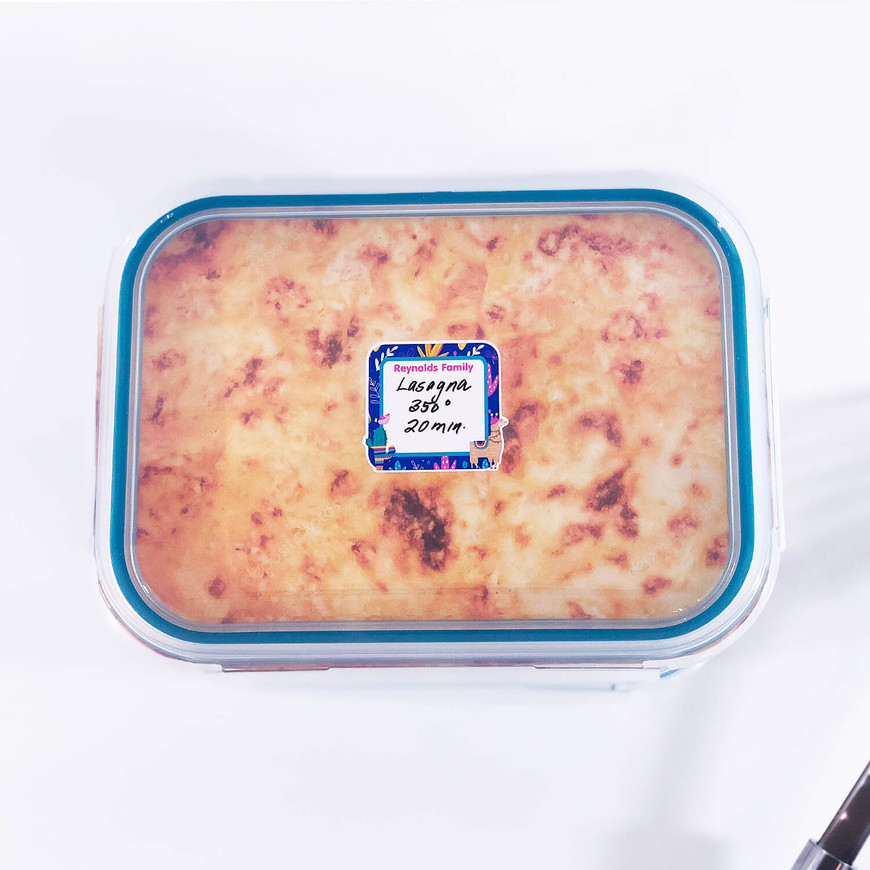
Everyone knows what a healthy dinner looks like in theory. Lean protein, whole grains, plenty of vegetables, something the whole family will actually eat. The gap between knowing this and achieving it five nights a week isn't usually a lack of recipes — it's a lack of system. Without a reliable organization approach, healthy intentions meet a Wednesday evening when nobody has energy and the fridge is a mystery.
This post covers the organization side of healthy family dinners: how to plan ahead, how to store and label what you cook so it actually gets used, and how to make leftovers work for you instead of building up as unidentified containers at the back of the fridge. The recipes are a bonus.
In This Article
From the founder of Sticky Monkey Labels
As a mom of three boys — including two with food allergies — and the founder of Sticky Monkey Labels, healthy family dinners are something I care about both personally and practically. The system that makes them happen consistently isn't just good recipes — it's good organization. Here's the approach that works in our house.
Plan Meals Ahead — The Fifteen-Minute Habit That Saves Hours
A weekly meal plan eliminates decision fatigue at the worst possible moment — 5:30pm on a Tuesday when everyone is tired and hungry and asking "what's for dinner." Fifteen minutes on a Saturday or Sunday planning the week's dinners pays back significantly in reduced stress and less food waste.
The planning approach that works best for busy families:
- Plan around what you already have. Check the fridge and pantry before planning — build meals around ingredients that need to be used rather than buying everything fresh each week.
- Build in intentional leftovers. If you're roasting chicken one night, make enough for chicken sandwiches or a salad the next day. A batch of soup covers two dinners. This is cooking once, eating twice — the most efficient healthy cooking strategy available.
- Plan for realistic weeknights. The week's most demanding workday is not the night to attempt a complex recipe. Match meal complexity to your actual schedule — one-pan meals and 30-minute recipes for busy evenings, more involved cooking for weekends when there's time.
- Use seasonal produce. Seasonal ingredients are fresher, cheaper, and more flavorful than out-of-season alternatives. A meal plan built around what's currently in season at your grocery store produces better dinners at lower cost.
The Leftover System That Actually Works
Leftovers are meal prep's most underused resource — already cooked, already seasoned, ready to become tomorrow's dinner or lunch. The reason they don't get used is almost never that the food isn't good. It's that unlabeled containers become a mystery zone. Nobody opens the container to check. The food sits until it has to be thrown away. That's wasted food, wasted money, and wasted cooking effort.
The system that makes leftovers reliable:
- Label immediately — not tomorrow, not after dinner, immediately. As soon as food goes into a container, the label goes on. Contents and date. This is the non-negotiable habit. Food labeled when it's packed stays identifiable and gets used. Food that "I'll label later" becomes the mystery container.
- Store components separately. Crispy elements stored in sauce go soggy. Dressing stored in salad wilts it. Leftover meals that keep their components separate maintain better texture and flavor when reheated or assembled again. A labeled container for the sauce, a labeled container for the protein, a separate container for the grain — each clearly identified, each reassembled fresh when needed.
- Stack in freshness order. Most recently made at the back, oldest at the front. This prevents the situation where a newer container gets grabbed first while an older one quietly passes its use-by date behind it.
- Label freezer portions with date and contents. Batch-cooked soups, sauces, and casseroles that go straight to the freezer need the same treatment — contents and date. A well-labeled freezer is a resource you actually use. An unlabeled one is a repository of mystery items that never get touched.
Which Labels for Which Food Storage Use
The right label for food storage is one that survives every environment food containers encounter — fridge, freezer, microwave, and dishwasher — and can be updated when the container is repurposed for something new. Our write-on labels are designed specifically for this.
Write-On Labels — For All Food Storage Containers
Apply to the container once — the label stays permanently adhered. Write contents and date with our tested semi-permanent marker. When the container is washed and used for something new, the writing wipes off with water and you write again. No replacing labels, no residue, no mystery containers.
- Refrigerator and freezer safe
- Dishwasher safe (top rack)
- Microwave safe
- Rewritable with our tested semi-permanent marker
Color-Coded Labels for Multi-Person Households
For households where multiple people's meals are stored simultaneously — different family members' meal-prepped lunches, specific portions for specific people — color coding by person adds a visual identification layer. Our write-on labels are available in a range of colors, making it straightforward to assign a color per person and make the right container instantly identifiable without reading.
Dinner Organization for Families Managing Food Allergies
For families with food allergies — and with two sons with food allergies, this is personal for me — dinner organization isn't just about efficiency. It's about safety. A clearly labeled container that identifies not just "leftover chicken" but "leftover chicken — no dairy sauce" is the difference between a safe meal and an accidental exposure.
A few practices that matter specifically for allergy households:
- Label allergen status on all stored food. Not just contents and date — also what the food does or doesn't contain if it matters for your family. A write-on label with space to add this note takes seconds.
- Store allergen-free meals separately and clearly labeled. When one family member's food needs to be kept strictly separate from others', clear labeling and physical separation in the fridge reduces the risk of accidental cross-use.
- Label lunchboxes and school food with allergy information. Packed lunches for children with food allergies should carry an allergy alert label on the container and the bag — visible to any adult at a glance. Our allergy labels are designed specifically for this.
Quick Healthy Dinner Ideas to Build the System Around
The organizational system works best when built around meals that produce good leftovers and lend themselves to component-based storage. A few of our family favorites that tick both boxes:
Sheet-Pan Chicken with Sweet Potatoes
Chicken thighs, sweet potatoes, and broccoli on one pan with olive oil, garlic, and paprika at 400°F for 25-30 minutes. Everything on one pan, minimal cleanup, excellent reheated the next day.
White Bean and Spinach Orzo
Sauté garlic and onion, add vegetable broth, orzo, and canned white beans. Fold in fresh spinach at the end. Finish with lemon juice and Parmesan. Ready in under 25 minutes, stores well.
Chickpea and Kale Soup
Chickpeas, kale, garlic, veggie broth, and smoked paprika. Make a large batch — it freezes well in individual labeled portions and improves with a day in the fridge.
Enchilada Skillet with Beans
Black beans, diced tomatoes, corn, and enchilada sauce in one pan. Top with cheese and tortilla strips. No oven needed, ready in 20 minutes, leftovers are equally good the next day.
Broccoli Pesto Pasta
Blend steamed broccoli, garlic, olive oil, and Parmesan into a pesto sauce. Toss with whole-wheat or chickpea pasta. Store sauce and pasta separately so the pasta doesn't absorb everything overnight.
Stuffed Butternut Squash
Roasted butternut squash halves filled with sautéed spinach, caramelized onion, and Parmesan. Makes an impressive dinner with minimal effort, and the filling can be prepped ahead and stored separately.
All of these are candidates for intentional leftover production — make a double batch, label the extras clearly with contents and date, and Wednesday's dinner is already handled. Browse our full range of write-on labels for food storage at Sticky Monkey Labels.
Frequently Asked Questions
What's the best way to store leftover dinner?
Airtight containers, labeled immediately with contents and date, stored in the fridge with the oldest at the front and newest at the back. For meals with sauces or dressings, store components separately so textures hold better. Write-on labels that wipe clean in the dishwasher and can be rewritten are the most practical labeling solution for food storage containers.
How long do healthy dinner leftovers keep in the fridge?
Most cooked proteins and grain-based dishes keep safely for three to four days in an airtight container in the fridge. Soups and stews generally keep four to five days. The date label is what makes this trackable — food that's been in the fridge since Monday is clearly identifiable when it's Thursday, which prevents the "is this still okay?" guessing game that leads to food waste.
What labels work for freezer storage?
Our write-on labels are explicitly freezer-safe — the adhesive holds at freezer temperatures and the writing remains legible. Apply to containers before freezing, write the contents and date, and the label stays readable for the duration of freezer storage. The writing wipes off with water when the container is thawed and washed, so the same label is ready for the next batch.
How do I organize dinner for a family with food allergies?
Label all stored food with allergen status alongside contents and date. Store allergen-free portions in clearly labeled, physically separate containers. For children's packed lunches, add an allergy alert label to the lunchbox exterior and bag — visible to any adult handling the food, not just the person who packed it. Our allergy labels are waterproof, dishwasher-safe, and designed for exactly this use.