
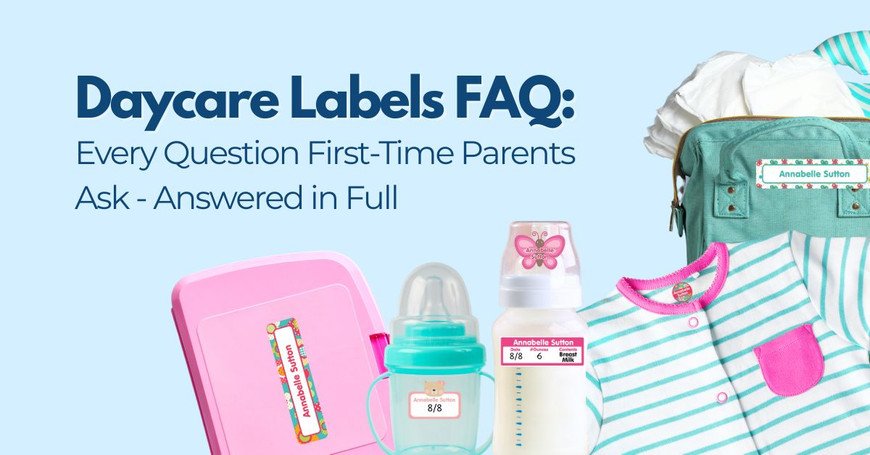
The week before your child's first day of daycare, the questions start piling up. What exactly needs to be labeled? What goes on the label? Does every bottle need a label or just some of them? What about the lid? What kind of label survives a dishwasher? Can I use a regular sticker?
These are good questions, and most parents figure out the answers the hard way — by arriving on day one with something labeled incorrectly, something missing a label entirely, or the wrong type of label on the wrong surface. The daycare provider catches it and sends a note home. You redo it that evening.
This post answers every question first-time daycare parents ask about labels — in one place, before day one. What to label, which label type goes on which surface, what information providers need to see, why the lid is always a separate label, and what parents consistently get wrong before the first drop-off.
From the founder of Sticky Monkey Labels
I'm Dodie — founder of Sticky Monkey Labels, a boy mom to three sons, and 15 years in business since 2011. Daycare label questions are some of the most common calls we get — almost always from parents who are a few days out from the first drop-off and trying to get everything right. This is the post I'd send them before they called.
Questions answered in this guide
- What exactly needs to be labeled for daycare?
- Which type of label goes on which item?
- What information goes on a daycare label?
- Does the lid need its own label?
- Do labels survive the dishwasher and bottle sterilizer?
- What about clothing labels for daycare?
- My bottles are silicone. What do I do?
- What's the write-on label for and what do I write with?
- What mistakes do first-time daycare parents make with labels?
- How many labels do I actually need?
- More frequently asked questions
1. What Exactly Needs to Be Labeled for Daycare?
Everything that leaves your house with your child needs a label. That's the simplest version of the rule — and the most accurate one. In a daycare room with multiple children, shared spaces, communal cubbies, and providers moving fast through mealtime and activity transitions, an unlabeled item has no reliable path back to the right child.
Bottles and feeding items
- Every baby bottle — body and lid separately
- Every sippy cup or transition cup — body and lid separately
- Breast milk storage bags — one label per bag
- Formula containers sent to daycare
- Pacifiers and pacifier clips
Food containers and mealtime items
- Lunchbox or insulated meal bag — outside and inside
- Every snack container — body and lid separately
- Food jars and puree containers — body and lid separately
- Ice pack
- Utensil case or cutlery pouch
Clothing, shoes, and bags
- Daycare bag or backpack
- Every item of clothing sent — including the change of clothes most daycares require
- Every sock — both individually
- Shoes — both shoes of every pair
- Jackets and outerwear
- Blanket and nap mat
2. Which Type of Label Goes on Which Item?
There are two distinct label types for daycare and they are not interchangeable. Using the wrong type on the wrong surface is the most common cause of labels that peel immediately.
Waterproof labels — for all hard surfaces
Bottles, sippy cups, food containers, lunchboxes, the daycare bag, pacifiers, and any smooth hard surface. These use a pressure-sensitive adhesive that bonds to smooth, stable surfaces. They are dishwasher safe and sterilizer safe when applied correctly to a prepared surface. Not for fabric of any kind.
Iron-on clothing labels — for socks, underwear, and tagless fabric items
Socks, onesies without usable care tags, underwear, and any tagless clothing item. Heat-activated adhesive that bonds permanently into fabric fibers. The only option for fabric items with no care tag. Not for hard surfaces.
Stick-on clothing labels — for care tags and tagless imprints
Everyday daycare outfits with accessible care tags. Peel and press onto the care tag or the largest flat area of a tagless imprint — not directly onto fabric. Holds through home laundry. Also works on some hard surfaces. Not for commercial washers, dryers, or dry cleaning. Not for socks, underwear, or direct application to fabric.
3. What Information Goes on a Daycare Label?
The required information varies by facility, age group, and state regulations. The core requirements that appear at almost every licensed facility are consistent.
Standard information for bottle and food container labels
- Child's full name — first and last. First name only isn't sufficient when multiple children in the same room share a first name.
- Date — when the bottle or food was prepared. Required for food safety rotation.
- Contents — breast milk, formula type, or food contents. Essential in rooms where children have allergies or dietary restrictions.
- Volume / ounces — how much is in the bottle. Helps providers feed the right amount and track intake.
4. Does the Lid Need Its Own Label?
Yes. Always. Label the bottle body and the lid as two separate items — every time, every bottle, every food container.
Lids detach from their containers constantly — in the dishwasher at home, during washing at daycare, and during the mealtime rush when providers are opening multiple children's containers at the same time. An unlabeled lid that separates from a labeled bottle has no identification. It lands in a pile with other lids and gets matched to the nearest available bottle — which may belong to a different child.
5. Do Labels Survive the Dishwasher and Bottle Sterilizer?
Yes — our waterproof labels are designed to survive home dishwasher and bottle sterilizer use, and they last for years when applied correctly. Daycares do not wash bottles for you. You take bottles home each evening, wash them, and send them back the next morning. Our labels handle nightly home dishwasher and sterilizer use through the entire daycare period.
What determines how long labels last is the application — not the label itself.
The two steps that determine label longevity
- Clean the surface with alcohol before applying. Every bottle surface — even brand new — has manufacturing oils or hand oils that prevent adhesion. Wipe with alcohol, let dry completely, then apply. This is the step most parents skip and the most common cause of early peeling.
- Allow 24 hours before the first dishwasher or sterilizer run. The adhesive continues curing after application. Label bottles at least a day before first use — not the morning they go to daycare for the first time.
6. What About Clothing Labels for Daycare?
Most daycares require a full labeled change of clothes in the bag every day — shirt, pants, socks, and sometimes shoes. All of it needs to be labeled before the first drop-off.
Which clothing label for which item
- Socks: Iron-on only, inside the cuff of each individual sock. No care tag exists on socks — stick-on has nothing to bond to. Open each sock to a single flat layer on the firm section of the ironing board before applying.
- Onesies and clothing with accessible care tags: Stick-on clothing label on the care tag, or iron-on for longer-lasting performance. Stick-on works well for frequently outgrown infant sizes.
- Tagless clothing: Stick-on on the largest flat area of the tagless imprint, or iron-on into the fabric for a more permanent bond.
- Shoes: Shoe labels inside the heel — both shoes of every pair. Not standard waterproof labels — use shoe labels specifically, which include a clear overlay that goes over the name label to protect it from heel friction.
Browse our clothing labels and our daycare label packs — you need both types. Waterproof labels cover bottles and gear. Clothing labels cover the daily outfits and shoes.
7. My Bottles Are Silicone. What Do I Do?
Silicone is a non-stick surface by nature — nothing adheres to it reliably, including adhesive labels. This is the same property that makes silicone bakeware release food so easily. No label will bond to a silicone bottle body regardless of how carefully it's applied.
The solution is the plastic nipple ring. Every silicone bottle has a hard plastic collar at the top that holds the nipple in place. That ring is a smooth, stable surface that bonds well to waterproof labels. Apply your label there — on the outside of the plastic ring, as high as possible so it's visible during feeding.
8. What's the Write-On Label For and What Do I Write With?
Our bottle and food container labels have your child's name pre-printed — you never write the name by hand. The write-on area is for the daily information that changes with every feeding: date, ounces, contents. You fill in the write-on fields each morning and wipe them off before washing each night.
Wax pencil — add-on for bottles and wet surfaces
The wax pencil is an optional add-on at checkout — not included automatically. Write and go. Do not rub what you've written or it will smear. Once set, it's waterproof. Best choice for anything going through the dishwasher or sterilizer nightly.
Semi-permanent marker — add-on for bags, folders, and dry items
Also an optional add-on at checkout. Works on name labels, bags, folders, school supplies, and dry surfaces. Many parents also prefer it for bottle labels. Lasts longer than a standard marker on label surfaces. Both add-ons are available at checkout — many families order both.
9. What Mistakes Do First-Time Daycare Parents Make With Labels?
After 15 years of helping families prepare for the first drop-off, these are the mistakes that come up most consistently.
Not labeling the lid separately
The most common mistake. Every container needs a body label and a lid label. Separately. The lid will separate — label it before day one.
Skipping the alcohol prep step
Applying waterproof labels without cleaning the surface first. Hand oils and manufacturing residue prevent adhesion. Clean with alcohol every time on every surface before applying.
Washing before the 24-hour cure time
Labeling bottles the morning of the first drop-off and then washing them that night. The adhesive needs 24 hours to cure before the first wash. Label the weekend before — not the morning of.
Trying to label silicone bottle bodies
Nothing sticks to silicone. Use the hard plastic nipple ring instead — every time, for every silicone-bodied bottle.
Ordering only bottle labels and forgetting clothing labels
Daycare requires a labeled change of clothes every day. Parents who only order waterproof labels arrive on day one without labeled clothing. Order both before the first drop-off.
Placing labels in the middle or bottom of the bottle
Labels go at the top of the bottle, nearest the nipple ring — where they're visible during feeding and away from the base where the bottle sits in wet surfaces. Never the middle or bottom.
Using waterproof stickers on clothing
Waterproof labels are not for fabric. They peel immediately when applied directly to clothing. Use clothing labels — iron-on or stick-on — for all fabric items.
10. How Many Labels Do I Actually Need?
More than you think — because every container counts twice (body and lid), and you need clothing labels on top of waterproof labels. Here's a practical estimate for a typical first-month setup.
Estimating your count
- Bottles sent daily × 2 (body + lid each) = minimum bottle label count
- Add backup or spare bottles × 2 each
- Food containers × 2 each (body + lid)
- Daycare bag, lunchbox, ice pack = 3–5 more waterproof labels
- Clothing labels: one per clothing item, one per individual sock, one per shoe
- Add 20% across both types for replacements as items are added or replaced
Our daycare label packs are built to cover the standard first drop-off setup — waterproof labels for bottles and gear. Add a set of clothing labels for the daily outfits and shoes. Questions about which pack covers your specific setup? Call us at 1-888-780-7734.
More Frequently Asked Questions
My daycare says labels must be changed daily because of date requirements. How does that work?
Our write-on labels are designed for this. The label stays on the bottle permanently — the name is already printed, and the label doesn't get replaced. The date, ounces, and contents are written each morning in the write-on area with the wax pencil. Before washing each evening, wipe the written information off — the label stays, the day's information comes off, the write-on surface is clean for the next morning. You're not replacing the label daily. You're refreshing the daily information on a permanent label.
Can I write on the bottle with a permanent marker instead of using labels?
You can, but it won't last. Permanent marker on plastic or stainless steel fades within a few dishwasher or sterilizer runs — sometimes within the first wash. By the time you're a month into daycare, a marker name written at the start is often illegible. A waterproof label applied correctly to a prepared surface lasts for years. The provider also needs to read it reliably every day — not just on day one.
Does daycare wash my child's bottles for me?
Typcially no — most daycares do not wash bottles. You bring clean bottles every morning and take them home each evening to wash. This is why the label needs to survive home dishwasher and sterilizer use nightly — that's the washing environment the label faces, not a commercial facility machine.
My child has a food allergy. Do I need special labels?
Yes — in addition to standard name and date labels, use a dedicated allergy label on the exterior of the daycare bag and every bottle or food container. The allergy label should name the specific allergen — "PEANUT ALLERGY" not just "ALLERGY" — so providers can act correctly without asking a follow-up question during a busy mealtime. Always pair physical labels with written allergy documentation submitted to the daycare director before the first day.
How early should I order labels before the first drop-off?
We ship all orders within 1–2 business days. Order at least a week before the first drop-off — you need shipping time, time to apply labels correctly, and 24 hours of cure time before the first dishwasher run. Labels applied and immediately washed haven't finished curing. The weekend before the first day is ideal: order midweek, labels arrive Thursday or Friday, apply over the weekend, first drop-off Monday with fully cured labels.
My child is starting daycare and I have no idea where to start. What should I order?
Start with two things: a daycare label pack (waterproof labels for bottles and gear) and a clothing label set (for the daily outfits and shoes). If your child is in an infant room, also add the wax pencil for daily bottle write-on. If your child has food allergies, add allergy labels. Everything else — sippy cup labels as they transition, additional bottle labels as bottles are replaced — can be added as you go. The core order covers everything you need for day one. Call us at 1-888-780-7734 if you want to talk through your specific setup — we'll get you sorted quickly.