
From the founder of Sticky Monkey Labels
I'm Dodie — mom of three boys, two with food allergies and one with special needs, and founder of Sticky Monkey Labels. I'm now in my 15th year of business, which started in 2011. I design and test every label with real family life in mind — bottles, warmers, dishwashers, laundry, backpacks, and all — because daycare labeling isn't just about being organized. It's about safety, saving money, and making sure your child's day runs smoothly. I personally care about every order that leaves my shop, because behind every name is a real kid and a real parent who just wants things to be easier.
Transitioning your child to daycare is one of the biggest milestones in early parenthood — a mix of excitement for their new social world and real anxiety about the logistics. One of the fastest ways to reduce that new-parent stress is to get organized with personalized daycare labels before that first Monday morning arrives.
In a busy daycare room, baby bottles, boutique jackets, and hand-prepared purées can easily vanish into the lost-and-found — or get mixed up with another child's gear. This checklist walks you through every category that needs labeling, from bottles to solids to clothing and safety, so nothing gets left behind.
What's Covered in This Guide
1. Baby Bottle Labeling: Safety First
For infants, labeling isn't just about getting your bottle back — it's a critical safety requirement. Most licensed daycare centers must follow strict state health guidelines to prevent cross-contamination and ensure every baby receives the correct nutrition.
Key daycare bottle labeling requirements
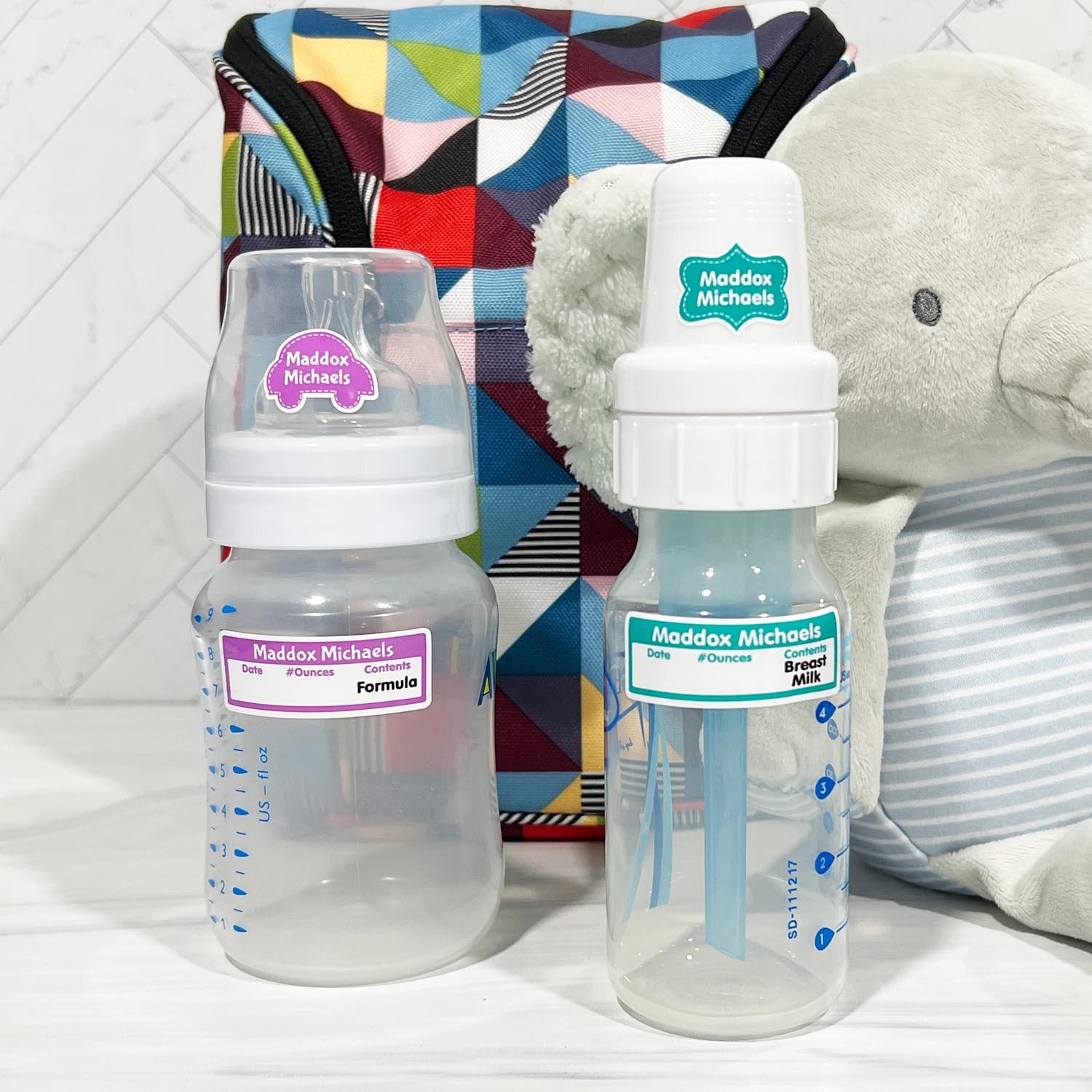
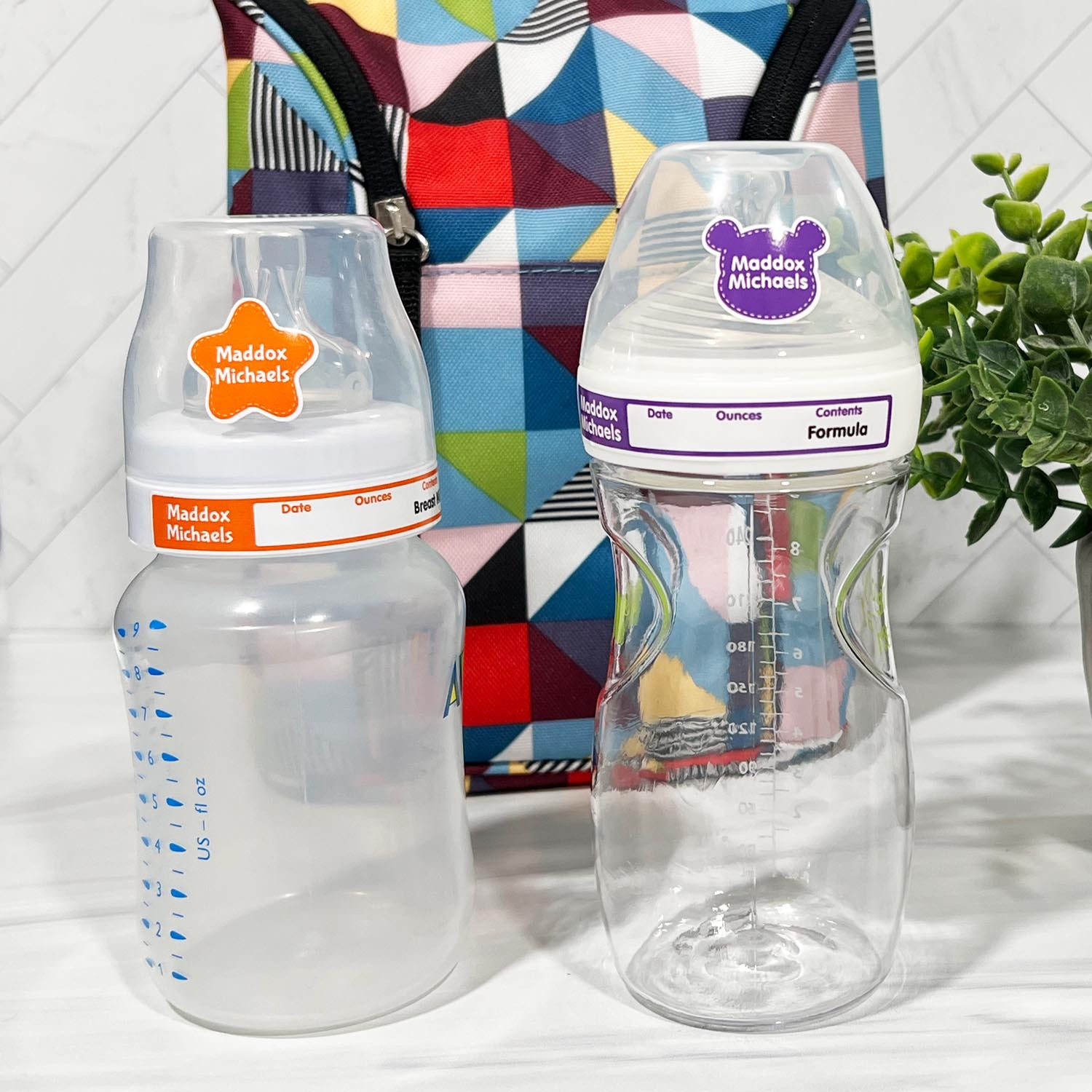
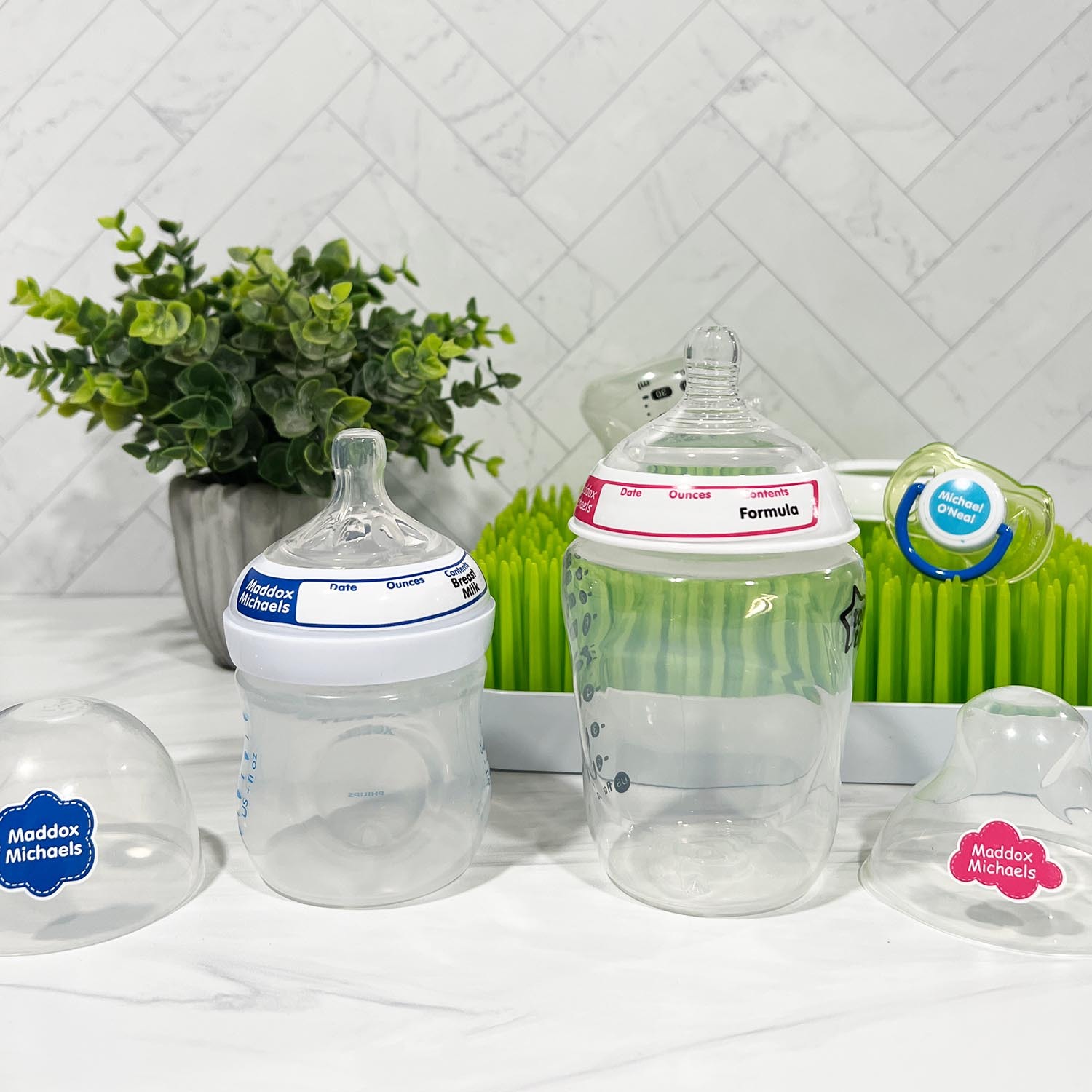
Your baby bottle labels for daycare should clearly display:
- Child's full name — quick identification for busy caregivers managing multiple infants simultaneously
- Date prepared — for freshness tracking and safe handling under the 24-hour rule
- Contents — breast milk vs. formula, clearly marked for nutritional and allergy protocols
- Volume and ounces — helps staff track intake and ensure correct feeding amounts
Some of Our Most Popular Baby Bottle Labels
The problem with DIY methods
Masking tape and permanent markers are the most common first-day mistakes. Masking tape peels off in bottle warmers, leaves sticky residue that traps grime, and harbors bacteria. Permanent markers smudge during sanitizing cycles and eventually ghost onto the plastic, making it impossible to read a new date over the old one.
Instead use dishwasher safe baby bottle labels for daycare specifically rated for heat, moisture, and daily handling. If your daycare uses a warmer or sanitizes frequently, confirm the labels are rated as sterilizer safe and bottle warmer safe — not just "waterproof" in general terms.
Silicone bottle placement tip — Comotomo and Boon Nursh
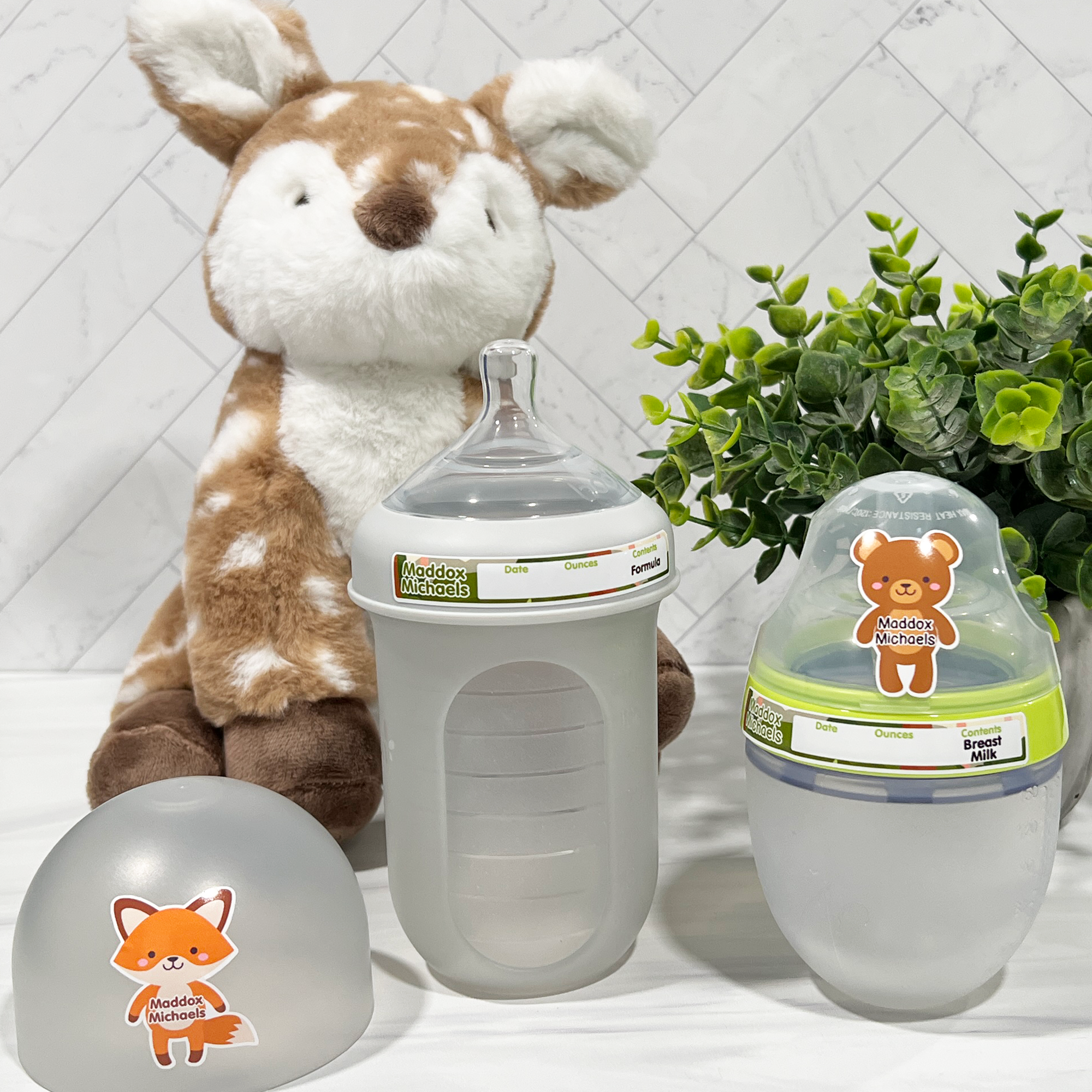
If you use silicone bottles like Comotomo or Boon Nursh, standard adhesives won't stick to the silicone body — nothing does reliably. Apply a slim rim daycare bottle label directly to the hard plastic nipple ring instead. This placement bonds permanently through repeated washing and sanitizing, without the bulk or hygiene risks of silicone bands that can trap moisture underneath.
2. Transitioning to Solids: Labeling Food Containers
When your baby starts solids, the labeling shifts from identical bottles to a variety of bento boxes, snack cups, and reusable food pouches — each needing its own clear identification.
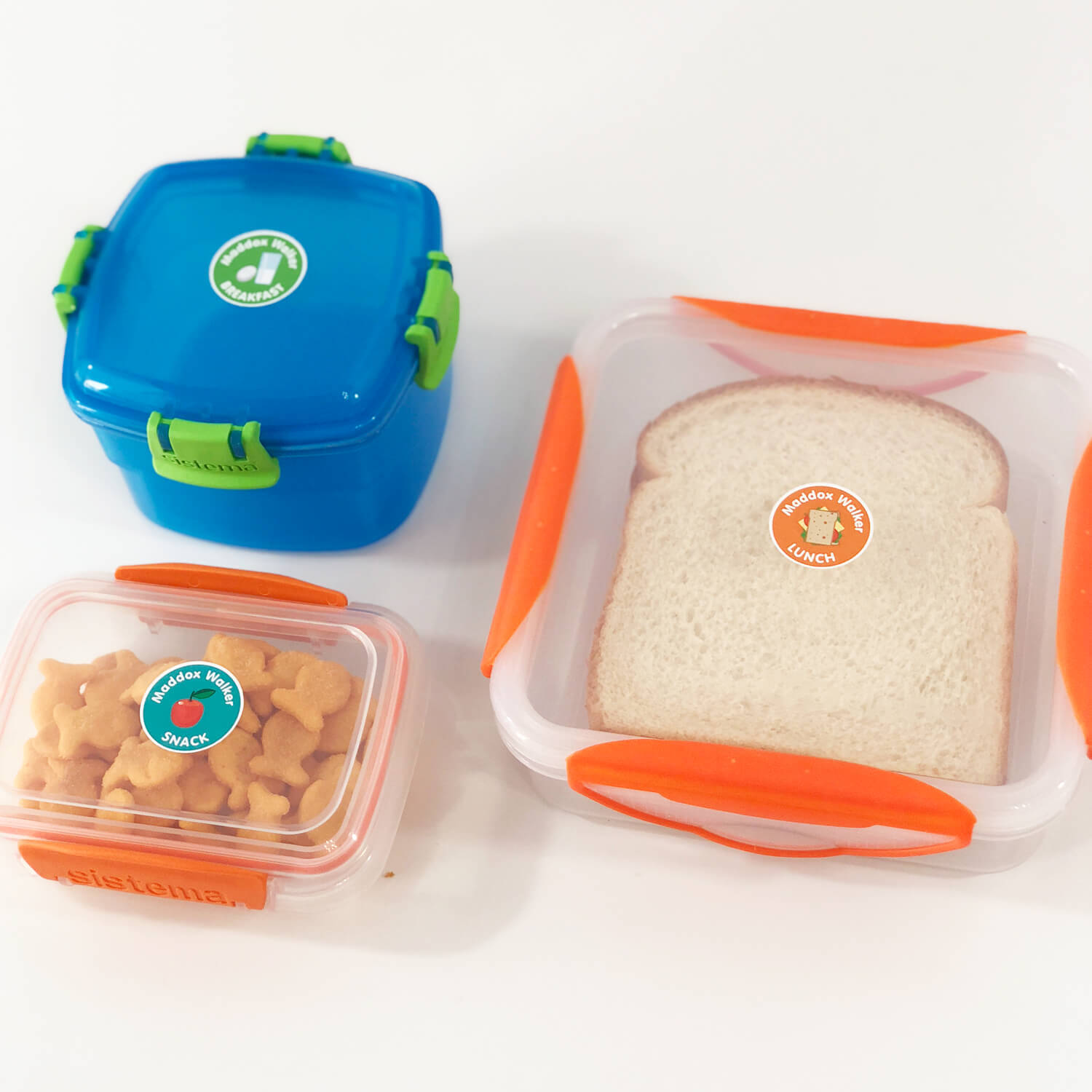
The mealtime identification strategy. Caregivers manage dozens of meals a day across multiple children. Using mealtime labels — "AM Snack," "Lunch," and "PM Snack" — tells your child's teacher exactly what to serve and when, without guesswork or asking you at drop-off. Our snack and lunch labels are pre-marked for each meal time so this takes no extra work on your end.
- Allergy alerts. If your child has a food allergy, high-visibility allergy labels for daycare containers are non-negotiable. Place an allergy alert label on the lid of every container — visible before anyone opens it, regardless of who is supervising that day.
- Durability. Between pureed carrots, oily pasta, and constant scrubbing, you need dishwasher safe food container labels that won't fade or peel. Label both the container and the lid separately — lids and containers routinely get separated.
3. Clothing and Gear: The Lost-and-Found Prevention Plan
Clothing is the number one item that gets lost at daycare. From spare socks to winter coats, every fabric item that leaves the house needs a name on it.
Iron-on vs. stick-on clothing labels — both have their place
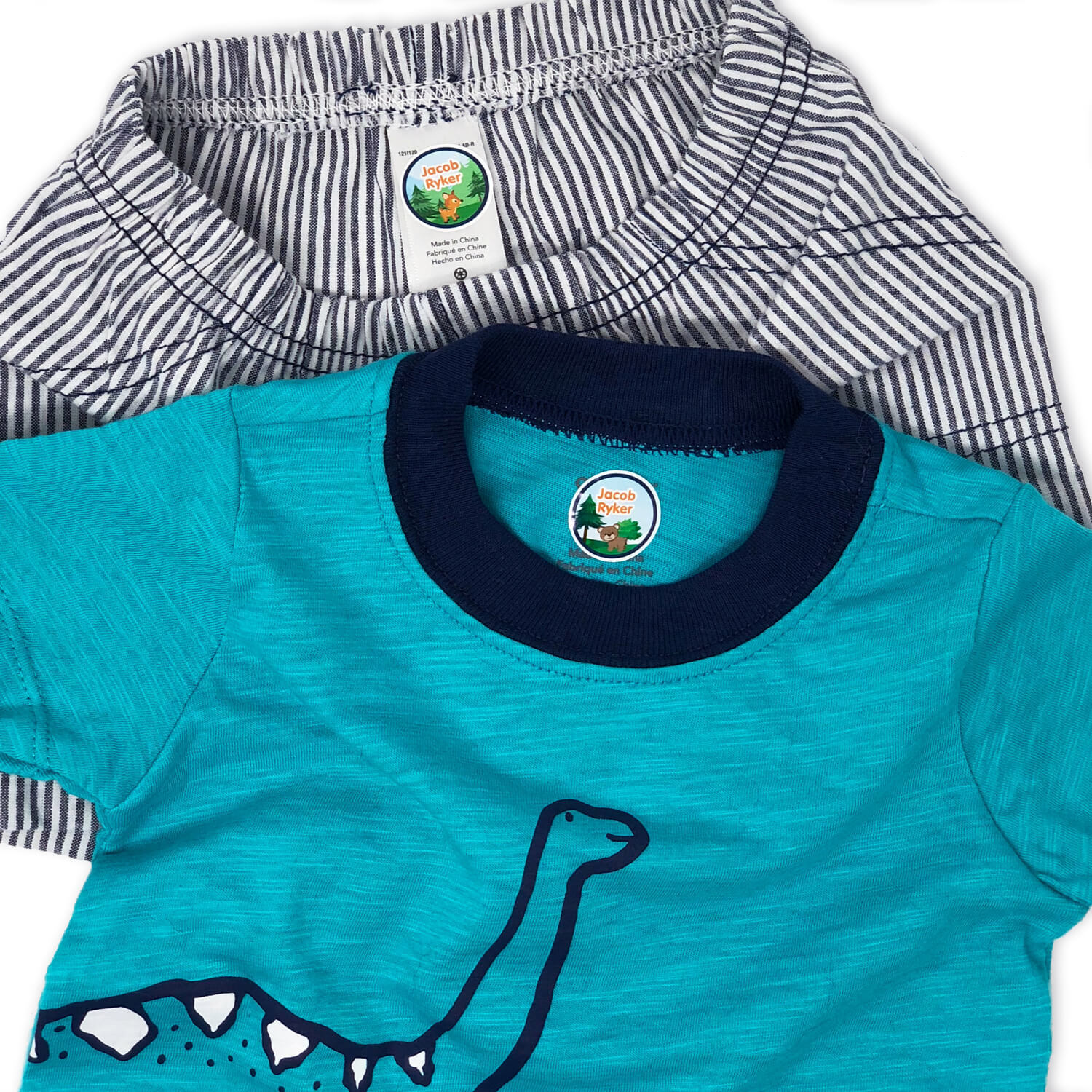
- No-iron stick-on clothing labels — peel and apply to the care tag or tagless label imprint. No iron required. Laundry safe through repeated washing and drying. Best for jackets, shirts, pants, hats, and any item with a care tag where quick application matters. Also works on containers, water bottles, and school supplies — dishwasher safe and outdoor resistant.
- Permanent iron-on labels — bond directly into fabric fibers, stay soft against skin, and are made to last the life of the garment. Ideal for items without usable care tags: blankets, socks, loveys, sleep sacks, and hats. Completely flat when applied — no raised edges — which makes them the right choice for sensory-sensitive children.
Don't forget shoes — toddlers take them off
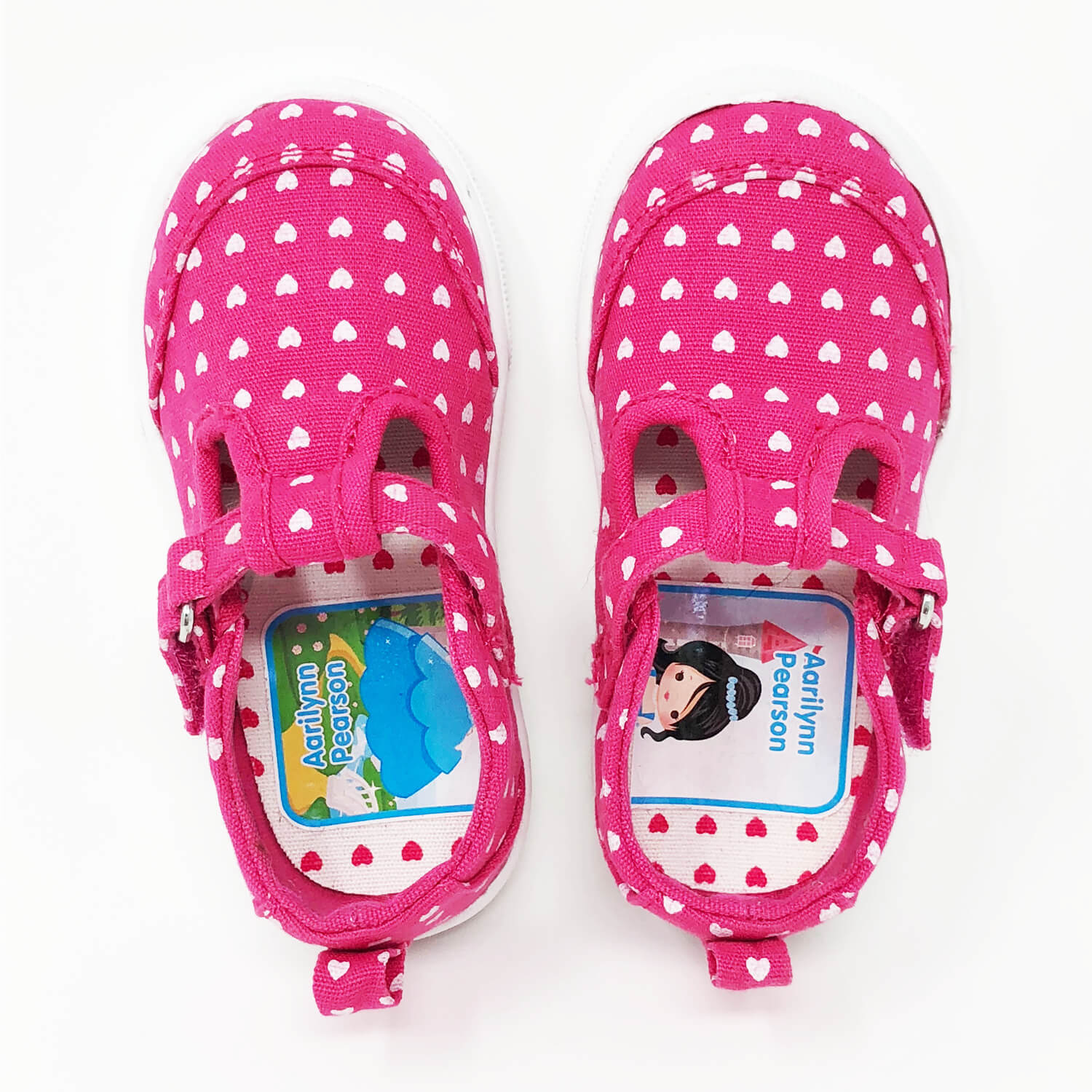
Kids remove shoes for nap time and indoor play, and a pile of 15 pairs of similar toddler shoes is a recipe for mix-ups. Use shoe labels for toddlers on the heel or insole to keep pairs identified and together.
- Heel-shape labels help the right pair make it home every day.
- Left and right shoe labels help toddlers build independence by self-correcting which shoe goes on which foot — reducing the number of times a caregiver has to intervene to fix shoes during a busy day.
4. The Complete 2026 Daycare Labeling Checklist
Use this checklist to make sure nothing goes to daycare unlabeled on that first Monday morning:
Bottles (4–6)
Sterilizer safe bottle labels on the bottle body and on the cap. Label the cap separately — caps are the most commonly swapped item in a daycare kitchen.
Spare outfits (2–3 sets)
Every shirt, pant, and sock tagged with no-iron clothing labels on the care tag or tagless imprint, or iron-on labels for items without usable tags.
Food containers, bento boxes, and lids
Dishwasher safe food container labels on both the container and the lid separately. Add mealtime labels — AM Snack, Lunch, PM Snack — so caregivers always know what's for when.
Reusable pouches and snack cups
Waterproof name stickers that handle daily washing. Sippy cups and straw cups need dishwasher safe labels that survive drops, scrubbing, and sterilizing.
Comfort items — blankets and sleep sacks
Permanent iron-on labels that bond into fabric and survive the heavy washing comfort items go through.
Outerwear — jackets, hats, and mittens
Label the inner lining where it's visible when the item is picked up. Iron-on for items without usable tags, stick-on for those with care tags. Double-label jackets — collar and inside pocket — since they're the highest-value lost item.
Shoes
Left and right shoe labels or heel-shape identification labels. Kids remove shoes for nap time — labeled pairs stay together and come home correctly.
Personal care items
Diaper cream tubes, sunscreen bottles, spare pacifiers. Small items that look identical across 15 children and get mixed up constantly without identification.
Safety labels — bags and outerwear
Emergency contact labels on the diaper bag, backpack, and key outerwear items. If your child has food allergies, allergy alert labels on the exterior of the bag — visible before anyone opens a single container.
For the best value, start with a personalized daycare label pack that covers bottles, containers, and clothing — so you're set from day one through solids and beyond. Questions about which label fits your specific bottles or situation? Call us at 1-888-780-7734 — after 15 years of helping families with this, I can usually answer in about two minutes.
Frequently Asked Questions
Do I really need to label the bottle caps?
Yes — caps are the most frequently swapped item in a daycare kitchen. A small daycare name label on the cap prevents cross-contamination and ensures the right lid goes on the right bottle throughout the day.
Will waterproof labels really stay on in a sterilizer?
Standard stickers won't — sterilizers run at temperatures that destroy most adhesives. Look for waterproof name labels for daycare specifically rated as sterilizer safe and bottle warmer safe. "Waterproof" in general terms doesn't guarantee survival in high-heat sterilizer environments — check the product specifications.
Can I use a regular Sharpie on the labels?
You can, but ink from a standard Sharpie fades over time and can smear in wet conditions. For best results on bottle labels, use our wax pencil — it's completely waterproof, stays legible through warmers and refrigeration, and wipes clean with a dry cloth when you're ready to update the date. Our semi-permanent marker works well for dry items like snack containers and daycare folders. Both can be added to your order.
What are the best labels for tagless clothing?
Use no-iron clothing labels designed to adhere to the tagless label imprint — the flat printed area on the inside of tagless garments. Make sure the surface is clean, dry, and lint-free before applying. These are laundry safe and survive repeated washing without ironing required.
Should I label the lid of food containers separately from the container?
Yes — always label both separately. Lids and containers routinely get separated in daycare meal service and washing. A labeled container with an unlabeled lid means the lid doesn't make it home, and vice versa. Label both with the same name label so staff can match them up even when they end up on different sides of the kitchen.
What's the most important label for a child with food allergies at daycare?
The allergy alert label on the exterior of the lunch bag or diaper bag — visible to any adult before they open a single container. Place it where it's seen immediately when the bag is picked up, not tucked inside where it's only visible after the bag is already open. This is a safety layer that operates independently of who is supervising that day — including substitutes who haven't been briefed on individual children's allergies. Always pair physical labels with a written allergy action plan on file with the daycare administration.