
From the founder of Sticky Monkey Labels
I'm Dodie — mom of three boys, two with food allergies and one with special needs, and founder of Sticky Monkey Labels since 2011. I started this business because I needed clothing labels that actually worked — not labels that looked great in September and were peeling by October. Everything in this guide comes from 14 years of real family experience and thousands of conversations with parents, teachers, and daycare providers.
It's Monday morning. Your child needs their favorite hoodie for school, but it's nowhere to be found. The school lost-and-found is overflowing with unlabeled clothing that all looks the same — and you have no way to prove which jacket is yours. Sound familiar?
The average family replaces dozens of items each school year because they can't prove ownership at the lost-and-found. Clothing labels for kids solve this — permanently, cost-effectively, and with less morning chaos. Here's everything you need to know to choose the right label, apply it correctly, and make it last.
What's Covered in This Guide
- Iron-on vs. stick-on vs. initial dot labels — which is best
- Real-life scenarios: school, daycare, camp, and special needs
- Customization options for personalized name labels
- How to apply clothing labels correctly
- Best placement locations for every item
- Durability and care instructions
- The cost analysis — what labels actually save you
- How to build a labeling routine that sticks
- Frequently asked questions
Iron-On vs. Stick-On vs. Initial Dot Labels: Which Is Best?
Not all clothing labels are created equal. The right choice depends on the item, the fabric, and how permanently you need the label to hold. Here's what you need to know about each type.
Iron-on clothing labels — the permanent solution
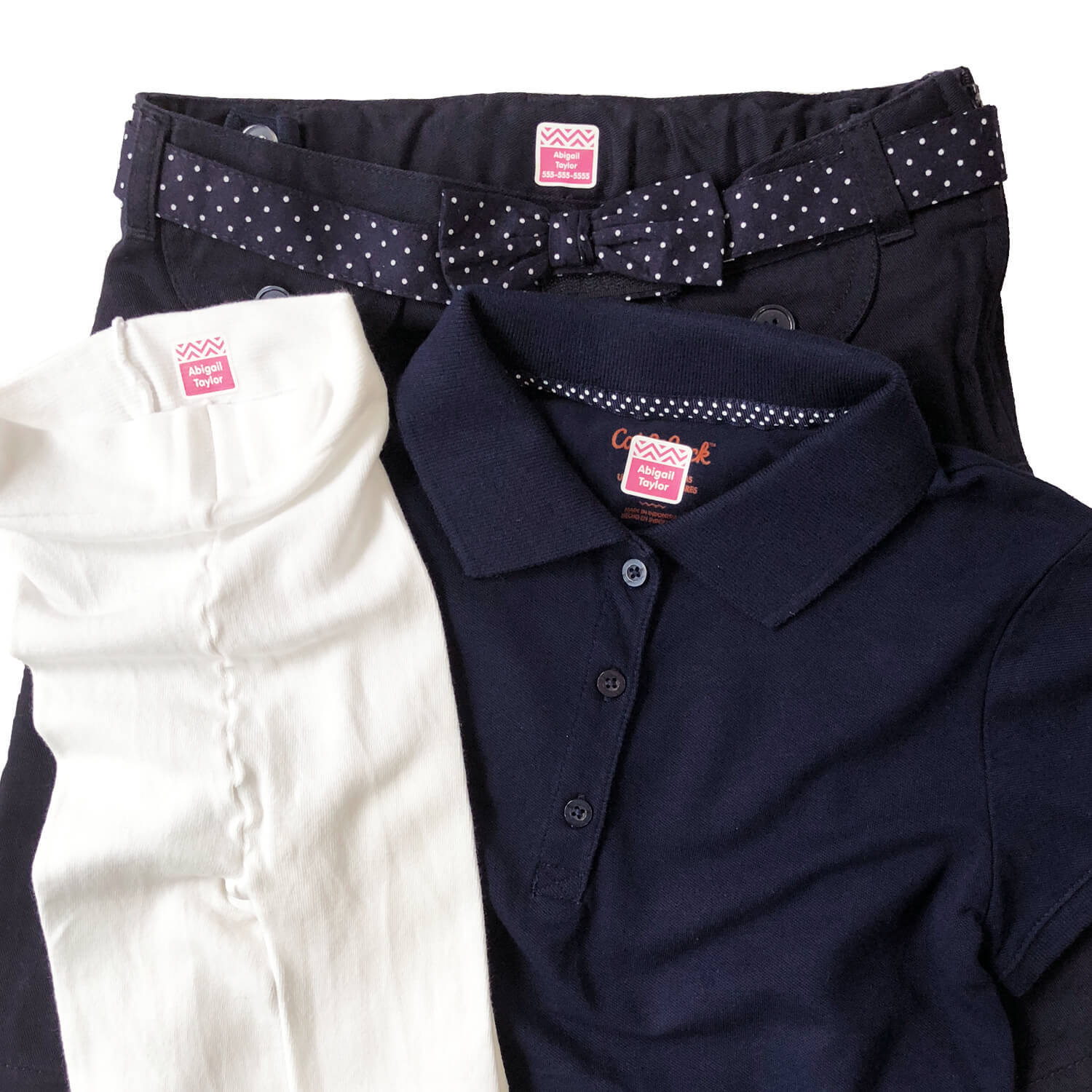
Iron-on clothing labels use heat to bond with fabric fibers, creating a permanent attachment that survives the life of the garment. They are the right choice whenever you need labeling that genuinely won't come off.
Best for:
- School uniforms and everyday clothing
- Items that go through frequent, hot washing
- Clothing for camp or overnight stays
- Sports uniforms and athletic wear
- Hand-me-downs — stays put through multiple children
- Items you want labeled permanently without re-checking
Why iron-on labels are the gold standard: Extremely durable, laundry safe through hot water and high-heat drying, won't peel or fade, and leave no residue when the garment eventually wears out. The label outlasts the clothing.
Stick-on clothing labels — the flexible solution
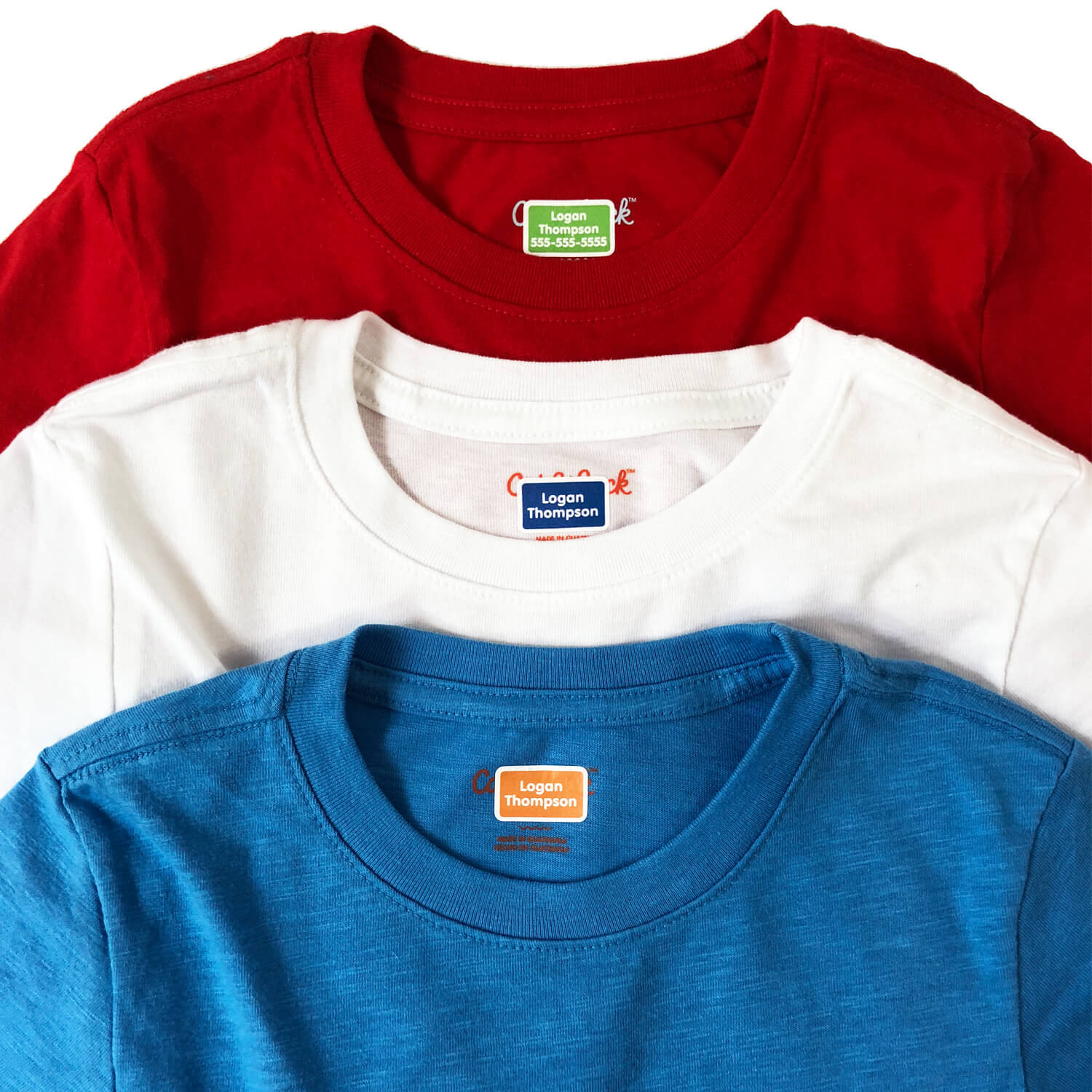
Stick-on clothing labels apply without heat — peel and place on the care tag or tagless label imprint. No iron required.
Best for:
- Quick labeling when you're in a rush
- Delicate fabrics that can't handle heat
- Care tags and tagless label imprints
- Items you might want to relabel later
- Rental or borrowed clothing
- Also dishwasher safe, microwave safe, and outdoor resistant — works on lunch containers, water bottles, and school supplies too
Initial dot labels — the subtle solution
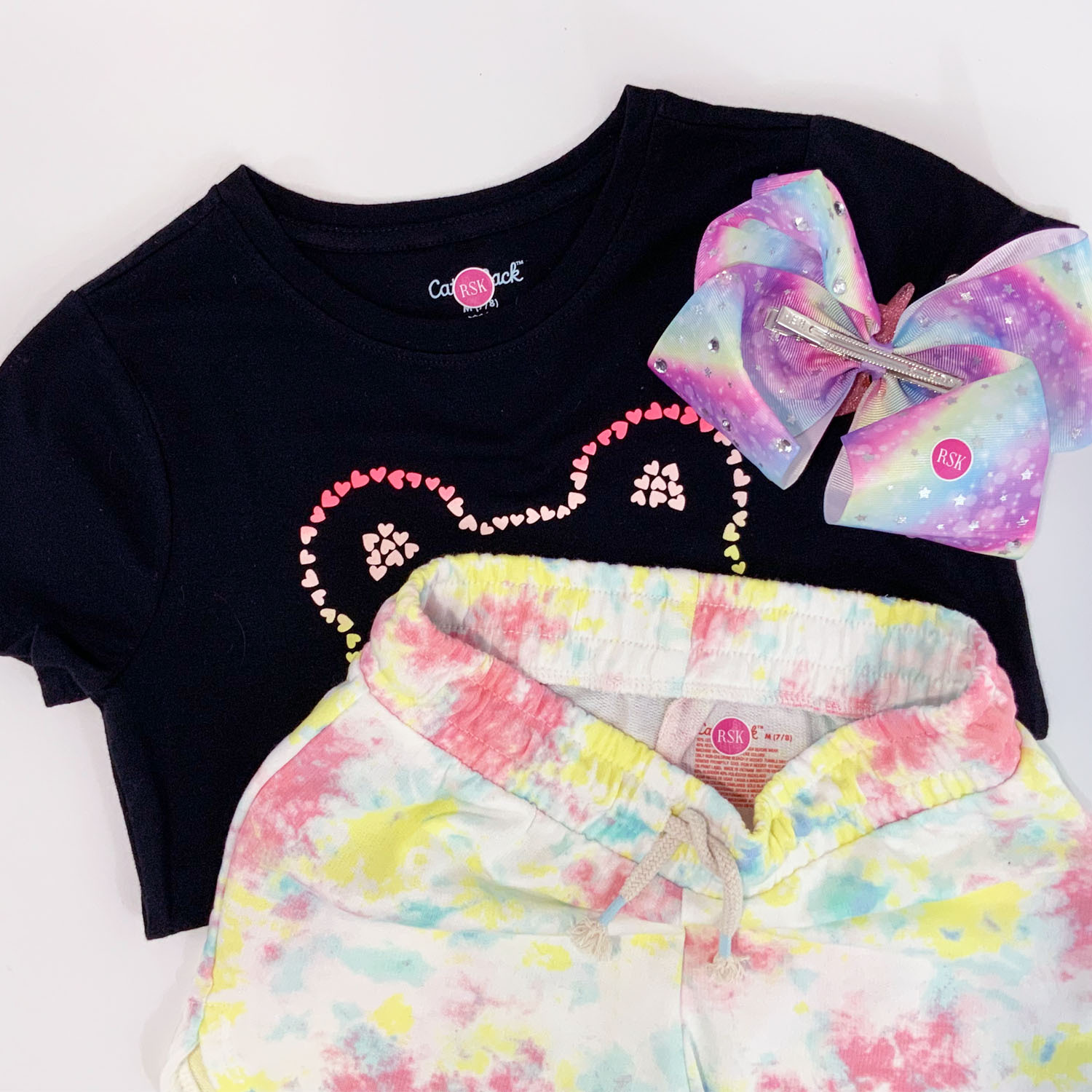
For families with multiple children, initial dot labels offer a discreet way to identify clothing quickly. Small circular labels featuring the child's initials — great for teens, older kids, and adults who prefer something low-profile.
Best for:
- Sorting laundry among siblings
- Socks, underwear, and small items
- Quick visual identification in drawers and cubbies
- Older kids who prefer subtle labels
- Organizing drawers and closets
Real-Life Scenarios: School, Daycare, Camp, and Special Needs
Scenario 1: Organizing laundry at home with multiple kids
The challenge: Three kids, clothes constantly in the wrong rooms, socks perpetually missing, every laundry day a sorting nightmare.
The solution: Use washable clothing labels or initial dot labels on everyday items. Assign each child a color or initial — sorting laundry becomes something kids can do themselves.
Scenario 2: Back-to-school labels
The challenge: Your child comes home without their jacket — again. The school lost-and-found is overflowing with unlabeled items, and you have no way to claim what's yours.
The solution: Before school starts, label everything with iron-on clothing labels for school. Jackets, hoodies, gym clothes, and shoes need clear identification — not just the backpack.
What to label for school:
- Jackets and coats — inside collar and inside pocket (double labeling for high-value items)
- Backpacks — inside main compartment
- Lunch boxes and water bottles
- Gym clothes and athletic shoes
- School uniforms
- Hats, gloves, and scarves
Scenario 3: Daycare and preschool clothing labels
The challenge: Your toddler's clothes keep going home in someone else's bag. Extra outfits, bibs, and blankets all look similar, and daycare staff are managing 10 children simultaneously.
The solution: Label absolutely everything with bright, visible daycare clothing labels. Choose designs your child can recognize — a toddler who can't read their name can still identify "the one with the monkey" as theirs.
Essential items to label for daycare:
- Complete changes of clothes stored in the cubby
- Bibs and burp cloths
- Blankets and comfort items
- Bottles and sippy cups
- Pacifiers and teething toys
- Shoes and boots
- Seasonal outerwear
Scenario 4: Summer camp labels that last
The challenge: Your child is heading to overnight camp with a full duffel of clothes. Everything looks similar to what other campers have, and the communal laundry situation means mix-ups are guaranteed.
The solution: Summer camp labels — iron-on for clothing, stick-on for everything else. Label every single item before camp starts, not after the first lost-laundry incident.
Camp essentials to label:
- All clothing — shirts, shorts, pants, pajamas, underwear, socks
- Towels and washcloths
- Sleeping bag and pillow
- Toiletries and personal care items
- Water bottles and reusable containers
- Flashlights and electronics
- Sports equipment and gear
Scenario 5: Special needs and safety labeling
The challenge: Your child has special needs, medical conditions, or allergies. In emergency situations, caregivers need immediate access to critical information — and it needs to be on the child, not in a file in the office.
The solution: Custom clothing labels that include emergency contact information, medical alerts, or allergy warnings directly on the clothing itself.
Critical information to include:
- Child's name and parent phone number
- Medical conditions — autism, diabetes, epilepsy, and similar
- Severe allergies — food, medication, environmental
- Emergency contact information
- Special instructions for caregivers
Customization Options for Personalized Name Labels
Modern personalized clothing labels offer far more than just a name on a sticker. The right customization makes labels more effective — kids who are excited about their label design are more likely to look for it when checking belongings.
Design and theme options: Animals (dinosaurs, unicorns, dogs, cats, ocean creatures), sports (soccer, basketball, gymnastics, dance), interests (space, vehicles, music, superheroes), patterns (stripes, polka dots, rainbows), and colors from bright and bold to subtle and neutral.
Information to include beyond just the name:
- First and last name — reduces confusion with common first names in the same classroom
- Phone number — makes it easy for anyone to return a found item without going through the school office
- Grade or class — helps teachers and staff identify the right child quickly
- Emergency contact — critical for children with special needs, allergies, or medical conditions
Size and shape by item type:
- Large labels: Jackets, backpacks, lunch boxes — highly visible, easy to spot
- Medium labels: Shirts, pants, towels — standard clothing placement
- Small labels: Socks, underwear, care tags — discreet but functional
- Slim labels: Pencils, pens, small school supplies
- Shaped labels: Water bottles and containers
How to Apply Clothing Labels Correctly
Proper application is as important as label quality. A high-quality label applied incorrectly will fail quickly. A correctly applied label will outlast the garment.
Applying iron-on labels for clothing — step by step
- Preheat your iron to the cotton setting with no steam
- Peel the backing: Bend the backing sheet at the edge and carefully remove the iron-on label
- Position it: Place iron-on face up — so you can read it — onto the garment in your chosen location
- Quick press: Place the included parchment paper or a thin cloth over the label and press with the hot iron for 10–20 seconds
- Inspect and continue: Check the label hasn't shifted, then press again with parchment paper for 60–90 seconds with firm pressure to ensure full adhesion
- Cool and check: Let the label cool completely, then confirm all edges are firmly adhered and the fabric texture is visible through the label surface
- Wait before washing: Your garment is ready to wear. Wait 24 hours before the first wash for best long-term adhesion
Applying stick-on labels for clothing — step by step
- Prepare the surface: Inspect the care tag or tagless label area with a dry cloth or lint roller to remove any lint or fibers that prevent adhesion
- Peel carefully: Remove the label from the backing sheet without touching the adhesive
- Position precisely: Place the label on the care tag or the largest flat area of the tagless label imprint — not directly on fabric, which stretches and flexes during wear and prevents proper bonding
- Press firmly: Use your fingers to press from center outward, ensuring full contact across the entire label
- Smooth out bubbles: Run your finger over the label several times to ensure complete adhesion at all edges
- Wait before washing: Allow 24 hours before the first wash for best adhesion
Best Placement Locations for Every Item
Where you put the label matters as much as which label you choose. Labels in hard-to-find spots don't get found — by teachers, daycare providers, or other adults trying to return your child's belongings.
Shirts and tops
Inside back collar or care tag. Visible immediately when a shirt is picked up or turned inside out.
Pants and shorts
Inside waistband at the back center, or on the care tag. Waistband placement survives more wash cycles than side seam placement.
Jackets and coats
Inside collar AND inside pocket — double label high-value items. Jackets are the most commonly lost school item and worth the extra label.
Socks and underwear
Inside cuff for socks. Inside waistband at the back for underwear. Initial dot labels work particularly well here — discreet but identifiable.
Shoes
Inside tongue or on the insole. For younger children, our MatchUP shoe labels — two halves of a picture that only complete correctly when shoes are on the right feet — solve left-right confusion alongside identification.
Backpacks and bags
Exterior name label in a visible location, plus a contact label — name and phone number — inside the main compartment. Both labels, not just one. The exterior label helps return the bag. The contact label inside helps reach the parent directly.
Durability and Care Instructions
Expected lifespan from real family experience:
- Iron-on clothing labels: Last the lifetime of the garment with proper application and care. Hand-me-downs with iron-on labels retain clear, readable identification through multiple children.
- Stick-on clothing labels: Kids typically outgrow the clothing item before the label needs replacing. Also dishwasher safe, microwave safe, and outdoor resistant — works on lunch containers, water bottles, and school supplies beyond just clothing.
Washing: Cold or warm water for stick-on labels. Hot water is fine for iron-on labels. Regular detergent — no special products needed.
Drying: Tumble dry on any heat setting.
What to avoid — these shorten label life:
- Dry cleaning chemicals — may affect adhesive
- Bleach or bleach additives directly on labels — causes fading
- Products with essential oils — causes fading and adhesive failure
- Ironing directly over labels — always use a pressing cloth
The Cost Analysis: What Labels Actually Save You
Average annual losses without labels:
- 3–4 jackets or hoodies: $120–$200
- 2–3 lunch boxes: $30–$60
- 4–6 water bottles: $40–$80
- Gloves, hats, scarves: $50–$100
- School supplies and gym clothes: $50–$100
- Total annual cost per child: $290–$540
The investment in labels: A comprehensive label pack runs $30–$50, includes enough labels for a full school year, and many labels last multiple years. The first lost jacket prevented pays for the entire label set.
Beyond the financial savings: Fewer emergency shopping runs. No more trips to dig through the school lost-and-found bin. Less morning chaos searching the house for missing belongings. Kids who label their own items develop real ownership and responsibility for keeping track of them.
How to Build a Labeling Routine That Actually Sticks
The families who get the most value from clothing labels are the ones who make labeling a system — not a one-time event before school starts and never again.
Step 1 — Take inventory before you order. List every item that leaves the house regularly. Count clothing, shoes, bags, lunch boxes, water bottles, seasonal gear, and sports equipment. This tells you how many labels you need and which sizes.
Step 2 — Choose your label types based on the inventory. Iron-on for clothing that goes through hot washing. Stick-on for care tags, containers, and quick application. Initial dots for sorting between siblings.
Step 3 — Customize your order. Choose designs your kids are excited about. Decide what information to include — name only, or name plus phone number. Order a few extras for new items during the year.
Step 4 — Label systematically in one session. Start with high-value items (jackets, shoes, bags), move to frequently lost items (water bottles, lunch boxes), then label everyday clothing. Don't forget seasonal items and anything stored in the daycare or school cubby.
Step 5 — Label new items immediately. The habit that prevents loss is simple: when something new arrives, it gets labeled before it leaves the house. Keep a few labels in a drawer so this is a two-minute task, not a project.
Clothing Labels for Every Situation
Iron-On Clothing Labels — permanent, laundry-safe identification
Bond completely into the fabric and last the lifetime of the garment. The right choice for school uniforms, everyday clothing, camp gear, and anything that goes through repeated hot washing. Completely flat when applied — no raised edges, which matters for sensory-sensitive children.
Stick-On Clothing Labels — flexible, no-iron application
Peel and apply to care tags or tagless label imprints in seconds. Also works on containers, water bottles, lunch boxes, and school supplies. Dishwasher safe, microwave safe, outdoor resistant. The right choice when you need quick application or can't use an iron.
Initial Dot Labels — subtle, fast sorting for multi-child families
Small circular labels with initials for quick visual identification. Ideal for socks, underwear, and small items where full-name labels feel like overkill. Particularly popular for sibling laundry sorting.
School Label Packs — everything in one order
Multiple label sizes and types for every school item — clothing, backpacks, lunch boxes, water bottles, and school supplies. The most efficient starting point for back-to-school labeling.
Camp Label Packs — iron-on and stick-on for everything that goes away
Designed for the volume of labeling overnight camp requires. Iron-on labels for clothing that goes through communal laundry. Stick-on labels for containers, gear, and equipment. Order early — camp labeling sessions take more time than parents expect.
Browse our full range at Sticky Monkey Labels. Questions about which label is right for your specific situation? Call us at 1-888-780-7734 — I answer questions about label selection every day and it never takes long to figure out the right fit.
Frequently Asked Questions
What's the difference between iron-on and stick-on clothing labels?
Iron-on labels use heat to bond permanently with fabric fibers — they last the life of the garment and survive repeated hot washing. Stick-on labels apply without heat to care tags or tagless label imprints — faster to apply, also very durable, and versatile enough to use on containers and hard surfaces as well. For clothing that goes through frequent, hot washing, iron-on is the more permanent choice. For quick application and flexibility across multiple surface types, stick-on is the right call.
Can I put stick-on labels directly on fabric?
No — stick-on clothing labels need to go on the care tag or tagless label imprint, not directly on fabric. Fabric stretches and flexes during wear and washing, which prevents the adhesive from bonding properly. Without a stable, non-stretch surface, the label will peel quickly. The firm surface of the care tag provides the foundation for lasting adhesion.
How long do clothing labels last?
Iron-on labels last the lifetime of the garment when correctly applied and cared for. Stick-on clothing labels typically outlast the clothing item — kids grow out of clothes before the labels need replacing. In our experience, the label is never the limiting factor. The clothing wears out first.
Are clothing labels safe for children with sensory sensitivities?
Iron-on labels are the right choice for sensory-sensitive children. When correctly applied, they bond completely flat into the fabric — no raised edges, no corners to catch, no texture difference the child can feel through the clothing. Stick-on labels have an edge that sensory-sensitive children may notice if applied inside clothing against skin. For items worn close to the body, iron-on is the sensory-friendly option.
What should I label for back-to-school?
Everything that leaves the house: jackets and coats (double labeled — collar and pocket), backpacks (exterior name label plus contact information inside), lunch boxes, water bottles, gym clothes, athletic shoes, school uniforms, hats and gloves, and any sports equipment. The items most commonly found unlabeled in school lost-and-found bins are jackets, water bottles, and lunch containers — start there if you're labeling for the first time.
Do clothing labels work for summer camp?
Yes — and camp is one of the most important labeling situations because communal laundry virtually guarantees mix-ups without labels. Use iron-on labels for all clothing. Use stick-on labels for towels, gear, containers, and equipment. Label every single item before camp starts, including things that seem unlikely to get lost — at overnight camp, everything eventually goes through communal systems. Our camp label packs are designed for the volume camp labeling requires.
What information should I include on kids' clothing labels?
At minimum: full first and last name. First name alone doesn't help staff return items when there are multiple children with the same name. For bags and backpacks, also include a phone number so anyone who finds the item can reach you directly without going through the school office. For children with special needs, medical conditions, or food allergies, include relevant emergency information. For young children who can't read yet, choose a distinctive design they can recognize — the visual identification works before literacy does.