
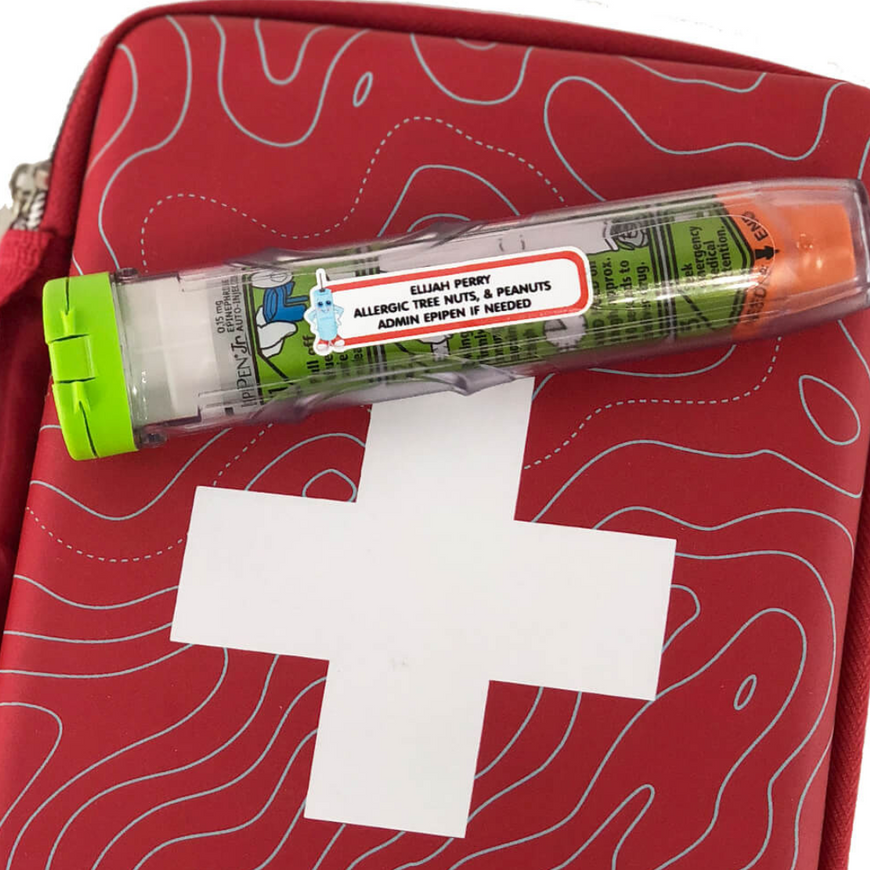
A caregiver opening your child's lunchbox at daycare has about five seconds to verify what's inside before moving on to the next child. In a room with twelve toddlers, all of whom have containers that look nearly identical, those five seconds are the entire window for catching a food mix-up before it reaches a child with a peanut allergy. The allergy label on the container isn't a nice-to-have — it's the only system that works at that speed, in that environment, without requiring the caregiver to stop and cross-reference a file or consult a database.
This is the complete guide to allergy labels and medical alert labels for kids — what information to include, which label type works for which situation, where to put them at daycare, school, and camp, and how to use waterproof labels that survive the daily dishwasher cycle from the first week of daycare through every year of school.
From the founder of Sticky Monkey Labels
I'm Dodie — founder of Sticky Monkey Labels and the original creator of Peel 'n Stix® clothing labels. Two of my three boys have food allergies. I have sat across from daycare directors and school nurses and had the conversation about what information needs to be visible, where, and why. Everything in this guide comes from that experience — fifteen years of making labels and talking to the parents who need them to work when it matters most.
Jump to Section
Why a Physical Label Does What a School Record Cannot
Every school, daycare, and camp has a system for recording medical and allergy information. The problem is that these systems live in files, databases, and intake forms that are accessed in advance — not at the moment a caregiver is handing a child a snack, opening a container, or responding to a medical situation. The gap between "the information exists in the system" and "the information is visible at the moment of action" is where allergic reactions happen.
Consider the specific failure points. A substitute teacher covering a classroom doesn't have time to pull up every child's medical record before distributing snacks. A camp counselor managing twenty kids at a picnic table cannot stop to cross-reference allergy files while serving lunch. A first responder arriving at the scene of an accident doesn't know your child's medical history — they know what they can read immediately on the child and their belongings.
A waterproof label on the food container, the lunchbox, the backpack, and the car seat puts the information at the point of action. It doesn't require anyone to remember, look up, or ask. It works for a caregiver who knows your child well and works equally well for a substitute who has never met them. That's the function a physical label performs that no digital record replicates.
What Information to Put on an Allergy or Medical Alert Label
The information on the label needs to be immediately actionable by anyone who reads it, including someone who doesn't know your child at all. Vague language fails this test. "Food allergy" tells a caregiver nothing useful — they don't know which foods, they don't know the severity, and they don't know what to do if exposure happens. Specific language gives them everything they need in the time it takes to read a label.
Essential information for every allergy or medical alert label:
Always Include
- Child's full name
- Specific allergen(s) — not "food allergy"
- Parent or guardian phone number
- Severity indicator if applicable (e.g. "carries EpiPen")
Add When Relevant
- Pediatrician or allergist phone number
- Additional medical conditions
- Medications carried by child
- Second emergency contact
For children with environmental allergies rather than food allergies — bee stings, latex, specific plants — the same principle applies. "BEE ALLERGY — EpiPen in front pocket of backpack" gives a camp counselor or field trip chaperone exactly what they need if a child is stung during an outdoor activity. The label doesn't replace the EpiPen or the training — it ensures the caregiver knows the EpiPen exists and where to find it.
Allergy Labels for Daycare
Daycare presents a specific set of challenges that school doesn't. Children are younger, they cannot advocate for themselves about what they can and can't eat, and the environments are often higher-contact than school classrooms — shared snack tables, communal food preparation areas, bottles stored in shared refrigerators where cross-contamination is a real risk if containers aren't clearly labeled.
At infant and toddler daycare, the shared refrigerator is the highest-risk point. When ten families all send bottles, sippy cups, and food containers that look nearly identical, the only system that prevents a mix-up is a label that's visible on every container. For a child with a dairy allergy in a room where other children's bottles contain dairy-based formula, a clear allergy label on every container is non-negotiable.
Everything to label at daycare for a child with allergies:
- Every bottle — body and lid separately
- Every food container and snack bag
- Sippy cups and transition cups
- The outside of the daycare bag or backpack
- The diaper bag if it travels with the child
- Any medication bag or pack carried to daycare
- The car seat — for emergency information including allergies
For infants and toddlers who move between rooms as they age up, re-check label placement every time your child transitions to a new room. New caregivers are the highest-risk moment — a label ensures they have the information before they need it, not after.
Many daycares now require allergy labels as part of their intake process. If your daycare hasn't asked for them, ask your director whether they have a protocol for allergy labeling — most will welcome labels that make their staff's job easier and safer. Browse our complete range of waterproof allergy labels for kids designed specifically for daycare environments. For a complete checklist of everything that needs a label at daycare, see our daycare labeling complete guide.
Allergy Labels for School
School introduces new risk environments that daycare doesn't have: cafeterias with shared surfaces, classroom celebrations with food brought by other families, field trips where a teacher is managing a large group in an unfamiliar environment, and the growing independence of children who are now moving between classrooms and spaces without a caregiver in close proximity.
The classroom birthday party is one of the most common high-risk moments for children with food allergies. For the complete guide to what needs a label before the first day, see name tags for school and what teachers actually notice. A parent brings cupcakes with unknown ingredients; the teacher distributes them; a child with an egg or dairy allergy receives one because no one thought to check. The allergy label on the lunchbox and the backpack is what prompts the caregiver to pause and ask before distributing — it's the visible cue that turns a potential incident into a routine accommodation.
For children old enough to understand their own allergies, label their belongings with them. A child who participated in labeling their lunchbox knows their allergy label is there and can use it as a conversation starter with teachers, lunch monitors, and other adults. "My lunchbox says I have a peanut allergy" is something a seven-year-old can manage. That ownership and confidence is one of the most practical things labeling does beyond the immediate safety function.
Priority label placements at school:
High Priority
- Lunchbox exterior — visible to lunch monitor
- Every container inside the lunchbox
- Water bottle
- Backpack exterior
- Medical bag or EpiPen carrier
Also Important
- Inside backpack lining (contact label)
- Snack container for after-school programs
- Sports bag if child stays for activities
- Jacket pocket for allergy information card
Our safety labels for kids include high-visibility allergy labels designed to stand out from standard name labels — different color, different format — so a caregiver scanning a lunchbox immediately sees the allergy alert separately from the name label.
Allergy Labels for Camp
Camp creates the most complex allergy-labeling environment because it combines all the elements of school with the added dimensions of overnight stays, outdoor activities, distance from medical facilities, and a rotating roster of counselors who may only know your child for one or two weeks. A counselor who has just met your child on Monday morning needs to have your child's allergy information without a briefing, without a file review, and without relying on the child to self-report.
For overnight and sleepaway camp, the labeling scope expands significantly beyond daycare or school. In addition to all food containers and water bottles, label every piece of clothing, every bunk item, and the bag or trunk itself. If your child has an EpiPen or carries any allergy medication, label the case it's stored in, label the bag or trunk compartment where it lives, and include the information on a large-format label on the outside of the trunk. Camp nurses and counselors are trained to look for medical information on large personal items — make sure it's there to find.
The car seat label is particularly valuable for camp drop-off and pick-up when carpooling with other families. If another parent is driving and your child is riding in their car in their own car seat, the car seat label ensures your child's name, your contact number, and their allergy information are visible to anyone who encounters that car seat, regardless of whether the driver has been briefed. Read our dedicated guide to allergy labels for summer camp for the complete camp-specific labeling checklist.
Allergy Labels vs Medical Alert Labels: Which One Do You Need?
These two label types solve overlapping but distinct problems. Understanding the difference helps you build the right labeling system for your child's specific situation.
Designed to alert caregivers to specific food or environmental allergens at the point of contact with food or the environment. Highly visible, typically using alert colors (red or orange) to signal "stop and check" before proceeding.
Best for:
Food containers, lunchboxes, water bottles, snack bags, any item that contacts food or is distributed to children in a group setting.
Broader format designed to carry complete medical information including allergies, conditions, medications, and emergency contacts. Used on items that travel everywhere with the child and need to communicate full medical context in an emergency.
Best for:
Backpacks, car seats, trunks, bags, and any item a first responder might access in an emergency. Paired with allergy labels on food items for complete coverage.
Most families with children who have food allergies use both: allergy labels on every food container and the lunchbox, medical alert labels on the backpack, car seat, and camp trunk. The two types build a complete system that covers both routine daily caregiver interactions and emergency situations where your child may be separated from familiar adults.
Labeling for Multiple Allergies
Children with multiple food allergies need labels that list every allergen specifically — not a summary phrase, not an abbreviation. A caregiver reading "ALLERGIES: PEANUTS, TREE NUTS, DAIRY — EpiPen in backpack — Call 555-123-4567" has complete, actionable information. A label reading "multiple food allergies — see file" requires a step the caregiver cannot take in the moment.
For children with four or more allergens, our larger format medical alert labels and car seat emergency labels provide the most space for complete information. The car seat label in particular — used on the car seat itself — gives enough room to list all allergens, any medications carried, and two emergency contact numbers. For a child whose daily life involves navigating multiple serious allergens across daycare, school, activities, and transportation, the car seat label is often the most important single safety label you can apply.
You can also pair a compact allergy label on food containers (listing allergens and one phone number) with a larger medical alert label on the backpack (listing everything including medications and both parent and physician contacts). This layered approach puts the most critical information — what the child can't eat — at the food point of contact, and the complete medical picture at the item most likely to be accessed in an emergency.
Browse our complete range of safety labels for kids including allergy labels, medical alert labels, and car seat emergency labels that carry complete allergy and medical information wherever your child goes.
Which Label to Order
| Situation | Label Type | Where It Goes |
|---|---|---|
| Food allergy at daycare or school | Waterproof Allergy Labels | Every food container, lunchbox, water bottle |
| Complete medical info for emergencies | Medical Alert Labels | Backpack, camp trunk, duffel bag exterior |
| Emergency information on car seat | Car Seat Emergency Labels | Car seat itself — allergens, contacts, medications |
| General safety + allergy pack | Safety Labels for Kids | Full coverage across all items and situations |
For the complete camp-specific allergy labeling guide covering every item from the bunk to the car seat, read allergy labels for summer camp. For general labeling guidance across every stage from daycare through high school, see our back to school labels by grade complete checklist. For car seat safety labeling including emergency contact and allergy information, see car seat emergency labels. Questions? Contact us at stickymonkeylabels.com.
About the Author