
From the founder of Sticky Monkey Labels
As a mom of three boys and the founder of Sticky Monkey Labels, I've seen our labels end up in some surprising places over the years. The consistent thread: any item a child cares about and takes out into the world deserves a label. Here are 40 of them.
Personalized labels started out as a practical tool for preventing lost items — and they still are. But for kids, a label with their name on a design they chose is also just fun. It's their mark on their things. A small but genuine expression of identity and ownership that makes them more likely to look after what's theirs and notice when something goes missing.
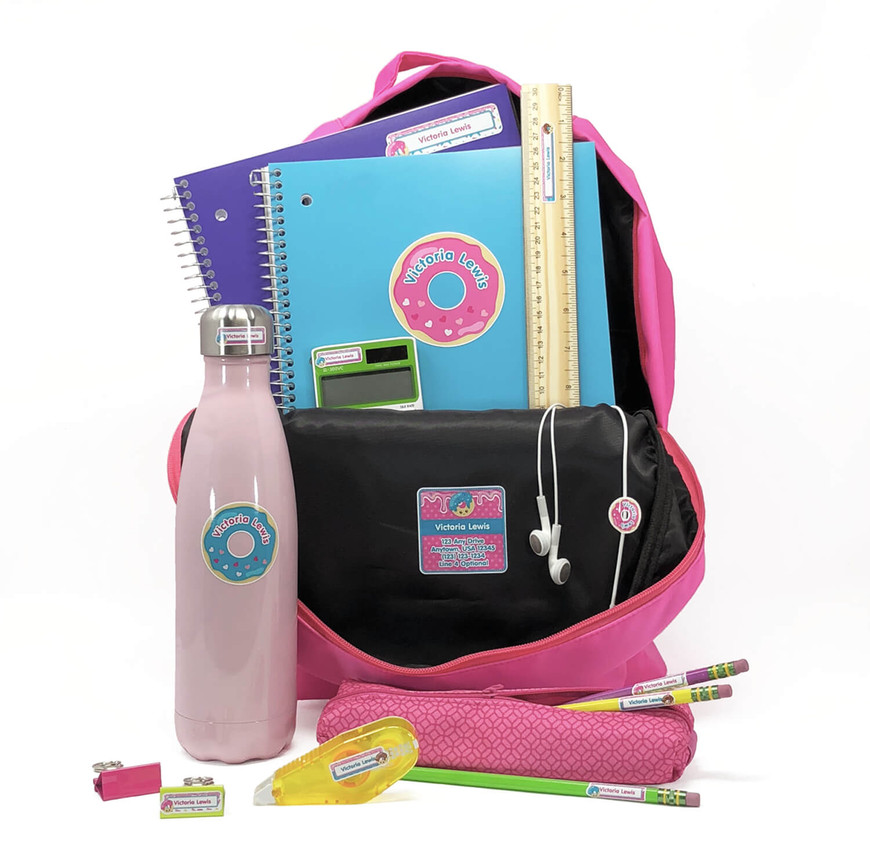
Here are 40 places to put personalized name labels — organized by category, with the right label type for each surface so everything you apply actually lasts.
Quick Label Type Guide
- Waterproof labels — plastic, metal, glass, hard surfaces. Dishwasher-safe, weatherproof.
- Stick-on clothing labels — garment care tags and tagless imprint areas. Laundry-safe.
- Iron-on labels — iron-safe fabrics, permanently bonded. Flat, soft, washer/dryer safe.
- Shoe labels — curved inner sole at heel. Washer/dryer safe.
- Write-on labels — hard surfaces where information needs to change. Refrigerator/freezer/dishwasher safe.
1–12: Everyday Items That Leave the House
These are the items most likely to go missing — and the ones where a label makes the biggest practical difference. Apply before they leave the house for the first time.
- Water bottle (waterproof)
- Lunchbox (waterproof)
- Reusable food containers (waterproof)
- Backpack — inside and outside (waterproof)
- Pencil case (waterproof)
- Stuffed animal or comfort toy (stick-on to care tag)
- Blanket or comfort item (stick-on or iron-on)
- Eyeglass case (waterproof)
- Purse or small wallet (waterproof)
- Phone case (waterproof)
- Tablet or device case (waterproof)
- Luggage and travel bags (waterproof)
13–24: School and Study Supplies
School supplies travel between home and classroom daily — and in a room full of children with similar items, unlabeled supplies quietly disappear. Labeled supplies come back.
- Notebooks and journals (waterproof)
- Binders and folders (waterproof — use subject labels)
- Sketchpad or art book (waterproof)
- Planner or calendar (waterproof)
- Clipboard (waterproof)
- Filing folders (waterproof)
- Pencils and pens (pencil labels)
- Calculator (waterproof — back panel)
- Ruler and scissors (waterproof)
- Headphones or earbuds case (waterproof)
- Scrapbook (waterproof)
- Musical instrument case (waterproof)
25–30: Clothing and Footwear
Clothing in shared environments — school, camp, daycare, sports — is where labels earn their keep most obviously. Every item that leaves the house wearing a label has a path back.
- School uniforms (iron-on or stick-on)
- PE kit and sports uniforms (iron-on)
- Jackets, hoodies, sweatshirts (stick-on or iron-on)
- Hats, gloves, scarves (stick-on or iron-on)
- School shoes and sneakers (shoe labels)
- Sports shoes and cleats (shoe labels)
31–38: Sports Equipment and Active Gear
Sports gear lives in shared spaces — locker rooms, team bags, sports halls. It also tends to be expensive. A label on a labeled piece of sports kit is the difference between it coming home and staying in the locker room forever.
- Sports bag or kit bag (waterproof)
- Helmet (waterproof)
- Shin guards, pads, protective gear (waterproof)
- Bicycle or scooter (waterproof — frame or handlebar)
- Skateboard (waterproof — underside)
- Skates and snowboard (waterproof)
- Dance gear and costume bag (waterproof or stick-on)
- Hockey or other team equipment (waterproof)
39–40 (and Beyond): The Bedroom and Around the House
At home, personalized labels shift from a lost-item prevention tool to a belonging and identity tool. A child whose name is on their door, their desk, their bins, feels a genuine sense of ownership over their space — which has real developmental value.
- Bedroom door (waterproof)
- Piggy bank or money box (waterproof)
Plus: toy boxes, storage bins, picture frames, bookshelves, lamps, mirrors, plastic containers — anywhere a child's space benefits from a personal touch and a clear sense of ownership.
Choosing Labels That Actually Last
For items that get washed or exposed to moisture — bottles, lunchboxes, clothing — the label needs to be explicitly waterproof and either dishwasher-safe or laundry-safe depending on the surface. A label that looks great on day one but peels off after two washes isn't doing its job.
Our labels are built for the specific surfaces they're designed for — waterproof labels survive the dishwasher daily, clothing labels survive the washing machine and dryer, shoe labels are designed for the curved inner sole and handle both. Every product is tested in our own home before it ships.
Browse our full range at Sticky Monkey Labels — over 100 designs, fully personalized, in label types built for every surface on this list.
Frequently Asked Questions
What surfaces do waterproof name labels stick to?
Our waterproof name labels adhere to plastic, glass, metal, paper, and cardboard — covering water bottles, lunchboxes, hard cases, equipment, and most hard-surface items. They do not adhere to silicone surfaces. For fabric items, use clothing labels (stick-on for care tags, iron-on for iron-safe fabrics) rather than waterproof labels.
Can I put a name label on sports equipment?
Yes — waterproof name labels work on helmets, shin guards, protective gear, skateboards, skates, and most hard-surface sports equipment. Apply to a clean, dry surface (wipe with isopropyl alcohol first for best adhesion) and allow 24 hours before first exposure to the elements. For sports bags and clothing, use the appropriate clothing label type.
Why should I let my child choose their label design?
A child who chose their label design recognizes their belongings instantly and is significantly more likely to notice when something goes missing. The ownership and identity connection that comes from choosing the design makes the label more than a practical tool — it becomes a marker of their things that they actively relate to. With over 100 designs available, most children have a genuine opinion and enjoy the choosing process.
How do I get the best adhesion from a name label?
For hard surfaces: wipe the application area with isopropyl alcohol first to remove any oils or residue, let it dry completely, then apply the label firmly from center outward. Allow 24 hours before the first wash cycle or dishwasher run for the adhesive to fully bond. Avoid bleach-based detergents and sanitary dishwasher cycles, which degrade adhesive faster than standard cycles.