
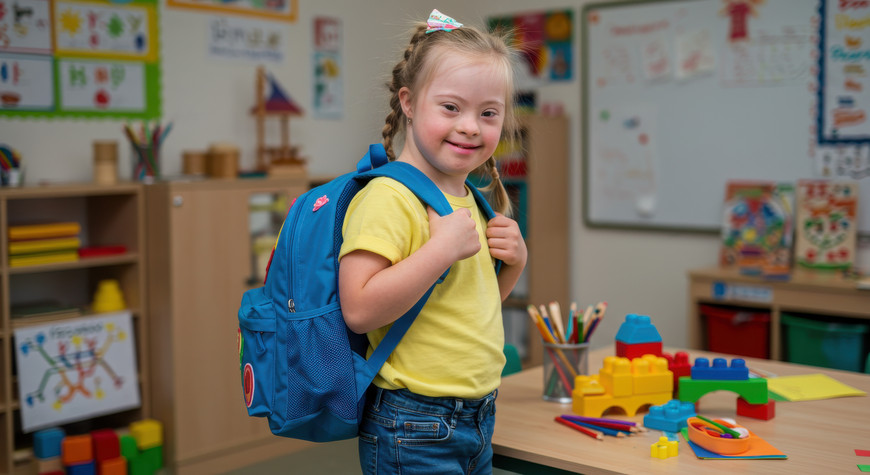
Back-to-school preparation for families with special needs children involves a different level of planning than a supply list and a trip to the store. The organizational systems that work for neurotypical children — basic labeling, a standard morning routine, generic classroom organization — frequently don't translate. What works depends on the specific child, their specific challenges, and the specific environment they're going into.
Here's what I've learned from my own experience and from 14 years of working with families navigating autism spectrum disorder, ADHD, sensory processing disorders, and learning disabilities — the organizational strategies that actually reduce anxiety and build the independence that makes school more manageable.
Topics Covered
- Why organization matters more for special needs children
- Autism spectrum disorder — structure, predictability, and visual systems
- ADHD — simplified systems and visual anchors
- Sensory processing — texture, comfort, and label choice
- Learning disabilities — visual and multi-modal approaches
- Products that specifically support special needs children
- Communicating your child's needs through labeling
From the founder of Sticky Monkey Labels
One of my three boys has special needs. Back-to-school prep for him has always looked different from what I did for his brothers — more planning, more communication with his teachers, more thought about what systems would actually work for the way his brain works. This post is written from that experience, alongside 14 years of hearing from special needs families, occupational therapists, and special education teachers about what genuinely helps.
Why Organization Matters More for Special Needs Children
For neurotypical children, organizational systems provide convenience. For many special needs children, they provide something closer to psychological safety. Predictability reduces anxiety. Knowing where things are and what comes next — and having environmental cues that reinforce that knowledge — significantly lowers the cognitive load of navigating a school day.
Children with executive function challenges (common across ADHD, autism, and many learning disabilities) struggle specifically with the planning, organizing, and task-initiation aspects that neurotypical children handle more automatically. The right organizational system doesn't try to override these challenges — it works around them by making the right action the obvious and easy one.
A labeled bin at eye level that shows exactly where the backpack goes doesn't require executive function to use correctly. A labeled lunchbox that a child recognizes immediately as theirs reduces the sensory and social friction of a crowded lunch environment. These aren't small things for children for whom school is already a significant daily challenge.
Autism Spectrum Disorder — Structure, Predictability, and Visual Systems
Children on the autism spectrum typically thrive with structured, predictable routines. Disruptions to established systems — a bag that looks different, a label that's changed, a new container for lunch — can create genuine distress. This means the organizational system you establish before school starts matters not just for practicality but for emotional regulation.
What works for autistic children:
- Consistent visual anchors. Labels should be consistent year to year where possible — the same design on the same items creates continuity that reduces the adjustment burden of each new school year. When you do need to change, involve the child in the process so the new label is familiar before it goes on the item.
- Interest-based design selection. Autistic children often have specific, strong interests. A label featuring a child's specific interest — the exact type of dinosaur, the specific vehicle, the particular character — creates genuine personal connection to the labeled item. This is more than aesthetic: it creates a visual anchor the child recognizes and feels ownership over.
- Sensory-considerate label placement on clothing. For autistic children with tactile sensitivity, label placement matters as much as label type. Iron-on labels bond completely into the fabric — no raised edges, no corners to catch, no texture difference a sensory-sensitive child can feel through clothing. This is the right choice for clothing items worn close to skin.
- Communication labels for teachers. A contact label inside the backpack can include more than just a phone number — it can include brief notes about communication preferences, sensory triggers, or calming strategies that help substitute teachers and new staff respond appropriately without requiring the child to self-advocate.
ADHD — Simplified Systems and Visual Anchors
Children with ADHD often struggle specifically with the sustained attention that traditional multi-step organizational systems require. The organizational systems that work for ADHD are the ones that require the fewest steps, provide the clearest visual cues, and make the right action obvious rather than requiring the child to remember what the right action is.
What works for children with ADHD:
- High-visibility, distinctive labels. In a busy cafeteria or classroom, a child with ADHD who has to scan every similar-looking lunchbox or water bottle to find theirs loses time and focus. A distinctive label design — one the child specifically chose and recognizes instantly — reduces the visual search burden and the frustration that comes with it.
- Fewer systems, more coverage. A simple system that labels everything is better than a complex system that labels some things thoughtfully. For children with ADHD, the organizational system needs to be maintainable without sustained attention — which means it needs to be simple enough to use automatically.
- Visual anchors at decision points. Labels aren't just for identification — they're visual cues that prompt the right behavior. A label on a hook, a bin, a cubby tells the child where something goes without requiring them to remember or ask. The labeled environment does the organizational work that the child's executive function can't reliably do independently.
- Medication management labels. For children on medication schedules, clearly labeled medication containers help school nurses manage schedules and dosages accurately. Medical alert labels on the medication case and on the backpack ensure the right information is available to the right adults.
Sensory Processing Disorders — Texture, Comfort, and Label Choice
For children with sensory processing disorders, the physical properties of labels matter as much as their organizational function. A label that irritates a sensitive child will be removed, picked at, or cause distress — defeating the purpose and adding a negative association to the labeled item.
What works for sensory-sensitive children:
- Iron-on labels for clothing worn close to skin. Our iron-on labels bond completely and smoothly into iron-safe fabric — completely flat, no raised edges, no corners, no texture difference the child can feel through the garment. For clothing items a sensory-sensitive child wears all day, this is the only appropriate choice. Stick-on labels applied inside clothing carry an edge that sensory-sensitive children will notice and often find intolerable.
- Stick-on labels applied outside the clothing, not inside. For items where an iron-on label isn't practical, apply stick-on labels to care tags that sit away from skin contact rather than directly to the fabric interior. A label on the care tag doesn't contact skin; a label inside the collar does.
- Design selection as regulation support. For some sensory-sensitive children, a label featuring a calming design — particular colors, particular themes — can be a small but genuine comfort in an overstimulating environment. Involve the child in choosing their labels specifically with this in mind.
Learning Disabilities — Visual and Multi-Modal Approaches
Children with learning disabilities that affect reading — dyslexia and related conditions — benefit from organizational systems that don't rely exclusively on text. Visual design elements that allow identification without reading provide independence that text-only labels can't.
A child who can't read their name reliably can still recognize their specific dinosaur label among all the other lunchboxes. The design becomes the primary identification mechanism, with the text as backup. As the child's reading develops, the text becomes more useful — but the design-based identification works from day one.
For children with dyscalculia or other organizational challenges related to spatial reasoning, our MatchUP Shoe Labels — two halves of a picture that only form correctly when shoes are on the right feet — are genuinely useful beyond the toddler years. Left-right confusion persists in many children with certain learning profiles well past the typical age of mastery. A self-correcting visual cue provides independence without requiring the child to remember which is which.
Products That Specifically Support Special Needs Children
Iron-On Clothing Labels — For sensory-sensitive children
Completely flat and smooth — bond into the fabric rather than sitting on top of it. No raised edges, no corners, no texture a sensory-sensitive child can detect through clothing. The right choice for any item worn close to skin by a child with tactile sensitivity.
MatchUP Shoe Labels — For left-right learning
Two-part labels that form a complete picture only when shoes are on the correct feet. Self-correcting — the child discovers the error by seeing the incomplete picture rather than requiring adult correction. Particularly useful for autistic children, children with dyspraxia, and any child for whom left-right discrimination is an ongoing challenge beyond the typical developmental window.
Medical Alert Labels — For children with medical conditions
Waterproof and dishwasher-safe. Apply to bags, EpiPen cases, medication carriers, and relevant equipment. Can include condition name, emergency response information, and parent contact. Particularly valuable on substitute teacher days and field trips when regular staff who know the child may not be present.
Allergy Alert Labels — For children with dietary restrictions
Specific allergen named clearly on lunchbox exterior and food containers. Visible to any adult at point of food contact. Particularly critical for special needs children who may not be able to reliably self-advocate their dietary restrictions in busy school environments.
Communicating Your Child's Needs Through Labeling
For special needs children, labels can serve a communication function that goes beyond identification. A contact label inside the backpack that includes more than just a phone number — a brief note about communication preferences, known triggers, calming strategies, or specific needs — gives substitute teachers and new staff immediate access to information that can make a significant difference in how they respond to your child.
This isn't a replacement for the formal documentation that goes through the school administration — IEPs, 504 plans, allergy action plans. But formal documentation is in the office. The label is with the child, in the moment, when a substitute teacher or a cafeteria supervisor needs to know something right now.
Some families include a small card inside the backpack alongside the contact label — a brief one-page overview of their child's key needs, communication style, and what helps when the child is dysregulated. The label directs staff to the card. Together they provide a layer of communication that travels with the child.
Browse our full range at Sticky Monkey Labels — including iron-on clothing labels, MatchUP shoe labels, medical alert labels, and allergy labels. Questions? Call us at 1-888-780-7734 — I'm always happy to talk through what will work best for a specific child's needs.
Frequently Asked Questions
Are iron-on labels really better for children with sensory processing issues?
Yes — for clothing worn close to skin. Iron-on labels bond completely into iron-safe fabric and are entirely flat and smooth when applied correctly. There is no raised edge, no corner, no texture difference that a sensory-sensitive child can feel through the garment. Stick-on labels applied inside clothing have an edge that many sensory-sensitive children find uncomfortable and will pick at or remove. For bibs, shirts, and any item worn against skin, iron-on is the right choice for sensory-sensitive children.
How do MatchUP Shoe Labels help children with special needs?
MatchUP Shoe Labels are two-part labels — one on each shoe — that form a complete picture only when shoes are on the correct feet. The system is self-correcting: the child sees the incomplete picture and adjusts without requiring adult correction, which reduces the frustration and shame that can accompany repeated correction. Particularly useful for autistic children, children with dyspraxia, and any child for whom left-right discrimination is a persistent challenge beyond the typical developmental window.
What should I put on a medical alert label for my special needs child?
At minimum: the child's full name, the condition or relevant medical information, and a parent contact number. For children with complex needs, a contact label directing staff to a brief information card inside the bag is more practical than trying to fit all information on a single label. Always pair visible labels with formal written documentation through the school administration — labels are the in-the-moment communication layer, not the replacement for documented plans.
How do I help an autistic child accept new labels or changes to their organizational system?
Involve them in the change before it happens. Let them see and touch the new label, put it on the item themselves if possible, and have a period of familiarity before the item goes to school for the first time. Maintaining the same design year over year where possible reduces the adjustment burden. When changes are necessary, the process of choosing together makes the new system theirs rather than something imposed on them.